
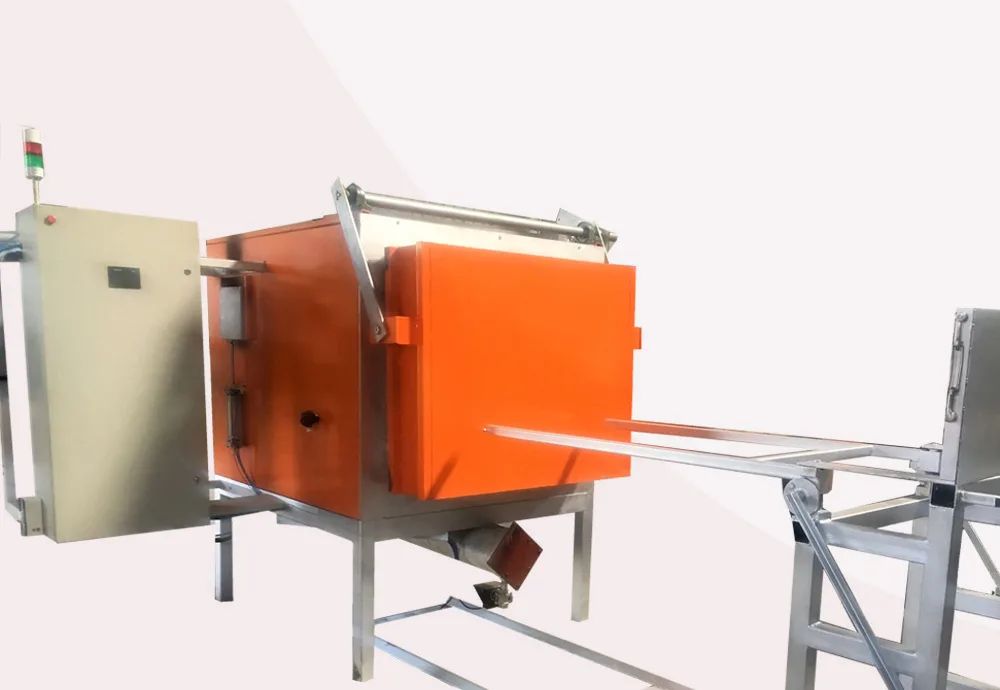
Quick Answer: Smart automation in a shell firing furnace means sensor-driven firing, programmed cycle recipes, and automated shell handling. It holds even temperature, flags cracks early, and cuts fuel and labour. The result: fewer rejects, tighter dimensional accuracy, and steadier output for investment casting foundries.
Ask any foundry owner where the money leaks. The shell firing furnace is usually near the top.
Since 1986, Laxminarayan Technologies has built and commissioned these machines, and smart automation is the biggest change we've seen in the shell room in years. Here's the thing. A furnace run on gut feel and a stopwatch cracks shells nobody can explain. Automation swaps that guesswork for data. Programmed ramps, live sensors, and recipe control. This article covers what smart automation in shell firing furnace technology actually does, where it pays off, and the limits worth knowing before you invest.
What Is a Smart Shell Firing Furnace?
A shell firing furnace dewaxes and sinters the ceramic shell mould in investment casting, firing the refractory to pouring strength at roughly 900 to 1100 degrees C. A smart one adds sensors, PLC recipe control, and automated handling, so it fires each shell to a repeatable, logged program instead of manual judgment.
How Smart Automation Changes the Firing Cycle
Old way, an operator eyeballs the flame and hopes. New way, the furnace follows a recipe tied to your part.
- Sensor feedback: thermocouples and fuel-flow meters correct heat in real time.
- Recipe control: each casting gets its own ramp, soak, and stabilise curve.
- Data logging: every firing is traceable, useful for aviation and IGT audits.
- Alerts: uneven heat gets flagged before a shell cracks on the second coat.
Think of it like cruise control versus a foot on the pedal. Same road, far steadier speed. This is the logic behind our smart IoT shell furnaces that cut fuel and cracks.
Manual vs Automated Shell Building
The gap is real. Here's how they stack up.
- Manual firing: cheap upfront, but wide temperature swings, higher rejects, heavy labour.
- Semi-automated: PLC ramps, some logging, moderate labour cut.
- Fully automated: recipe control, sensor correction, robotic loading, lowest rejects.
Our automated shell firing furnaces are engineered for roughly 50 percent power savings across wax, shell, and dewax, plus about 40 percent labour savings. ISO 9001 certified. Four decades of floor data in every build.
Why Even Heat Matters
An unevenly fired shell is a cake baked at the wrong temperature. Edges done, middle raw. It warps, it cracks, and your dimensional accuracy drifts past plus or minus 0.1 mm where it hurts. Zoned elements and sensor correction keep the whole chamber honest. Fewer surprises at pour.
Real-World Applications
- Aviation turbine blades: logged recipes hold the tight window superalloys need.
- IGT hot-section parts: even firing lowers residual stress before pour.
- Automotive and pump/valve castings: automation keeps high-volume lines steady.
- Complex ceramic-core geometries: clean, controlled firing protects fragile cores, and our ceramic core injection systems pair neatly with it.
Full grades and specs live on our shell firing furnace page.
How an Automated Firing Sequence Runs
- Load dry shells; the system reads the part recipe.
- Ramp to burnout temperature to remove residual wax and carbon.
- Soak to sinter the refractory coats to strength.
- Stabilise at pouring temperature under sensor control.
- Transfer hot moulds straight to the pour.
Challenges and Solutions
Shell cracking still tops the list. Automation fixes the root cause, uneven or rushed ramps, by holding the curve and alerting on drift. We tune each recipe to your shell system, not a generic setpoint.
Then there's cost. Automation is a bigger upfront spend. No exaggeration though. It earns back through lower rejects, less fuel, and fewer hands per shift. And some alloys or thick geometries still cap safe firing speed, sensors or not. We say so up front.
Upstream matters too. Wax drift starts patterns off wrong, so our wax injection machines and wax melters feed stable patterns into the same automated line.
Conclusion
Smart automation turns the shell firing furnace from a guesswork hot box into a measured, repeatable asset. Steadier heat, fewer cracks, lower bills. Laxminarayan Technologies has designed, commissioned, and serviced these lines since 1986, from single machines to complete turnkey IC foundries. If rejects and fuel costs keep biting, tell us your parts and volumes. We'll help you spec an automated shell firing furnace that fires right, every cycle.
FAQs
Question: What is smart automation in a shell firing furnace?
It's sensor-driven firing with PLC recipe control and automated shell handling. The furnace follows a logged program for each part, correcting heat in real time. This holds even temperature, flags cracks early, and cuts both fuel and labour for foundries.
Question: Does automation reduce shell cracking?
Yes. Most cracking comes from uneven or rushed heating. Automated ramp control and zoned sensors hold a steady curve and alert operators to drift before a shell fails, which lowers rejects and protects dimensional accuracy on complex castings.
Question: How much can an automated furnace save?
Our automated shell firing furnaces target roughly 50 percent power savings across wax, shell, and dewax, plus about 40 percent labour savings, mainly through programmed cycles, zoned heating, and reduced manual loading.
Question: Is automation worth it for small foundries?
Often, yes, in stages. Semi-automated PLC ramps and data logging give most of the reject and fuel benefit at lower cost, then you scale to full robotic loading as volumes grow. We help match the level to your output.