Stainless steel wire is used in countless industries because it offers strength, corrosion resistance, and long service life. Whether it is used for manufacturing springs, wire mesh, fasteners, welding applications, or industrial equipment, choosing the right grade of stainless steel is essential for reliable performance.
Among the different stainless steel grades available, Stainless Steel 304 Wire is one of the most widely used. It offers an excellent combination of corrosion resistance, formability, weldability, and mechanical strength. These qualities make it suitable for both industrial and commercial applications.
Hinduco Steel and Alloys is a trusted manufacturer, supplier, exporter, and stockist of premium-quality Stainless Steel 304 Wire. We supply stainless steel wire in different diameters, finishes, and forms to meet the requirements of customers across various industries.
What is Stainless Steel 304 Wire?
Stainless Steel 304 Wire is manufactured from Austenitic Stainless Steel Grade 304, which contains approximately 18% chromium and 8% nickel. It is commonly known as 18/8 stainless steel because of this composition.
The chromium forms a protective oxide layer on the surface that helps resist corrosion, while nickel improves toughness and durability. This combination makes Stainless Steel 304 Wire suitable for applications exposed to moisture, chemicals, and changing weather conditions.
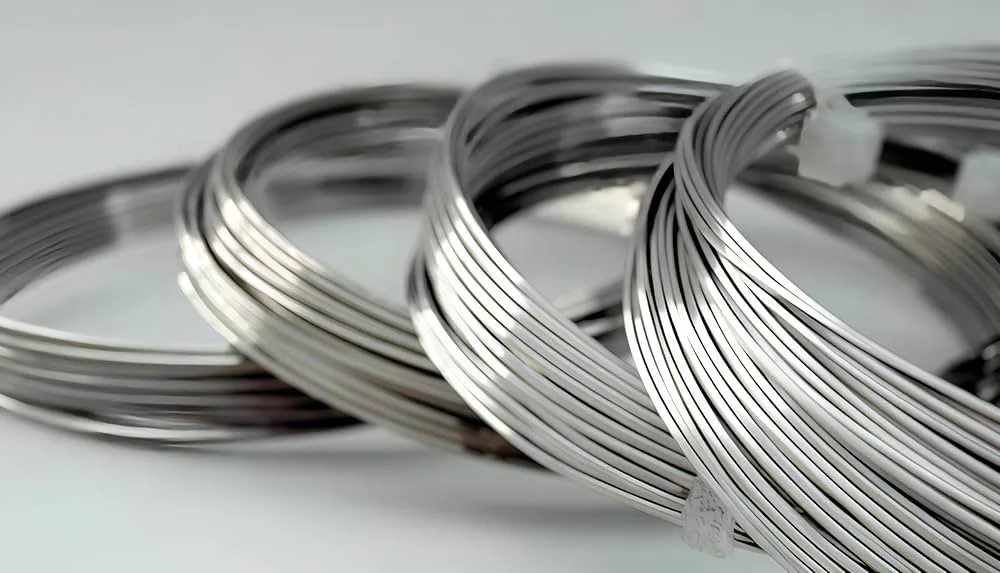
The wire is available in coils, straight lengths, soft annealed condition, spring hard condition, and customized sizes.
Chemical Composition
The chemical composition of Stainless Steel 304 provides its excellent corrosion resistance and mechanical properties.
ElementComposition (%)Chromium (Cr)18.00 – 20.00Nickel (Ni)8.00 – 10.50Carbon (C)0.08 MaxManganese (Mn)2.00 MaxSilicon (Si)1.00 MaxPhosphorus (P)0.045 MaxSulfur (S)0.030 MaxIron (Fe)BalanceMechanical Properties
PropertyValueTensile Strength515 MPa MinimumYield Strength205 MPa MinimumElongation40% MinimumHardness92 HRB MaximumThese properties provide an excellent combination of flexibility and strength.
Physical Properties
PropertyValueDensity8.00 g/cm³Melting Range1400–1450°CThermal Conductivity16.2 W/m·KElectrical Resistivity0.72 µΩ·mMagnetic PropertiesNon-magnetic in annealed conditionSpecifications
Hinduco Steel and Alloys supplies Stainless Steel 304 Wire in accordance with international standards.
SpecificationDetailsGradeStainless Steel 304UNS NumberS30400ASTM StandardASTM A580ASTM A313Spring WireASTM A276Stainless Steel Bars & WireDiameter0.10 mm to 12 mmFormCoil, Spool, Straight LengthFinishBright, Matt, PolishedConditionSoft Annealed, Half Hard, Spring HardCustom sizes and finishes are available on request.
Features of Stainless Steel 304 Wire
Excellent Corrosion Resistance
Stainless Steel 304 performs well in humid environments, fresh water, and many mild chemicals. It is one of the reasons why it is widely used across industries.
High Strength
The wire offers good tensile strength while remaining easy to fabricate and form.
Good Weldability
Stainless Steel 304 can be welded using standard welding methods without losing its mechanical properties.
Excellent Formability
The wire can be bent, twisted, drawn, and fabricated into different shapes for various applications.
Attractive Surface Finish
Its smooth and clean finish makes it suitable for decorative as well as industrial applications.
Long Service Life
Because of its corrosion resistance and durability, Stainless Steel 304 Wire requires minimal maintenance and offers a long operational life.
Types of Stainless Steel 304 Wire
Different industries require different wire conditions.
Soft Annealed Wire
Used where flexibility and easy bending are required.
Spring Hard Wire
Suitable for manufacturing compression springs, extension springs, and wire forms.
Bright Wire
Features a smooth surface finish and accurate dimensions for precision applications.
Fine Wire
Used in electronics, filtration systems, and medical equipment.
Welding Wire
Designed for welding applications that require corrosion-resistant filler material.
Applications of Stainless Steel 304 Wire
Wire Mesh Manufacturing
Stainless Steel 304 Wire is widely used to manufacture woven wire mesh and welded mesh for filtration, screening, and fencing applications.
Fastener Manufacturing
Bolts, screws, rivets, clips, and pins are commonly produced from Stainless Steel 304 Wire.
Springs
Its excellent strength and flexibility make it suitable for manufacturing industrial springs.
Welding Applications
The wire is used as filler material in stainless steel welding.
Food Processing Equipment
Because of its corrosion resistance and hygienic surface, Stainless Steel 304 Wire is widely used in food processing machinery.
Medical Equipment
Selected medical instruments and hospital equipment use Stainless Steel 304 because of its cleanliness and durability.
Automotive Industry
Automotive manufacturers use Stainless Steel 304 Wire for clips, springs, brackets, and exhaust system components.
Construction Industry
The wire is used in reinforcement, architectural applications, safety barriers, and structural components.
Advantages of Stainless Steel 304 Wire
There are many reasons why Stainless Steel 304 Wire is one of the most popular stainless steel products.
- Excellent corrosion resistance
- Good mechanical strength
- Easy fabrication
- High durability
- Good weldability
- Smooth surface finish
- Low maintenance
- Attractive appearance
- Long service life
- Cost-effective compared to higher alloy grades
These benefits make it suitable for both heavy industrial applications and everyday commercial use.
Stainless Steel 304 Wire vs Stainless Steel 316 Wire
Choosing between Stainless Steel 304 and 316 depends on the operating environment.
PropertySS 304 WireSS 316 WireChromium18–20%16–18%Nickel8–10.5%10–14%MolybdenumNoYesCorrosion ResistanceExcellentSuperior in marine environmentsCostLowerHigherBest ApplicationGeneral industrial useMarine and chemical industriesFor most indoor and general industrial applications, Stainless Steel 304 provides excellent performance at a more economical cost.
How to Choose the Right Stainless Steel 304 Wire
Before placing an order, buyers should consider the following factors:
- Wire diameter
- Mechanical properties
- Surface finish
- Wire condition
- Tensile strength
- ASTM specifications
- Coil weight
- Packaging
- Material certification
- Supplier reliability
Choosing the correct wire specification helps improve manufacturing efficiency and product quality.