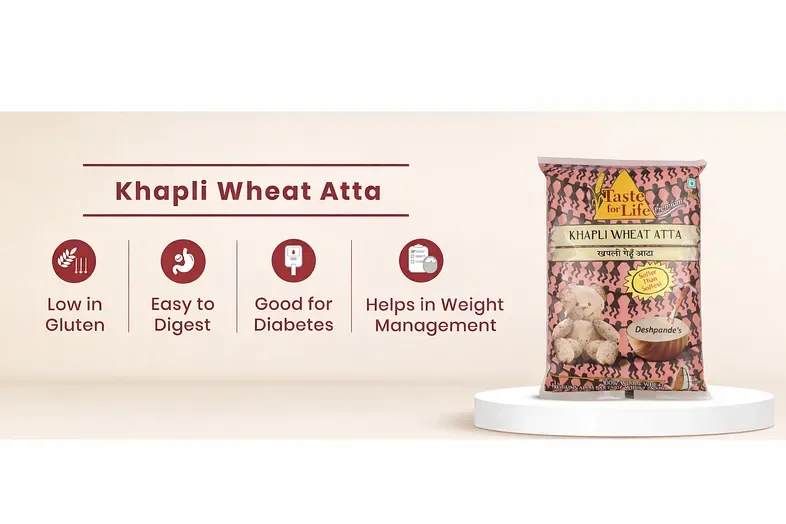
If you’re planning to switch to Khapli wheat or emmer wheat flour, give yourself a pat on the back, because honestly, in a world where there are plenty of tempting food options available to satisfy cravings rather than nourish the body, making a health-conscious choice is no walk in the park.
But before you stock your kitchen shelves with Khapli wheat flour, here are 10 things you should know about Khapli wheat that no one tells you.
1. Khapli Atta Isn’t a New Superfood
Khapli atta may be trending now, but not something new for Indian cuisine. This ancient wheat variety has been grown in parts of Maharashtra and Karnataka for centuries before being overshadowed by modern high-yield wheat varieties. Today, it’s slowly finding its way back onto our plates as more people rediscover the value of traditional grains.
2. Your Rotis May Look Different
Don’t be surprised if your rotis made from Khapli wheat flour look a little different from your regular rotis. Khapli wheat has a naturally reddish-brown colour, which gives rotis a distinct rustic look, but they are just as enjoyable as regular rotis.
3. You Don’t Need To Change The Way You Cook
If you’re worried that switching to Khapli atta means changing the way you’ve been cooking for years, then you can just relax, because you can make Khapli atta rotis the same way you make regular rotis, without any special techniques or extra cooking efforts.
4. Khapli Wheat Is Rich In Fibre
A review published in the Journal of Central European Agriculture found that Khapli wheat mainly contains insoluble fibre. This type of fibre helps add bulk to the diet and supports healthy digestion.
5. Khapli Wheat Has Weaker Gluten Content Than Modern Wheat Varieties
Like all other wheat varieties, gluten is also present in khapli wheat; however, a comparative study by Foods (2019) has highlighted that the gluten structure of khapli wheat is weaker than that of modern wheat varieties. Hence, some people might find it easier to digest khapli rotis. However, Khapli wheat is not gluten-free and is not suitable for people with celiac disease or wheat allergies.
6. Supports Healthy Weight Management
Khapli wheat is richer in dietary fiber than regular wheat; it may be helpful for those aiming to maintain a healthy weight. As reported by a study published in Nutrients in 2023, foods containing high dietary fibre result in enhanced feelings of satiety and help avoid unnecessary snacking and encourage mindful eating.
7. Khapli Wheat Helps Manage Blood Sugar Levels
Research published in the International Journal of Diabetes in Developing Countries (2001) noted that khapli wheat has a lower glycemic index than modern wheat varieties, which results in a lower insulin spike response post-meal. Hence, including khapli wheat may help support better post-meal blood sugar management when consumed as part of a balanced diet.
8. Results Won’t Show Up Overnight
Switching to Khapli atta, hoping for instant results? Well, you might need to set your thoughts for the real world. Healthy eating works best when followed consistently as a long-term habit. The advantages of Khapli atta, like most dietary shifts, tend to unfold gradually along with an overall balanced lifestyle.
9. Quality Of The Atta Matters
When buying the best Khapli atta, the quality of the flour matters just as much as the grain itself. Chakki-ground atta is often considered a better choice because it undergoes a gentler grinding process than industrial milling. This can help retain most of the grain’s natural goodness and flavour. Plus, contrary to popular belief, Khapli rotis don’t have to be hard or dry. A good-quality atta like Taste For Life Khapli Wheat Atta can help you make soft and delicious rotis every day.
10. You Don’t Need a Special Reason to Eat Khapli Atta
There’s a common belief that Khapli atta is only meant for people managing specific health conditions, like diabetes, or following particular diets. In reality, though, it’s a solid choice for almost anyone wanting to eat a little healthier. You don’t need a specific health reason to pick a grain that’s naturally packed with nutrition.
Conclusion
If you’ve been thinking about making the switch to Khapli atta, consider this as your sign to give it a try. It’s a simple change that won’t affect your daily routine, and the best part? Soft, flavourful rotis stay on the menu, even as you make a choice to eat healthier every day.
FAQs
Why Is Khapli Atta Better Than Regular Atta?
Khapli wheat is naturally rich in dietary fibre and has a lower glycemic index than regular wheat. It is considered diabetes-friendly. It also has a different gluten composition than many modern wheat varieties. Some people found it easier to digest, although individual experiences may vary.
How Can I Include Khapli Atta In My Daily Diet?
The easiest way is to use it as a replacement for your regular atta when making rotis, phulkas, and other everyday wheat-based dishes.
Can Diabetic Patients Have Rotis Made From Khapli Atta?
Studies say that the glycemic index of Khapli atta is lower than that of modern wheat varieties, which may result in a slower rise in blood sugar levels after meals. But it is always wise to consult your doctor before adding something new to your diet plan, especially if you are diabetic.
How Can I Make Soft Rotis With Khapli Atta?
To make soft Khapli wheat rotis, using a good-quality atta is important. A premium atta like Taste For Life Khapli Wheat Atta can help you make soft, delicious rotis every day.