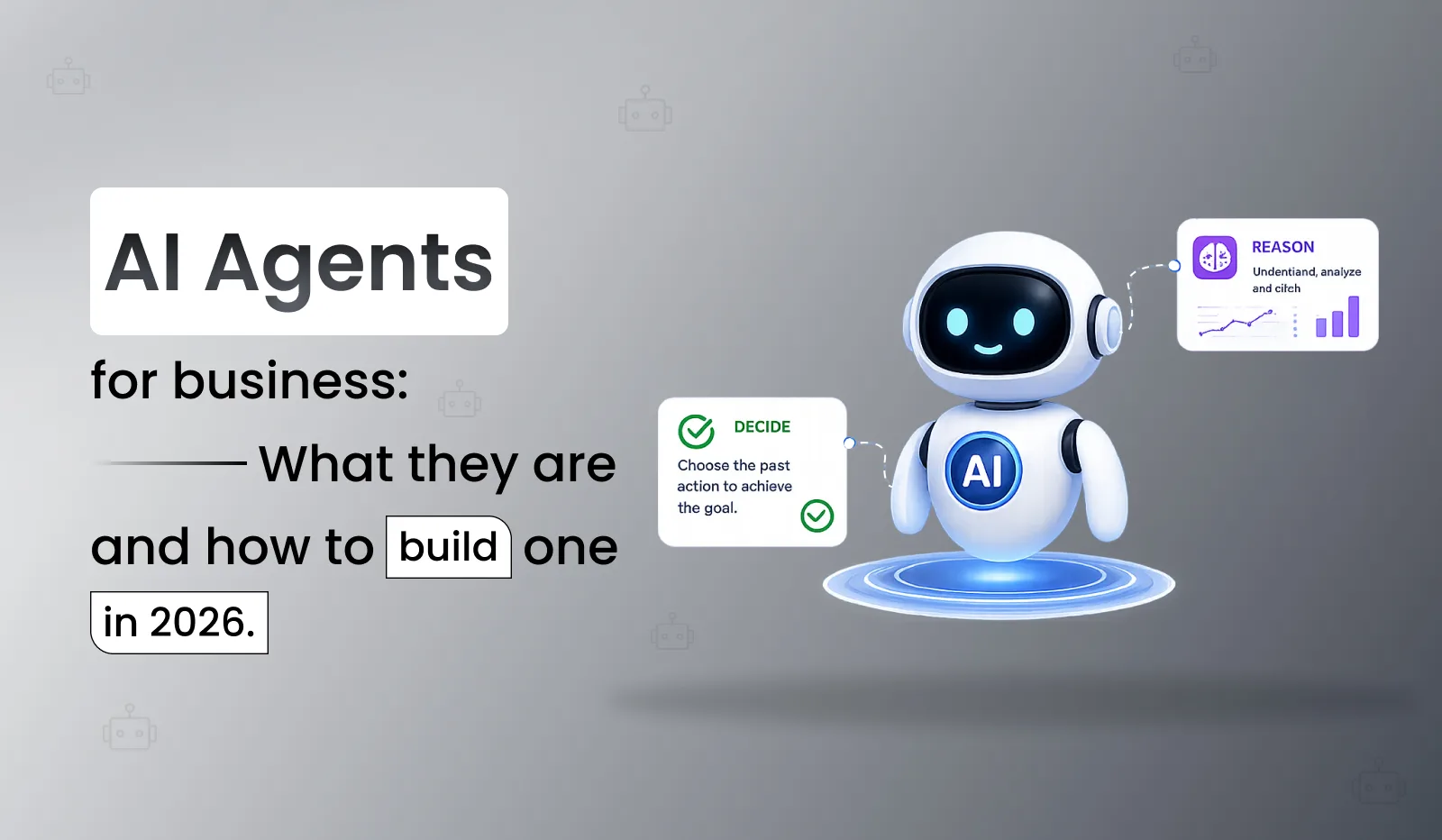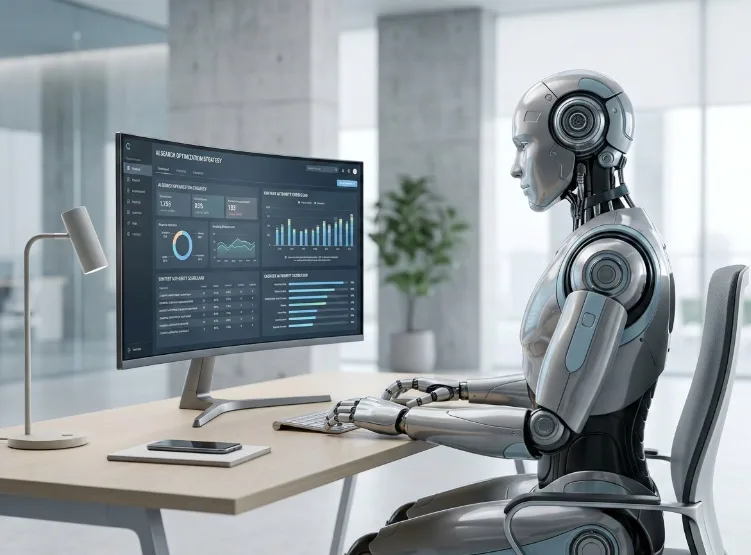
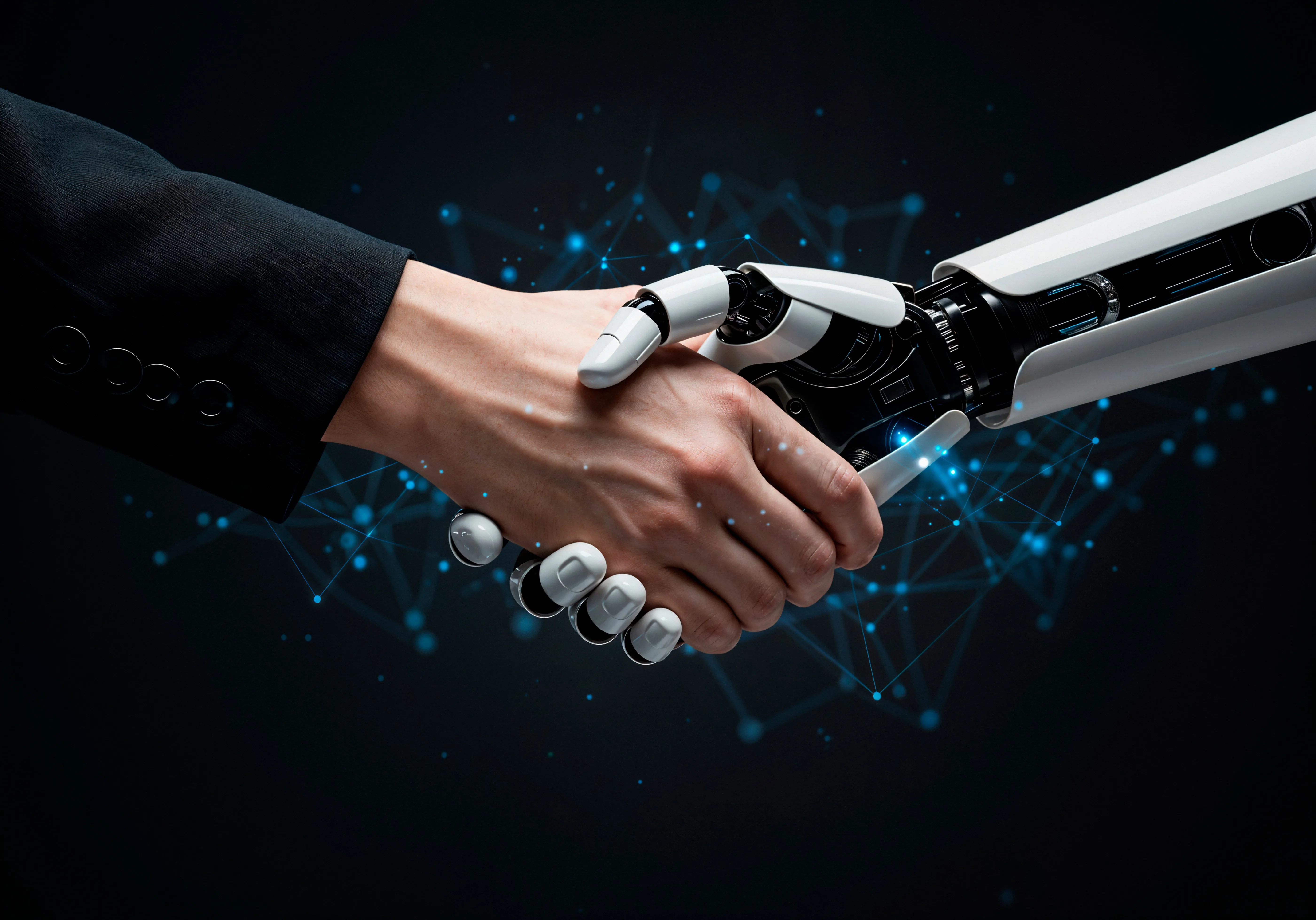
Artificial intelligence is no longer just a technology trend—it has become a strategic business capability. Across industries, organizations are embedding AI into customer service, software development, supply chain management, healthcare, finance, and manufacturing to improve efficiency and accelerate innovation. However, the enterprises achieving the greatest success are not those replacing people with AI; they are those enabling human + AI collaboration.
The future belongs to AI-first enterprises—organizations that integrate artificial intelligence into their core operations while empowering employees to make smarter, faster, and more informed decisions. Rather than viewing AI as a replacement for human expertise, forward-thinking businesses recognize it as a powerful collaborator that enhances creativity, productivity, and strategic thinking.
What Is an AI-First Enterprise?
An AI-first enterprise is a business that embeds artificial intelligence into its processes, products, and decision-making from the ground up. AI is not treated as a standalone tool but as an integral part of the organization's digital ecosystem.
These enterprises leverage AI to:
- Automate repetitive tasks
- Analyze large datasets in real time
- Improve customer experiences
- Optimize business operations
- Support strategic decision-making
However, the defining characteristic of an AI-first organization is that people remain at the center of decision-making. AI provides insights and recommendations, while employees apply domain expertise, ethical judgment, and business context to achieve the best outcomes.
Why Human + AI Collaboration Delivers Better Results
One of the biggest misconceptions about AI is that it will eventually replace human workers. In reality, the greatest business value comes from combining the strengths of both.
AI excels at processing massive amounts of data, identifying patterns, and performing repetitive tasks with speed and consistency. Humans bring creativity, critical thinking, emotional intelligence, and contextual understanding—qualities that AI cannot fully replicate.
When these capabilities work together, organizations gain significant advantages, including:
- Faster and more accurate decision-making
- Increased workforce productivity
- Better customer experiences
- Improved innovation cycles
- Higher operational efficiency
Businesses that invest in collaboration rather than replacement create more resilient, agile, and future-ready organizations.
AI Is Transforming Every Business Function
The adoption of enterprise AI is expanding across virtually every department.
Customer Experience
AI-powered assistants help resolve customer inquiries, personalize recommendations, and provide 24/7 support. Human teams focus on complex interactions, relationship building, and high-value customer engagement.
Software Development
AI-assisted coding tools accelerate development by generating code suggestions, identifying bugs, and improving testing efficiency. Developers remain responsible for architecture, quality assurance, and strategic technical decisions.
Healthcare
Healthcare organizations use AI to analyze medical images, predict patient risks, and support clinical decisions. Physicians interpret AI-generated insights alongside their medical expertise to deliver more accurate diagnoses and personalized care.
Manufacturing
Manufacturers increasingly rely on AI for predictive maintenance, quality inspection, and production optimization. Human engineers oversee operations, investigate anomalies, and implement continuous improvements.
Real-world applications demonstrate how AI can improve precision without eliminating human expertise. For example, Technostacks developed the Top Diamond Screener App, which combines AI and computer vision to assist with accurate diamond quality analysis. Rather than replacing specialists, the solution enhances inspection speed, consistency, and decision-making by supporting experts with intelligent visual analysis.
Building an Effective Human-AI Collaboration Strategy
Successfully adopting AI requires more than implementing new technology. Organizations must create an environment where AI complements human capabilities.
Key elements include:
Invest in AI Literacy
Employees should understand how AI works, where it creates value, and how to use AI-powered tools responsibly. Upskilling programs help teams build confidence and encourage adoption.
Define Clear Governance
Businesses need transparent policies covering AI ethics, data privacy, security, and accountability. Governance frameworks ensure AI systems remain aligned with organizational goals and regulatory requirements.
Start with High-Impact Use Cases
Rather than automating everything, organizations should focus on areas where AI delivers measurable business value, such as customer service automation, predictive analytics, workflow optimization, or intelligent quality inspection.
Encourage Cross-Functional Collaboration
AI initiatives succeed when business leaders, engineers, data scientists, and operational teams work together to solve real business challenges.
Human + AI Collaboration Is the Next Competitive Advantage
As AI adoption accelerates globally, competitive advantage will no longer come from simply implementing AI. Instead, it will come from how effectively organizations combine AI with human expertise.
Businesses that foster collaboration can respond more quickly to market changes, improve operational efficiency, and deliver better customer experiences. They also create workplaces where employees spend less time on repetitive tasks and more time solving meaningful business problems.
Organizations embracing this collaborative approach consistently outperform those relying solely on automation.
For enterprises planning long-term AI adoption, understanding the principles behind human and AI collaboration can help build a scalable strategy that balances intelligent automation with human expertise. These approaches provide a foundation for implementing AI responsibly while maximizing business value.
The Road Ahead: From AI Tools to Intelligent Enterprises
Enterprise AI is rapidly evolving beyond automation. Emerging technologies such as Agentic AI, intelligent workflow orchestration, generative AI, and autonomous business systems will increasingly support employees across departments.
The organizations that succeed will be those that build trusted partnerships between people and intelligent systems. AI will handle routine analysis, identify opportunities, and automate repetitive work, while humans continue to provide strategic thinking, innovation, leadership, and ethical oversight.
This shift marks the beginning of a new era where AI is not viewed as a replacement for talent but as a force multiplier that enables people to perform at their highest potential.
Conclusion
The future of enterprise innovation belongs to organizations that embrace human + AI collaboration. AI-first enterprises understand that technology alone does not drive transformation—people do.
By combining artificial intelligence with human creativity, judgment, and experience, businesses can improve productivity, accelerate innovation, and make smarter decisions at scale. As enterprise AI continues to mature, organizations that invest in collaborative AI strategies will be better positioned to adapt, compete, and lead in an increasingly digital economy.
Whether implementing AI for customer engagement, software development, manufacturing, or operational efficiency, the goal should always be the same: empower people with intelligent technology, not replace them.