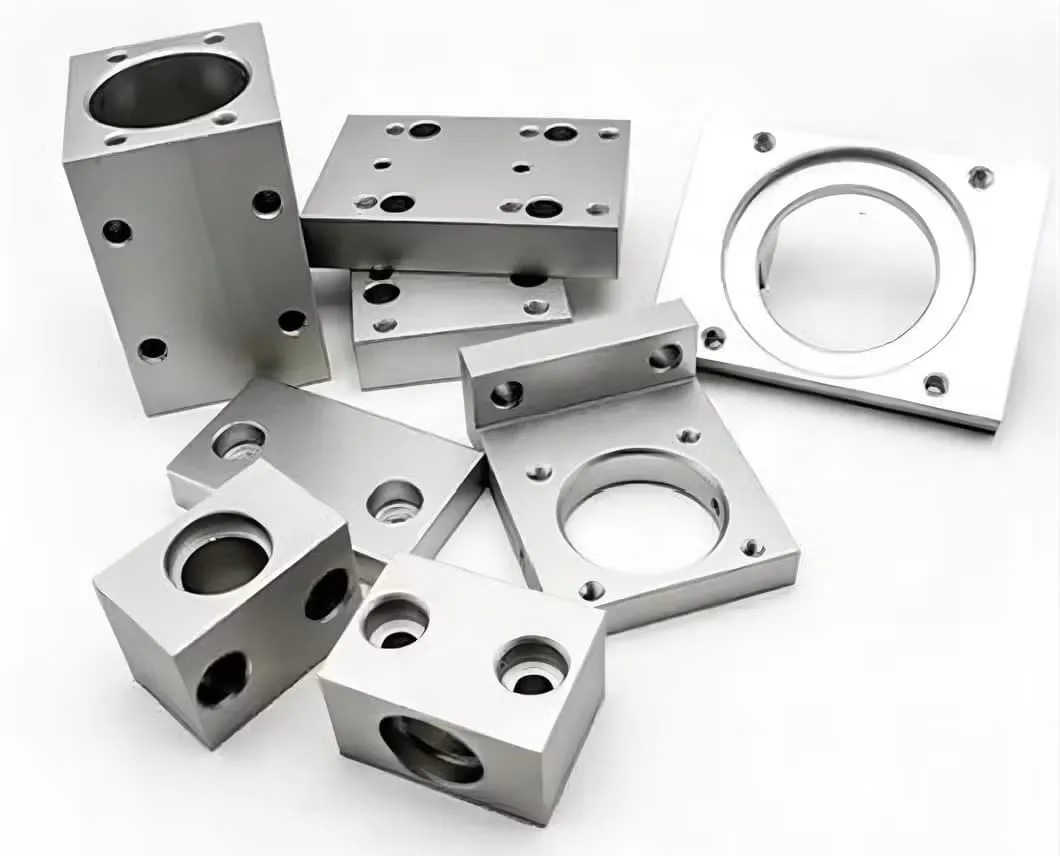
In the rapidly evolving landscape of global manufacturing, precision and speed are not just advantages; they are necessities. Industries ranging from aerospace to medical devices demand components that meet exacting specifications with zero room for error. At the heart of this industrial capability lies advanced computer numerical control (CNC) technology. For businesses seeking to bridge the gap between a digital design and a physical, high-performance product, leveraging a reliable China CNC milling service has become a strategic imperative. Similarly, when cylindrical components are required, a China CNC turning service offers unparalleled efficiency. Together, these processes form the foundation for producing high-quality CNC machined parts that power our modern world.
A premier example of such manufacturing excellence is JTR Machine, which provides comprehensive CNC milling and turning solutions. CNC milling is a subtractive manufacturing process where rotary cutting tools move along multiple axes to remove material from a solid block. JTR’s capabilities are particularly robust, featuring 3-axis, 4-axis, and 5-axis CNC milling centers. The distinction between axes is crucial for understanding complexity. Standard 3-axis machining works along the X, Y, and Z planes, ideal for parts that are primarily flat or require simple geometries. However, a 4-axis machine adds a rotational axis, allowing for more intricate features like helical curves or gears without manual repositioning. The pinnacle of accessible technology is the 5-axis milling machine, which adds two additional rotational movements. This capability allows JTR to machine extremely complex parts with undercuts and contoured surfaces in a single setup, drastically reducing lead times and improving accuracy. For instance, while a 3-axis machine can handle a maximum part dimension of 1500mm, a 5-axis machine can manipulate parts up to 500mm with high precision, achieving tight tolerances of ±0.005mm for metal components.
While milling excels at creating complex geometric shapes, turning is the go-to process for symmetrical, cylindrical parts. A China CNC turning service like that offered by JTR involves rotating the workpiece at high speeds while a stationary cutting tool moves along the surface, carving out diameters, shoulders, and threads. This is the ideal process for creating shafts, bushings, pulleys, and custom fittings. The synergy between milling and turning is where true manufacturing power is unlocked. Many modern CNC machined parts require both processes; for example, a hydraulic manifold may have a cylindrical body (turned) with flat mounting surfaces and fluid ports (milled). By offering both services under one roof, JTR eliminates the logistical nightmare and tolerance stacking that occurs when sending parts to multiple suppliers. Furthermore, their economic model is built on efficiency. With over 70 latest CNC machining centres and a professional team with a decade of experience, they achieve a high numerical control rate (estimated at 60%), which optimizes labor costs and machining time. This allows them to offer rapid turnarounds—sometimes as fast as 24 hours—without compromising on quality, as evidenced by their ISO9001:2008 and TS16949 certifications. For any engineer or procurement specialist looking to optimize their supply chain, integrating these core CNC services is the first step toward reliable, scalable production.