If you've ever had a power cord slip out of an outlet at the worst possible moment mid-task, mid-shift, or worse, mid-surgery in a hospital setting you already understand why locking power connections exist. Among the many plug and receptacle standards used across North America, the NEMA L6-20 series stands out as one of the most trusted solutions for high-demand electrical connections that simply cannot afford to disconnect on their own.
This guide breaks down what the L6-20 system is, how it works, where it's used, and how to choose the right one for your equipment.
What Is NEMA L6-20?
NEMA stands for the National Electrical Manufacturers Association, the organization responsible for standardizing plug and receptacle designs used throughout the United States and Canada. Each NEMA configuration is assigned a code that tells you its voltage, amperage, and physical design. The "L" in L6-20 indicates that it's a locking connector, "6" refers to the specific pin and voltage configuration, and "20" tells you it's rated for 20 amps.
A NEMA L6-20P refers specifically to the plug (the "P" stands for plug), while the corresponding receptacle is labeled L6-20R. Together, they form a connection system rated for 250 volts and 20 amps, making it suitable for equipment that draws more power than a standard household outlet can safely handle.
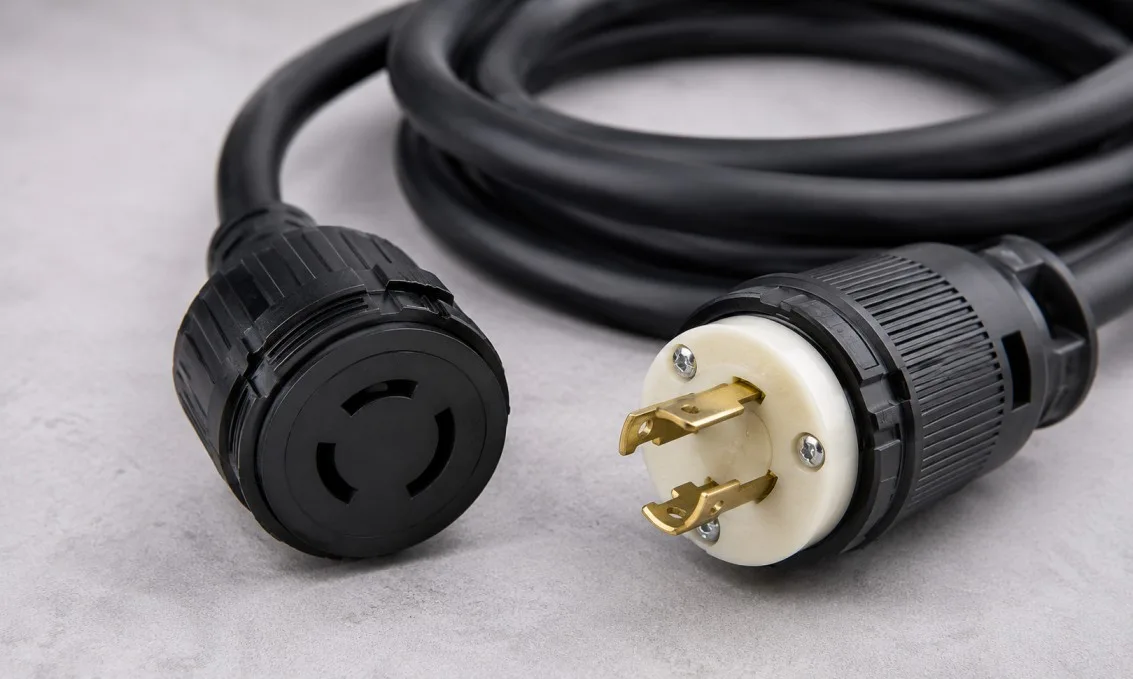
Unlike a standard household plug that simply pushes into a wall socket, an L6-20 power cord is designed with a twist-lock mechanism. After inserting the plug, you give it a quarter turn, and the pins engage with a curved slot inside the receptacle. This locks the connection in place, preventing accidental disconnection from cord tension, vibration, or someone bumping into the cable.
Why Twist-Lock Design Matters
Standard straight-blade plugs work fine for lamps, phone chargers, and other low-stakes devices. But in commercial, industrial, and data center environments, an accidental unplug can mean lost data, halted production, or safety hazards. This is where the locking design of an L620P connector becomes valuable.
The twist-lock mechanism offers several practical advantages:
- Vibration resistance: Equipment with motors, compressors, or moving parts can shake connections loose over time. A locking plug stays seated even under constant vibration.
- Accidental disconnect prevention: In busy environments like server rooms or workshops, cords get bumped, stepped on, or pulled. A locked connection resists this kind of accidental separation.
- Secure high-current delivery: Because L6-20 connections carry more current than standard outlets, a loose or partially seated connection can cause overheating or arcing. The locking design ensures full contact between pins and receptacle.
Electrical Specifications of the L6-20 Configuration
Understanding the specs behind an L6-20 cord helps you determine whether it's the right choice for your equipment.
- Voltage: 250 volts
- Amperage: 20 amps
- Configuration: Two-pole, three-wire, grounding
- Typical wattage capacity: Up to 5,000 watts (250V x 20A), though real-world usage should always follow the equipment manufacturer's rated draw
Because this configuration delivers 250 volts rather than the standard 120 volts found in most U.S. wall outlets, L6-20 connections are typically used with single-phase 240V circuits, which are common in commercial and industrial electrical panels rather than typical residential wiring.
Common Uses for L6-20 Power Cords
Given its combination of higher voltage, higher amperage, and secure locking connection, the L6-20 configuration shows up in a range of demanding applications:
Server rooms and data centers: Rack-mounted servers, network switches, and other IT infrastructure often require a stable 240V power source. Facility managers frequently use L6-20 cords to connect equipment to power distribution units (PDUs), especially where downtime from an accidental disconnect is not an option.
Industrial and manufacturing equipment: Machinery such as air compressors, welding equipment, and certain CNC tools often require 240V circuits with more current capacity than a standard outlet provides. The locking mechanism helps these cords stay connected despite constant equipment vibration.
Commercial kitchens: Some heavy-duty kitchen appliances, such as certain ovens, warmers, and specialty cooking equipment, are wired for 240V and benefit from a connection that won't shake loose during a busy service.
Live events and stage production: Temporary power setups at concerts, trade shows, and outdoor events often rely on locking connectors to keep power flowing reliably across cords that get moved, coiled, and re-routed throughout setup and teardown.
HVAC and refrigeration units: Many commercial refrigeration compressors and rooftop HVAC units operate on 240V circuits and use locking connections to maintain consistent power delivery.
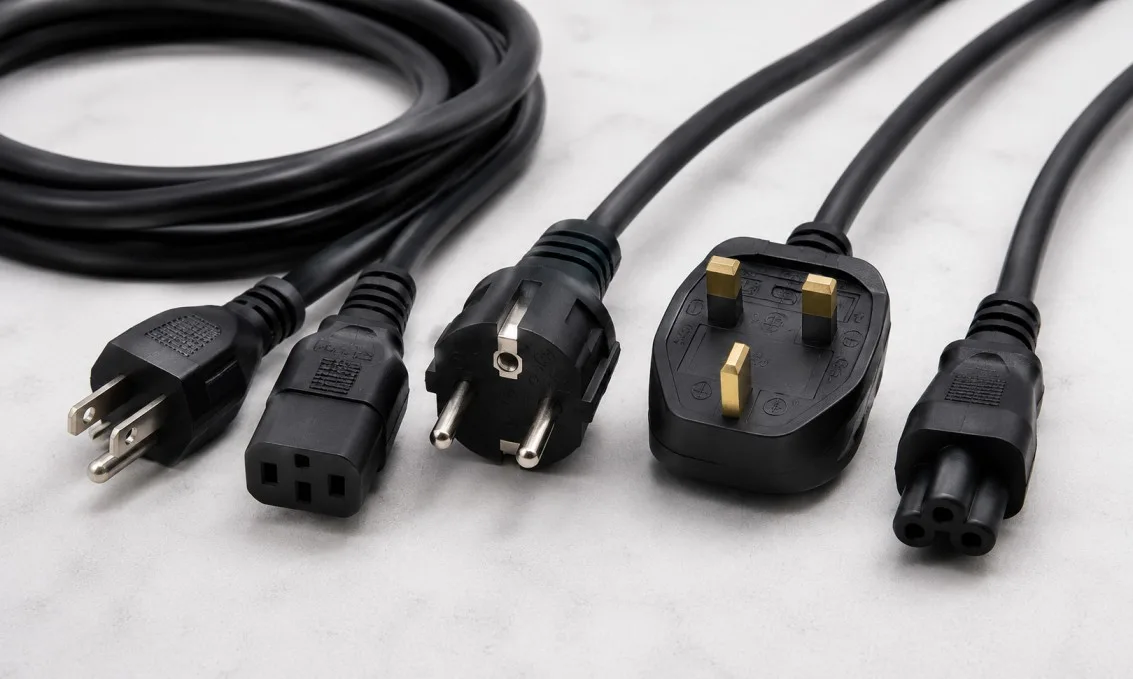
Not every piece of equipment requires a locking NEMA connection, so it's important to choose a cord based on the device's power inlet and electrical requirements. For IT equipment, monitors, servers, and other electronics, options such as C14 to C13 power cords are commonly used to connect compatible IEC equipment, while C14 to NEMA 5-15 power cords can connect equipment with a C14 inlet to a standard North American 120V outlet. Similarly, a NEMA 5-15P power cord is suitable for many standard 120V applications, while a NEMA L5-15P provides a locking connection when additional security against accidental disconnection is needed.
Choosing the Right Cord Length and Gauge
Once you've confirmed that L6-20 is the correct configuration, a few additional factors affect performance and safety:
- Length: Longer cords introduce more resistance, which can cause voltage drop under heavy loads. For runs longer than 25 feet, consider a 12 AWG cord even if your equipment's draw would technically allow 14 AWG.
- Gauge: As a general rule, 12 AWG wire is the safer choice for consistently drawing close to the full 20-amp rating, while 14 AWG may be sufficient for lighter, intermittent loads.
- Jacket material: SJT-rated cords are common for indoor commercial use, while outdoor or rugged applications may call for more abrasion- and weather-resistant jacketing.
Final Thoughts
The NEMA L6-20 system exists to solve a specific problem: delivering higher voltage, higher current power in environments where a loose connection isn't an acceptable risk. Whether you're powering server racks, industrial equipment, or temporary event setups, understanding the electrical specifications and locking mechanism behind an L6-20 power cord helps you make an informed, safe choice for your equipment.
As with any electrical decision involving voltage above standard household levels, when in doubt about compatibility or wiring, it's always worth consulting a licensed electrician before making a purchase or installation decision.
Original Article :- https://pdplex.blog/the-complete-guide-to-nema-l6-20-locking-power-cords/