
In over 30 years of working on factory floors, one lesson has repeated itself across industries, countries, and technologies: temperature is never “just a number.” It is a controlling variable that decides product quality, equipment life, safety, and profitability.
I’ve seen entire production batches scrapped because a sensor drifted by just 1°C. I’ve watched molds crack due to unnoticed thermal lag, and chemical reactions go unstable because the temperature reading was accurate in theory—but wrong in practice.
This is why selecting the right temperature sensors manufacturer is one of the most critical decisions an industrial operation can make. In this guest article, I’ll explain why high-precision temperature sensors are the foundation of modern thermal management and how experienced manufacturers like Nexthermal are reshaping industrial temperature control in India.
Why 1°C of Error Can Cost Lakhs in Industrial Production
On paper, a one-degree deviation feels insignificant. On a production line, it’s often catastrophic.
In plastic injection molding, a 1–2°C error can:
- Change material viscosity
- Increase internal stress
- Cause warpage or surface defects
In chemical and pharmaceutical processing:
- Reaction rates shift
- Product consistency drops
- Compliance risks increase
These failures rarely announce themselves loudly. Instead, they slowly erode yield, increase energy consumption, and reduce tool life. In nearly every case I’ve handled, the root cause traced back to poor temperature sensing, not poor heating.
That’s why forward-thinking manufacturers now treat sensors as control assets, not accessories.
Understanding Industrial Temperature Sensors Beyond the Datasheet
Many buyers compare sensors using catalog specs alone. Engineers know better.
A true industrial temperature sensors solution must account for:
- Response time
- Installation geometry
- Electrical noise
- Ambient conditions
- Long-term drift
This is where experienced temperature sensor manufacturers in India differentiate themselves from low-cost assemblers.
Real-World Challenges I’ve Seen Firsthand
- Thermal lag in deep-cavity molds, where sensor placement caused delayed feedback
- Sensor drift in corrosive chemical environments, especially with poor sheath selection
- Moisture ingress during monsoon seasons affecting insulation resistance
- Voltage and grounding inconsistencies interfering with low-signal thermocouples
Solving these problems requires experience—not just instrumentation theory.
Thermocouples vs RTDs: Choosing the Right Tool for Indian Industry
Thermocouples: Rugged, Fast, and Versatile
Thermocouples work on the Seebeck effect, generating a voltage when two dissimilar metals experience a temperature difference. They are mechanically robust and ideal for harsh environments.
Commonly used types include:
- J-Type: Popular in plastics and packaging
- K-Type: Widely used in furnaces, kilns, and extrusion
- T-Type: Preferred for low-temperature and food applications
A reliable Thermocouple Sensor manufacturer understands alloy behavior, oxidation limits, and sheath compatibility—not just temperature range.
RTDs (Pt100 / Pt1000): When Accuracy Is Non-Negotiable
RTDs use the predictable resistance change of platinum with temperature. They offer:
- Higher accuracy
- Better repeatability
- Lower long-term drift
In pharmaceutical plants and chemical reactors, RTDs often outperform thermocouples—especially where ±0.1°C matters.
In large Indian plants with long cable runs, Pt1000 RTDs offer better noise immunity, a practical advantage many overlook.
Sensors Alone Don’t Control Heat—Systems Do
After decades in thermal engineering, I can confidently say this:
A temperature sensor without integration is just a thermometer.
Modern thermal management demands system-level design, where sensors, heaters, and controllers work as a single ecosystem.
Leading manufacturers like Nexthermal design sensors to integrate seamlessly with:
- Custom Heating Elements
- Advanced PID controllers
- Application-specific thermal profiles
For example:
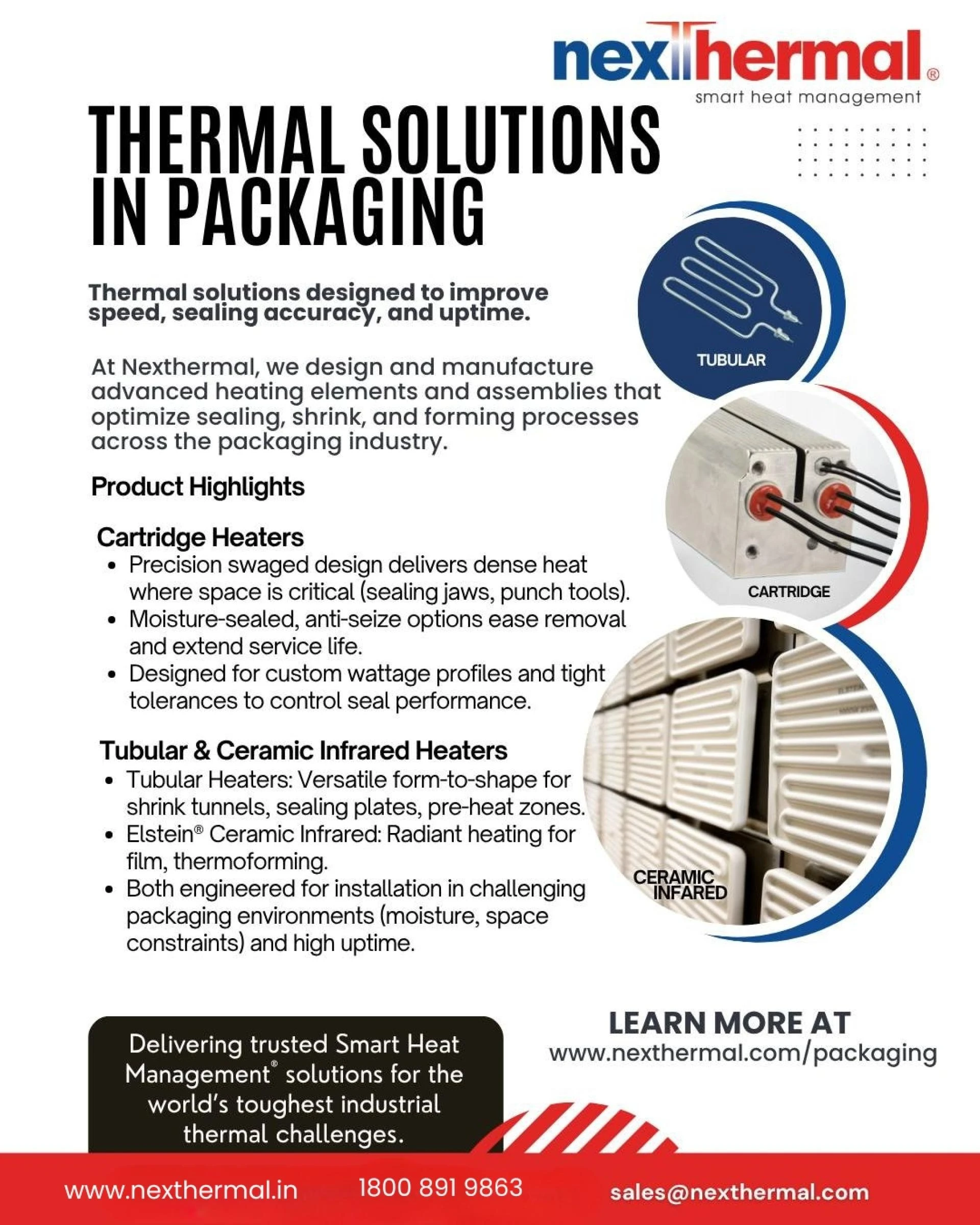
- Injection molding applications pair sensors with cartridge heating elements to eliminate hot and cold spots.
- Packaging and sealing systems use fast-response sensors with coil heaters for uniform heat distribution.
- Continuous process heating relies on sensor-driven Electric Heating Elements for energy efficiency.
- Precise control loops are completed using controllers from leading controller manufacturers.
This “Smart Heat Management” philosophy is what separates stable processes from constantly adjusted ones.
Why Bangalore Matters in Industrial Sensor Manufacturing
Bangalore is no longer just an IT hub—it’s one of India’s most important industrial manufacturing ecosystems.
Industries here demand:
- High precision
- Rapid customization
- Reliable logistics
- Technical support without long delays
Being engineered and manufactured locally allows Nexthermal to:
- Customize probe lengths and sheath materials
- Match Indian voltage and grounding realities
- Respond faster to OEM and plant requirements
- Maintain consistent quality control
As a temperature sensor manufacturer and a 100% subsidiary of Nexthermal USA, the company combines global engineering discipline with Indian manufacturing practicality.
Calibration, Drift, and Long-Term Trust
Every temperature sensor drifts over time. The difference lies in how predictably it does so—and how easily it can be recalibrated.
ISO-aligned calibration ensures:
- Measurement traceability
- Process consistency
- Reduced quality risks
- Predictable maintenance schedules
Many factories suffer losses not because sensors fail—but because no one verifies them. Nexthermal emphasizes calibration discipline, backed by expert technical support through 1800 891 9863.
That level of post-sale engagement is what builds long-term trust.
Contact use from the Factory Floor
After 30 years in thermal engineering, one principle stands firm:
You can’t control what you don’t measure accurately.
Choosing the right temperature sensors manufacturer is not about cost—it’s about control, consistency, and confidence. With deep industrial experience, global standards, and strong Indian manufacturing roots, Nexthermal continues to support industries that demand precision, reliability, and long-term performance.
If your process depends on temperature—and most do—make sure your measurements are engineered by people who’ve stood where you stand.
Learn more or connect with experts:
Call: 1800 891 9863
Book a Consultation: https://www.nexthermal.in/contact/
Learn More About Us: https://www.nexthermal.in/about-us/
Visit Product Page: https://www.nexthermal.in/temperature-sensors/
Connect With Us
More Products:
Electric Heating Elements manufacturer | cartridge heating element | coil heaters manufacturer | temperature sensors manufacturer | tubular heaters manufacturer | temperature controller manufacturers | Engineering services provider in india | Ceramic Infrared Heater manufacturer |Temperature Control Panel manufacturer | Heating Coil Element manufacturer | Tubular Heater manufacturer | Temperature Sensors manufacturer | Temperature Controller manufacturer