The Future of Body-in-White Manufacturing: How Automation, Robotics and Precision Engineering Are Transforming Automotive Production
A modern vehicle is the result of thousands of carefully coordinated manufacturing operations. Before a car receives its engine, interior, paint or electronic systems, its basic structure must be built with exceptional accuracy. This important stage is known as Body-in-White (BIW) manufacturing.
As automotive manufacturers respond to changing vehicle designs, lightweight materials and growing production demands, BIW manufacturing is becoming more advanced. Robotics, automated welding, intelligent production systems and precision engineering are helping manufacturers improve structural quality while making production processes more flexible and efficient.
Understanding these developments provides valuable insight into how the next generation of vehicles will be manufactured.
What Is Body-in-White Manufacturing?
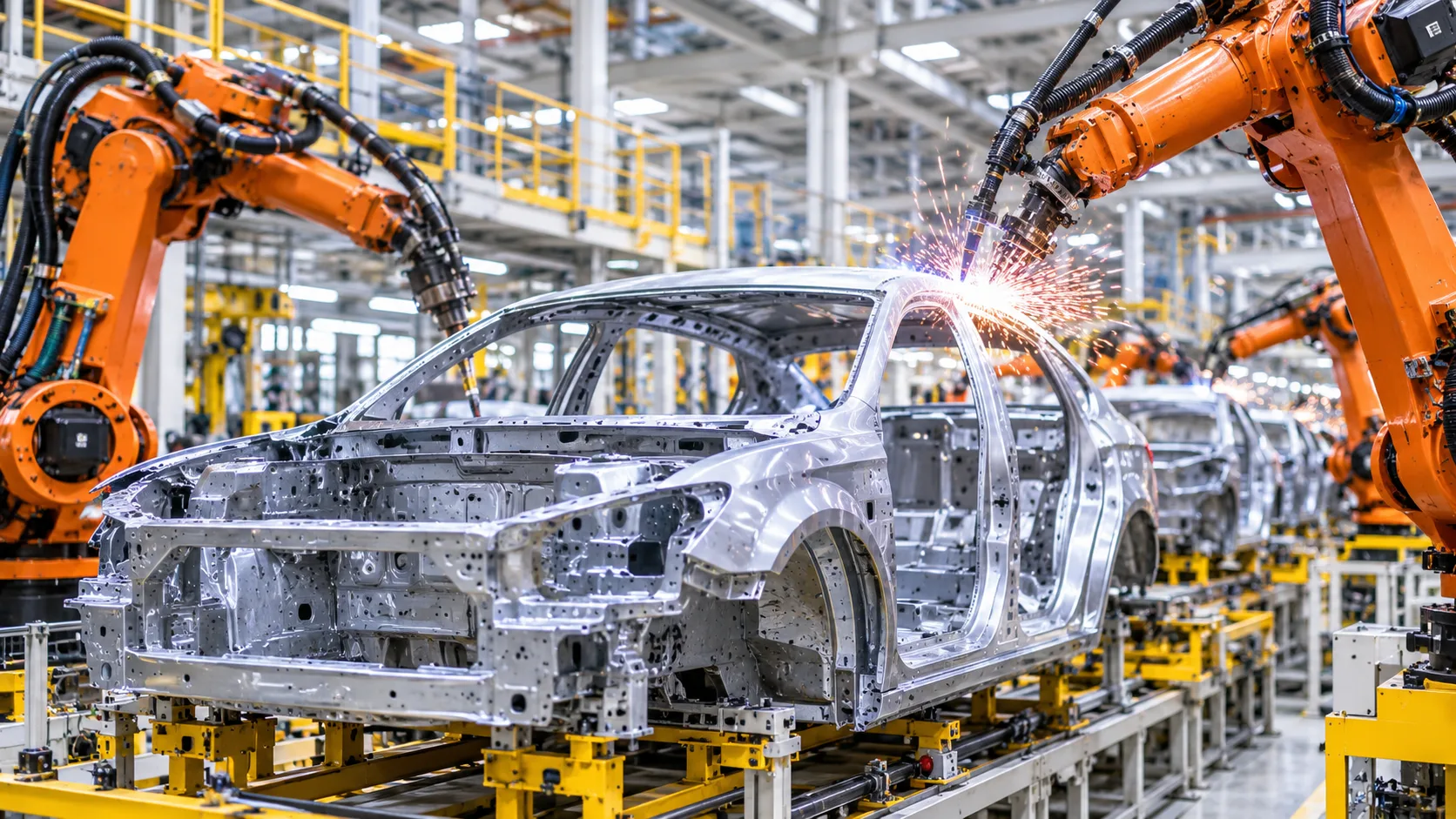
Body-in-White refers to the stage of automotive production in which the main body structure of a vehicle is assembled before painting and final component installation.
It involves joining several metal components, including floor panels, side panels, roof sections, pillars, doors and structural reinforcements. These components are carefully positioned and joined to create the vehicle's main framework.
The accuracy of this stage is extremely important. Even small variations in component positioning can affect vehicle dimensions, assembly quality and the fit of exterior panels.
Manufacturers therefore depend on advanced engineering, reliable joining technologies and precise production equipment to maintain consistent results.
1. Robotics Is Transforming Automotive Body Assembly
Robotics has become an important part of modern BIW production. Robotic systems can perform repetitive manufacturing operations with consistent positioning and controlled movements.
In automotive body shops, industrial robots are commonly used for:
- Resistance spot welding of body components.
- Material handling and component positioning.
- Automated joining operations.
- Repetitive assembly tasks.
- Supporting consistent production cycles.
One of the major advantages of robotic automation is repeatability. When properly programmed and maintained, robotic systems can perform the same operation across multiple production cycles with consistent parameters.
This helps manufacturers reduce process variation and improve manufacturing efficiency.
2. Precision Welding Creates Stronger Vehicle Structures
Welding plays a central role in joining the individual components of a vehicle body. The quality of these joints influences structural integrity, dimensional accuracy and overall manufacturing performance.
Automotive manufacturers use different welding technologies depending on component materials, joint requirements and production design.
Resistance spot welding is widely used in body assembly, while other joining technologies may be selected for specific applications.
Modern automated welding systems help control important process parameters, including positioning, pressure and welding conditions. Integrating these operations into automated production lines can improve consistency and support reliable manufacturing quality.
3. Flexible Manufacturing Supports Changing Vehicle Designs
The automotive industry is continuously introducing new vehicle platforms, body styles and structural designs.
Manufacturing systems must therefore adapt to changing production requirements without requiring a complete redesign of the factory every time a new model is introduced.
Flexible BIW production lines can support this requirement through:
- Reconfigurable production equipment.
- Flexible robotic workstations.
- Modular manufacturing systems.
- Adaptable tooling and fixtures.
- Automated material handling.
These technologies help manufacturers respond to different production volumes and vehicle configurations.
Flexibility is particularly important for manufacturers producing multiple vehicle models within the same manufacturing facility.
4. Lightweight Materials Are Changing BIW Engineering
Vehicle manufacturers are increasingly exploring lightweight materials to support improved vehicle efficiency and performance.
High-strength steel, aluminum and mixed-material structures are influencing how automotive body components are designed and assembled.
However, working with different materials introduces manufacturing challenges. Each material may require specific joining methods, tooling arrangements and process controls.
For example, joining aluminum and steel components requires careful consideration of material compatibility and joint design.
Manufacturing equipment must be designed around these requirements to maintain structural quality while supporting efficient production.
5. Smart Manufacturing Is Improving Production Quality
The integration of digital technologies is creating new opportunities for automotive manufacturing.
Smart manufacturing combines automation, production data, monitoring systems and connected equipment to improve visibility across factory operations.
In BIW production, these technologies can help manufacturers:
- Monitor production equipment performance.
- Identify process variations.
- Track manufacturing operations.
- Improve maintenance planning.
- Support quality inspections.
- Reduce avoidable production interruptions.
When production information is collected and analyzed effectively, manufacturers can identify potential problems earlier and make better operational decisions.
This approach also supports continuous improvement by helping engineering teams understand how individual processes influence overall production performance.
6. Why Integrated Manufacturing Solutions Matter
A successful BIW production line requires more than individual machines or robotic systems. It depends on how different manufacturing technologies work together.
Engineering, tooling, fixtures, robotics, welding equipment, material handling and quality inspection must be coordinated throughout the production process.
An integrated manufacturing approach helps ensure that each operation supports the next stage of assembly.
This is where experienced automotive manufacturing engineering partners play an important role. Companies such as HIROTEC contribute to the automotive manufacturing industry through engineering and production solutions, including Body-in-White manufacturing technologies.
By combining manufacturing expertise with advanced equipment and automation, the industry can continue developing production systems that address changing vehicle requirements.
Explore HIROTEC's Body-in-White manufacturing solutions to learn more about its approach to automotive body production.
7. The Future of BIW Manufacturing
The future of Body-in-White manufacturing will be shaped by several connected developments.
Artificial intelligence and advanced data analysis may support better production monitoring and process optimization. More flexible robotic systems can help manufacturers respond to changing product designs. Advances in material engineering will also influence joining technologies and production equipment.
At the same time, manufacturers will continue looking for ways to improve resource utilization, reduce material waste and maintain consistent product quality.
The most successful production environments will likely be those that combine mechanical engineering, automation, digital technologies and skilled human expertise.
Conclusion
Body-in-White manufacturing is much more than assembling metal panels. It is a carefully engineered process that establishes the structural foundation of every vehicle.
Robotics, precision welding, flexible production systems, lightweight materials and smart manufacturing technologies are changing how automotive body structures are produced.
As vehicle designs continue to evolve, manufacturers will need production solutions that balance accuracy, flexibility, efficiency and quality.
The continued development of integrated automotive manufacturing technologies will play an important role in building the next generation of vehicles.