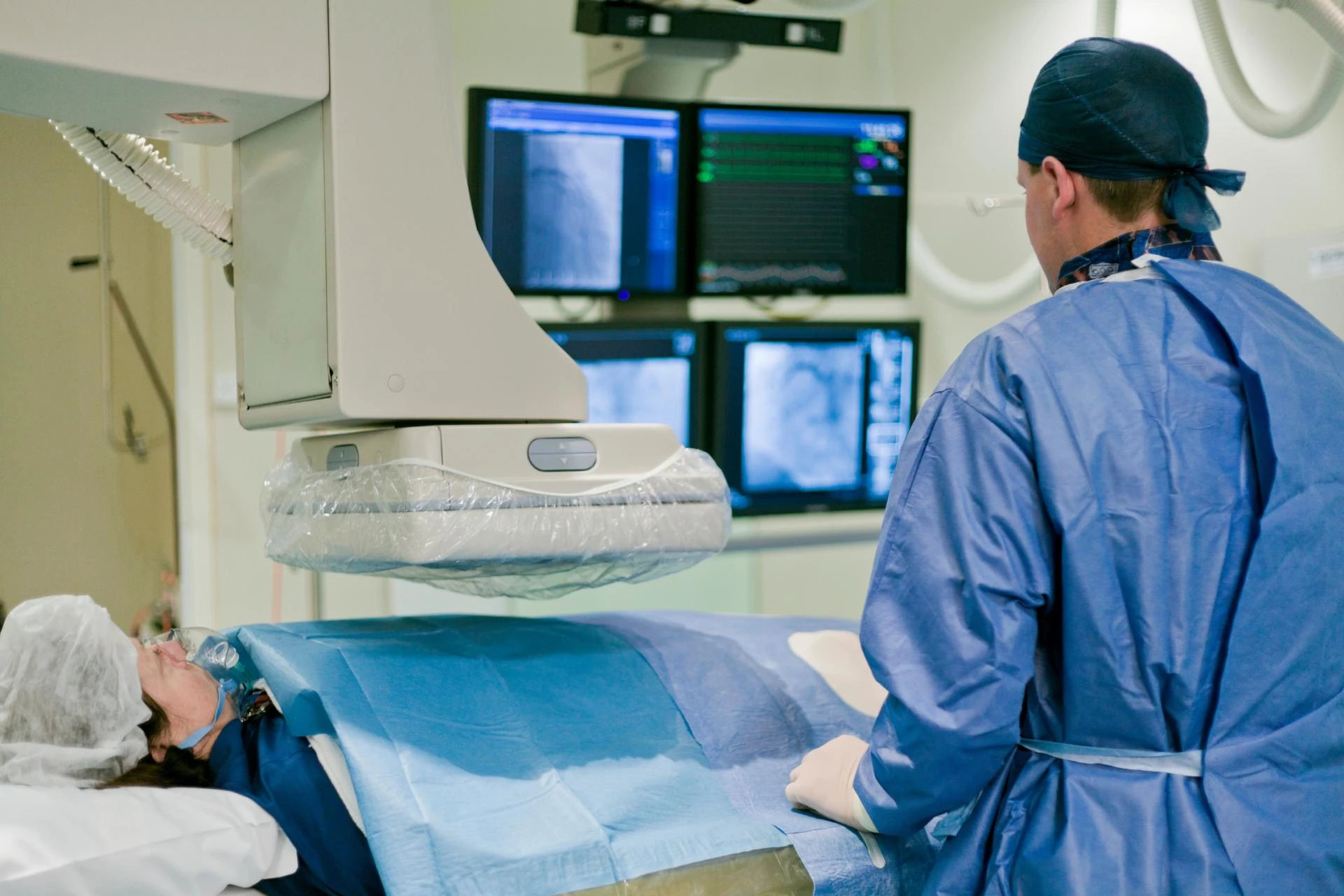
Dr. Alina Voss had seen many emergencies in her years at Mediversal, the state-of-the-art floating medical city orbiting Earth. But when an alert flashed on her wrist device about a cardiac emergency in Sector 12, she knew time was critical.
She activated the Mediversal’s AI-assisted teleport system, instantly appearing in the home of Daniel Carter, a 52-year-old astrophysicist who lay unconscious, his skin pale and lips blue. His biometric implants had detected the heart attack and sent an automatic distress call.
Alina tapped her holo-screen, summoning the Mediversal Auto Rescue Drone. Within seconds, a compact, hovering unit injected nanobots into Daniel’s bloodstream. These microscopic machines raced to his heart, dissolving the clot and reinforcing his arterial walls in real time. The AI monitored the process, ensuring precision.
As Daniel’s vitals stabilized, his eyes fluttered open. “What… happened?” he murmured.
“You had a heart attack,” Alina said, “but Mediversal had your back.”
Within an hour, Daniel was transported to the city’s floating cardiovascular wing for a full recovery. Thanks to Mediversal’s pioneering fusion of AI and nanotechnology, heart attacks were no longer the death sentence they once were.
Dr. Voss exhaled, already receiving another emergency alert. In Mediversal, the pulse of life never stopped.