The beverage industry is more competitive than ever, with consumers constantly on the lookout for healthier, tastier, and more innovative drink options. This is exactly why beverage research and development has become the backbone of every successful drink brand today. From functional waters to plant-based teas and energy drinks, every product on the shelf has gone through a rigorous cycle of testing, tasting, and refining before it ever reaches the consumer. In this blog, we will explore how beverage research and development works, why it matters, and how the right formulation partner can help brands turn an idea into a market-ready product.
What is Beverage Research and Development?
Beverage research and development, often shortened to R&D, refers to the scientific and creative process of designing new drinks or improving existing ones. It combines food science, sensory analysis, nutrition, and consumer insights to create beverages that are safe, stable, flavorful, and commercially viable. Companies investing in beverage research and development are essentially future-proofing their business, ensuring they can keep up with shifting consumer preferences such as low sugar, natural ingredients, and functional benefits like immunity support or better hydration.
Why Beverage Research and Development Matters for Brands
Launching a beverage without proper research is a recipe for failure. Beverage research and development helps brands avoid costly mistakes by testing formulations for taste, shelf life, packaging compatibility, and regulatory compliance before mass production begins. It also allows companies to differentiate themselves in a crowded market by identifying unique flavor combinations or functional ingredients that competitors haven't explored yet. Without a structured beverage research and development process, brands risk releasing products that fail to resonate with consumers or, worse, face safety and quality issues after launch.
The Beverage Recipe Development Process Explained
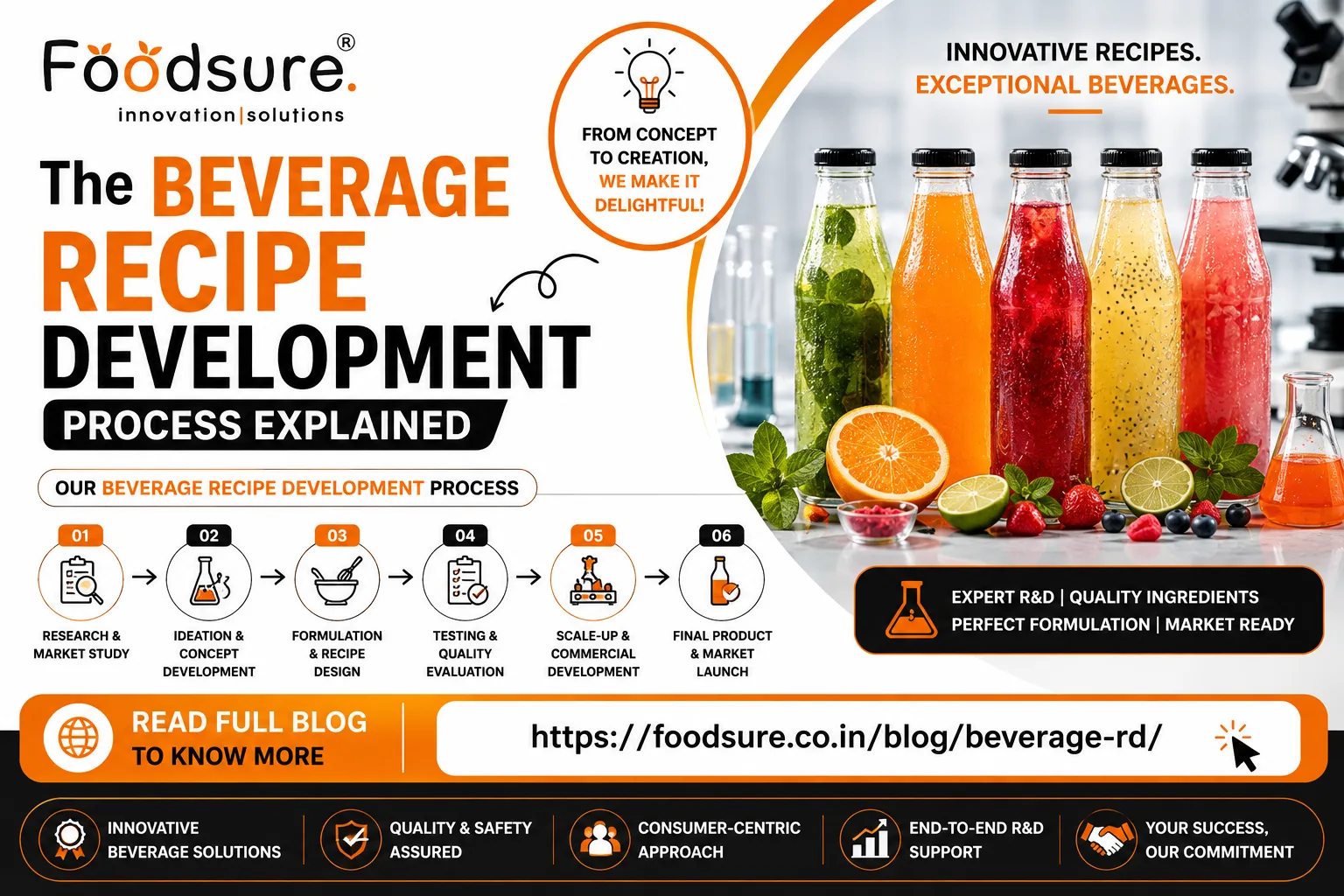
Every great drink starts with an idea, but turning that idea into a finished product requires a detailed beverage recipe development process. This typically includes concept ideation, ingredient sourcing, prototype creation, and multiple rounds of sensory testing. Food scientists work closely with flavor experts to balance taste, texture, aroma, and mouthfeel while ensuring the recipe remains stable across different batches and storage conditions. Beverage recipe development also considers cost-efficiency, so the final product is not only delicious but also commercially feasible to produce at scale.
Beverage Recipe Formulation: Key Elements to Consider
When it comes to beverage recipe formulation, several technical factors come into play beyond just flavor. pH balance, preservation methods, nutritional content, and ingredient interactions all need to be carefully calculated to ensure the final product is both safe and enjoyable. Formulators also need to factor in packaging type, since certain ingredients react differently depending on whether the beverage is bottled, canned, or packaged in cartons. A well-executed formulation strikes the right balance between taste, functionality, and shelf stability, which is why experienced teams are essential during this stage.
How a Beverage Formulation Company Develops Market-Ready Products
A specialized beverage formulation company develops products by combining lab-based science with real-world market insights. These companies typically have access to advanced testing equipment, regulatory expertise, and a network of ingredient suppliers that individual brands may not have on their own. They start by understanding the brand's vision and target audience, then move into prototyping, sensory panels, and small-batch trials before scaling up to full production. This structured approach significantly reduces the time and risk involved in bringing a new beverage from concept to store shelves, making beverage research and development far more efficient for emerging and established brands alike.
Trends Shaping Beverage Formulation Today
The demand for functional and clean-label beverages continues to grow, pushing beverage formulation teams to experiment with adaptogens, probiotics, botanical extracts, and reduced-sugar alternatives. Consumers are also more ingredient-conscious than ever, reading labels closely and favoring transparency over artificial additives. Sustainability is another major factor, with brands looking for eco-friendly packaging and ingredient sourcing that aligns with their environmental commitments. These evolving trends mean that beverage research and development is no longer a one-time process but an ongoing cycle of innovation and refinement to stay relevant with changing consumer expectations.
Choosing the Right Partner for Beverage Research and Development
Not all formulation partners offer the same level of expertise, so choosing the right team for beverage research and development can make or break a product launch. Brands should look for partners with proven experience across different beverage categories, strong regulatory knowledge, and the ability to scale formulations from small trials to full commercial production. A good partner will also offer flexibility, allowing brands to iterate quickly based on consumer feedback rather than locking them into rigid processes. Ultimately, the right collaboration ensures that the final product not only tastes great but also meets safety standards and business goals.
Conclusion
In today's fast-evolving drink industry, investing in strong beverage research and development is no longer optional; it's essential for staying competitive and meeting the ever-changing demands of consumers. From initial concept to final formulation, every step plays a crucial role in delivering a beverage that is safe, delicious, and market-ready. Brands that prioritize this process, whether in-house or through a trusted partner like Foodsure, position themselves for long-term success in an industry where innovation never stops.
FAQs
1. What does beverage research and development actually involve?
It involves ideation, ingredient testing, sensory evaluation, and regulatory checks to create a safe, tasty, and commercially viable drink from an initial concept.
2. How long does beverage recipe development usually take?
Timelines vary depending on complexity, but a typical project can take anywhere from a few weeks for simple reformulations to several months for entirely new products.
3. Why is beverage recipe formulation important for shelf life?
Proper formulation ensures ingredients remain stable and safe throughout the product's shelf life, preventing spoilage, separation, or flavor degradation over time.
4. Can small beverage brands benefit from working with an established beverage formulation company?
Yes, smaller brands often gain significant advantages by partnering with an experienced formulation company, since it reduces trial-and-error costs and speeds up time to market.
5. What is the difference between beverage formulation and beverage research and development?
Formulation focuses specifically on the recipe and ingredient composition, while research and development is the broader process that includes formulation, testing, market research, and product optimization.