
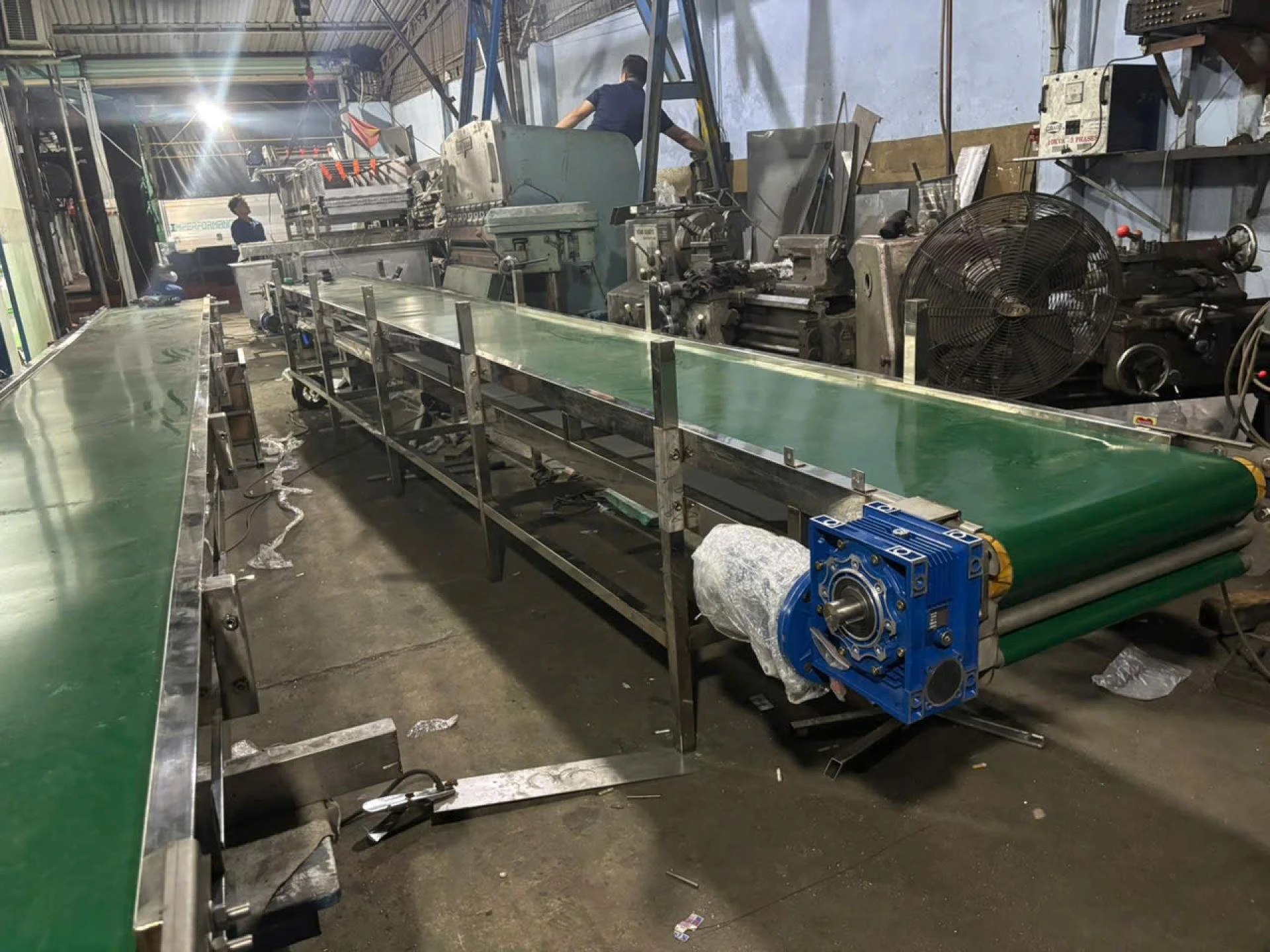
Industrial conveyor play a crucial role in manufacturing, helping businesses transport goods quickly, reduce labor costs, and optimize the workflow assembly line. Each type of conveyor belt is designed to suit specific industries and product characteristics. The following article will help you better understand the 5 most common types of industrial conveyor belts, along with their practical applications.
PVC CONVEYOR BELT
PVC conveyor belts are widely used in many industries thanks to their high-durability PVC plastic surface, light weight, and good moisture resistance. This type of conveyor belt is easy to clean, less prone to dirt accumulation, and suitable for clean working environments. Common applications include packaging lines, packaging production, and the transportation of electronic components, pharmaceuticals, and consumer goods, where stability and cleanliness are required.
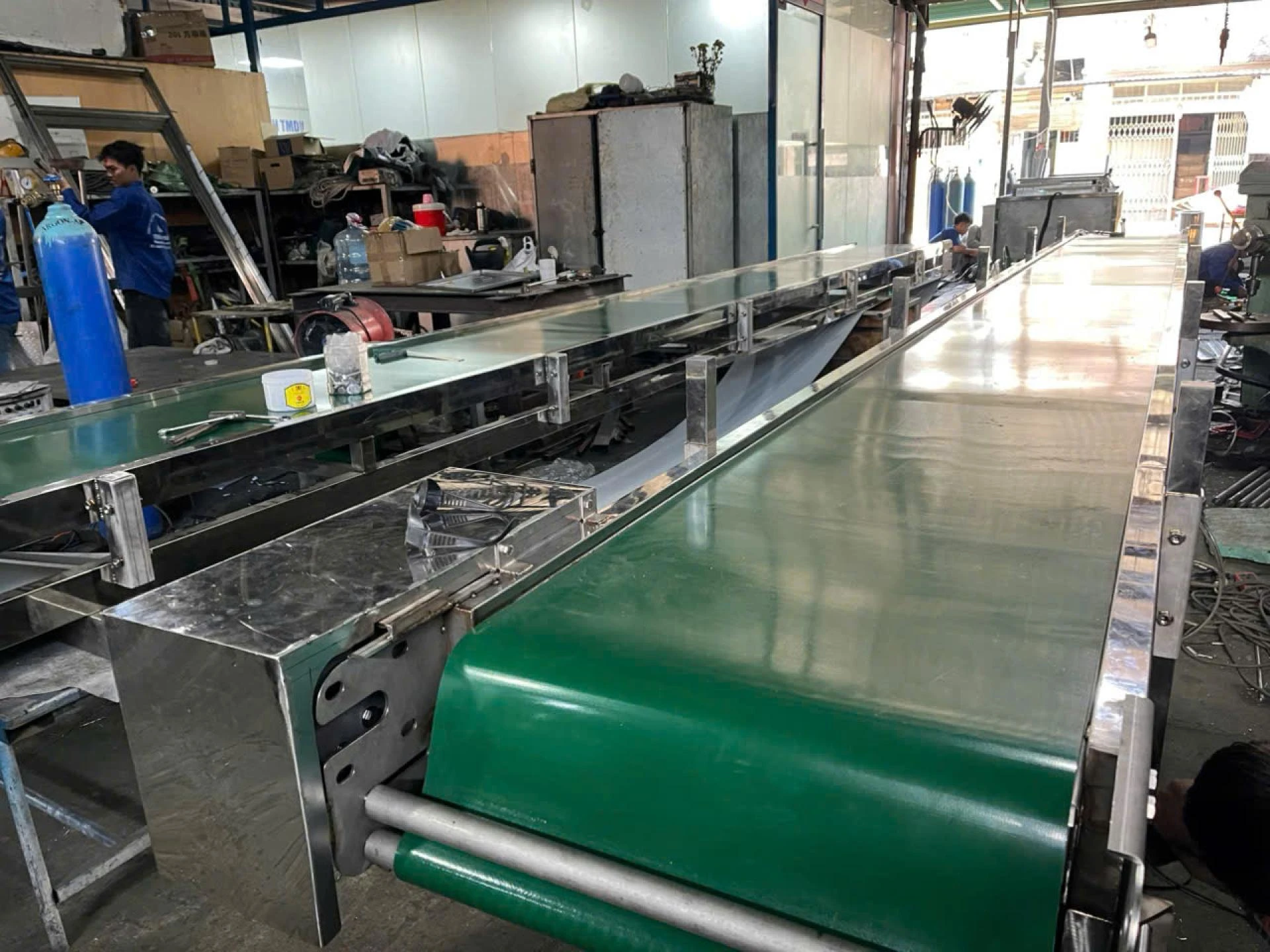
ROLLER CONVEYOR
Roller conveyors are also one of the common types of industrial conveyor belts today. Their structure consists of many rollers arranged consecutively, allowing goods to move via pushing force or motor drive. They are suitable for items in the form of boxes, crates, or pallets and are widely applied in warehouses, distribution centers, packaging lines, component manufacturing workshops, and loading/unloading ports, where fast processing speed and reduced manual labor are required.
RUBBER CONVEYOR BELT
Rubber conveyor belts stand out for their strength, abrasion resistance, and ability to operate well in harsh environments. This type is often used to transport coal, stone, ore, cement, or construction materials. In the mining industry, rubber conveyors help move large volumes of raw materials continuously, saving time and improving production efficiency.
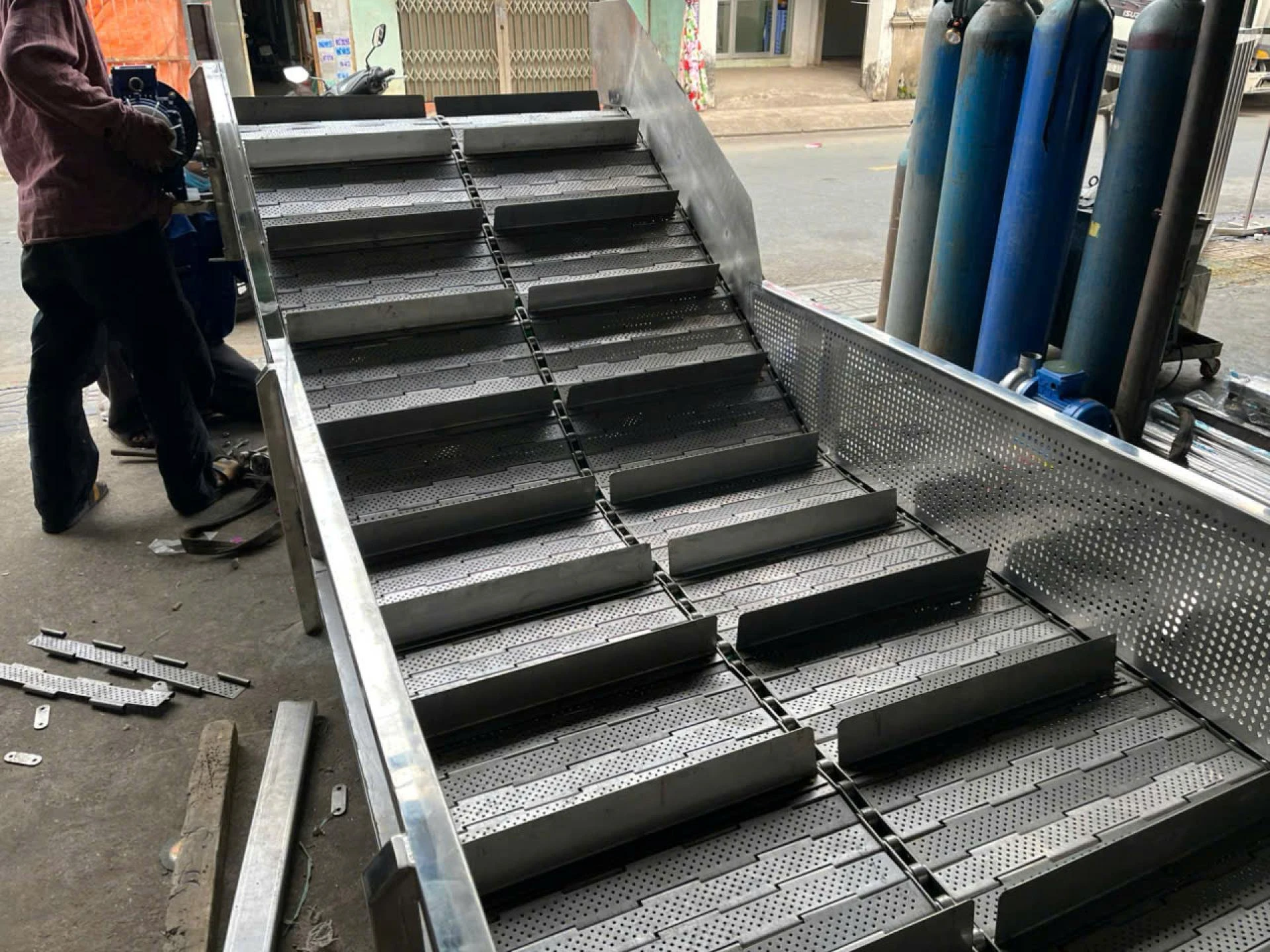
STAINLESS STEEL CONVEYOR
Stainless steel conveyor are made from Inox 304 or 316 material, and include various sub-types such as mesh conveyors and chain conveyors. They are widely used in the food, pharmaceutical, and canning industries. Thanks to the superior advantages of stainless steel, these conveyor have excellent resistance to rust and corrosion, operating strongly in harsh, wet environments, and those exposed to acids or chemicals.
PU CONVEYOR BELT
PU conveyor belts have a surface made from polyurethane, meeting food safety standards and offering good resistance to grease, oil, and chemicals. This type is particularly suitable for the food and beverage processing, pharmaceutical, and medical industries. Thanks to their flexibility and high abrasion resistance, PU conveyor belts help transport products gently, minimizing damage and ensuring maximum hygiene.
The above are the 5 most common types of industrial conveyor belts (bang tai cong nghiep gia re), used for almost all industrial production systems, automating the transportation of goods, and helping to optimize production lines.