Building Competence for Safer Work-at-Height Operations
Working at height continues to be among the main causes of injuries and deaths at work in sectors such as construction, manufacturing, marine, and facilities management. Among the measures to minimize these dangers, Singapore has, through laws and guidelines, strongly promoted the training of proper skills, competence upgrading, and educating workers and their supervisors on work safety to the utmost level.
The WSQ Manage Work at Height (MWAH) course aims at those involved in supervising, managing, and other individuals planning and controlling work-at-height operations and activities. Besides fulfilling legal stipulations and requirements, this training course prepare trainees with the necessary skills to help foster a work environment that is not only safer but also more productive.
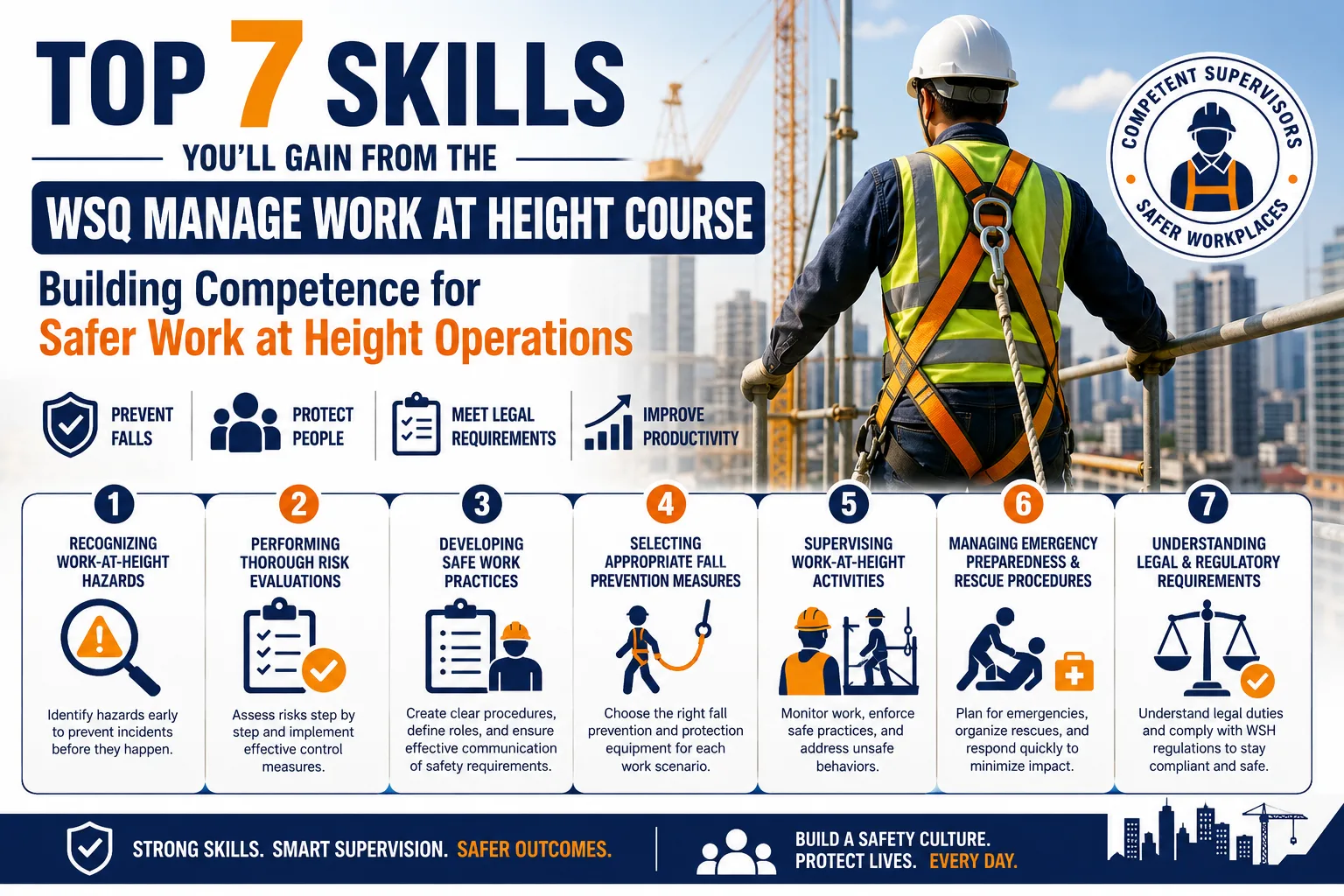
In fact, it will be the 7 major abilities that you will have after having attended the MWAH training program.
1. Recognizing Work-at-Height Hazards
Being able to see hazards coming and thus to prevent them is one of the main lessons that the program imparts. Facing a hazardous situation in which one or more of these risks are present, such as an unstable surface, an unguarded edge, falling objects, lack of proper access systems, and weather conditions, requires thorough attention and care.
Knowing the risks beforehand enables supervisors to not only take safety measures but also to be able to avert most, if not all, of the incidents that might otherwise occur.
2. Performing Thorough Risk Evaluations
In fact, assessing risks is what work safety is built upon. With the aid of MWAH, students can learn hazard assessment step by step, appraising the danger level at each stage and choosing the right control methods.
This capable helper will also allow supervisors to present evidence for their line of reasoning when they undertake this or that step in the safety decision-making chain, as well as to make sure that the safety provisions are properly implemented.
3. Developing Safe Work Practices
It is no accident that safe work procedures are a major theme in the course. MWAH recognizes that a well-thought-out plan is the first step towards safely carrying out high-risk tasks.
Safe work procedures are developed after a thorough analysis of various work methods and are documented in a procedural manual. Likewise, the procedures specify the roles and responsibilities of individuals and provide clear communication of safety directives. Additionally, the procedures also ensure that proper safety measures are in place to deal with any unforeseen circumstances.
4. Selecting Appropriate Fall Prevention Measures
Different work-at-height tasks bring different risks and therefore demand various safety strategies. You will learn from this course how to identify the correct fall prevention and protection equipment to use in a given work scenario.
The participants are introduced to various types of collective and personal protective equipment like guardrails, safety nets, travel restraint systems, personal fall arrest systems, etc. that are capable of reducing the exposure to the hazards of falls from heights.
5. Supervising Work-at-Height Activities
The supervisor is a key person ensuring that the work environment is safe.
Participants of the MWAH course sharpen their sharp observation skills so that they can monitor the operations, ensure that the workers are following the safety procedures, and recognize and work to eliminate unsafe behaviors.
Good supervision is one of the ways to remind workers that safety is of primary importance and that they have to account for their actions in terms of safety.
6. Managing Emergency Preparedness and Rescue Procedures
Though steps have been taken to prevent accidents, circumstances may lead to an emergency. The course discusses why it is crucial to have an emergency plan and to be ready for a rescue.
Attendees get acquainted with setting up response protocols, organizing rescue operations, and having their workers well-informed about their individual roles during such times. Timely and well-organized actions can drastically lessen the effects of accidents.
7. Understanding Legal and Regulatory Requirements
Supervisors need to be acquainted with Singapore workplace safety and health requirements.
The program exposes trainees to the legal framework, their role, and the responsibilities related to work-at-height activities.
Knowing these is essential for any company to stay on the right side of the law, avoid fines, and show that they really care about the safety of their workers.
Why These Skills Matter
Skills acquired from the WSQ Manage Work at Height training do not just serve to meet the requirements for certification. Instead, they give supervisors and managers the ability to spot hazards, plan the prevention of such hazards, and encourage a safety mindset in a big way throughout their companies.
Through the utilisation of these skills in work settings, firms can not only decrease the number of accidents but also increase work performance and safeguard the health of employees.
Final Thoughts
Providing workers with training for working at height is a great way to make sure that people and the worksite stay safe. The MWAH course is filled with hands-on knowledge that managers and supervisors can use to really change things, whether you are a supervisor looking to get better at what you do or a company that wants to raise safety levels through their staff.
Getting these seven key skills will not only help with meeting rules and regulations but will also play a great part in making the workplace safer and more productive for everyone concerned.