A handmade lampshade can change the way a lamp looks without requiring a complete room makeover. For people who enjoy sewing, decorating, or traditional crafts, Victorian-inspired designs offer plenty of room for fabric, trim, fringe, lace, and other decorative details.
The appeal is also practical. A shade can be made to suit the size, shape, and character of an existing lamp base. Instead of replacing a lamp that has sentimental or vintage value, a new shade can give it a fresh purpose.
For beginners, a kit can make the process easier because the major materials are selected to work together. This reduces the time spent trying to match individual components.
Why Is a Victorian-Style Shade Suitable for DIY Projects?
Many traditional lampshade designs rely on a combination of structure and decorative materials. That makes them useful projects for someone learning how handmade shades are assembled.
A Victorian-style shade can include a wire frame, lining, outer fabric, lace, trim, fringe, and decorative accents. Each part has a role. The frame establishes the shape, while the fabric and trims determine much of the finished appearance.
The project can also be adjusted to personal taste. A maker may prefer a restrained design with simple trim or choose a more detailed arrangement with beaded fringe and floral accents.
For someone searching for handmade Victorian lampshade kits for beginners, choosing a package with several compatible materials can be more convenient than purchasing everything separately.
What Comes in a Handmade Lampshade Kit?
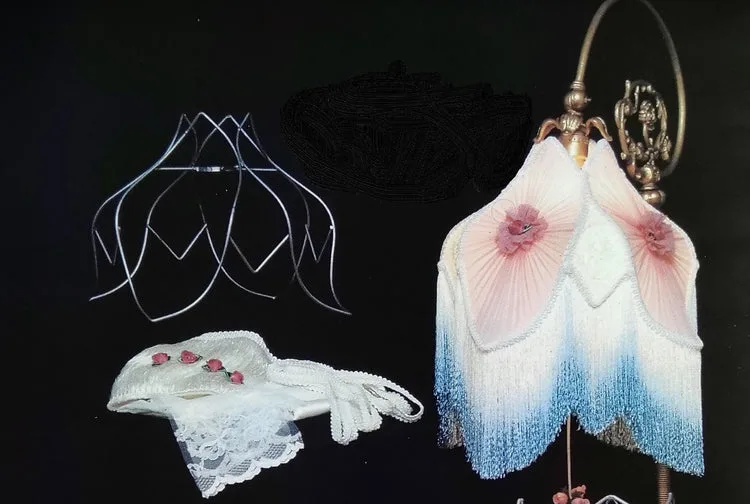
The Victorian Beauty Lampshade Kit from LampShadeLady is designed as a supply package for making a handmade shade. According to the product page, the kit includes a medium wire frame measuring 10 inches tall and 13 inches wide, along with seam binding, lining, lace, silk chiffon, French scroll trims, six-inch beaded fringe, and two ribbon rose bud accents. The lamp base is not included.
This combination gives a beginner a starting point for working through the construction process while also providing several decorative elements for the finished design.
The kit can be especially useful when the goal is to learn how individual components work together. Instead of beginning with a long shopping list, the maker can focus on measuring, assembling, fitting, and finishing the shade.
The product page also notes a beginner bundle that combines a lampshade kit with the “How to Make Victorian Style Lampshades” video for an additional discount when both items are added to the cart.
How Can You Plan Your Shade Before Starting?
Before cutting fabric or attaching trim, take time to plan the overall appearance of the shade.
Start by considering the lamp base. Look at its height, finish, shape, and decorative details. The shade should complement those features rather than compete with them.
Next, think about the fabric and trim arrangement. Decide whether the lace will be used around the upper or lower section, where the fringe will sit, and how decorative accents will be positioned.
A simple sketch can help. Mark the frame dimensions and note where each material will be placed. This can prevent unnecessary adjustments later.
If you are making DIY Lampshades, planning is particularly helpful because small measurements can affect the final fit.
How Does a Wire Frame Shape the Finished Shade?
The wire frame is one of the most important structural components of a handmade shade. It establishes the basic dimensions and gives the fabric a defined form.
The medium frame supplied with the Victorian Beauty Lampshade Kit is 10 inches tall and 13 inches wide.
When working with a frame, accurate measuring matters. Fabric should be prepared according to the frame's shape and construction requirements. Uneven measurements can lead to wrinkles, gaps, or an uneven lower edge.
A wire structure also gives makers a useful foundation for experimenting with different fabrics and decorative treatments. Once the basic construction process is understood, the same skills can be applied to future projects.
What Fabrics and Decorative Details Work Well?
Fabric selection can have a major effect on the finished shade. Silk chiffon, for example, creates a different visual result from heavier materials. Lace can introduce texture, while trim can define individual sections of the shade.
The Victorian Beauty kit includes silk chiffon, lace, French scroll trims, six-inch beaded fringe, and ribbon rose bud accents.
These components can be arranged according to the desired look. A maker might use the fringe as a lower border, place lace along a selected section, and use the ribbon accents as focal details.
The key is balance. Too many competing details can make a shade look crowded, while too few may not provide the traditional decorative character the maker wants.
How Can You Create a Coordinated Look?
A successful handmade shade should work with the lamp and the surrounding room.
Consider the colors already present in the space. If the lamp base has a warm metallic finish, fabrics and trims in related tones may create a connected appearance. For a darker lamp base, lighter fabric can provide contrast.
Patterns should also be considered. If the room already contains several bold patterns, a simpler shade may work better. In a quieter room, decorative fabric and detailed trim can become a stronger focal point.
When planning vintage-inspired lampshade designs for antique lamp bases, it is useful to consider the age and visual character of the lamp. The shade does not have to look like an exact historical reproduction. It can simply use traditional design elements in a way that suits the existing piece.
Where Can Beginners Find Supplies and Learning Support?
Beginners often need two things: suitable materials and clear instructions.
LampShadeLady focuses on handmade lampshades, kits, supplies, and instructional materials. The website states that Mary Maxwell has been making and teaching the art of handmade Victorian lampshades for nearly 40 years.
The site also provides access to lampshade kits, supplies, wire frames, instructional videos, and related resources.
For someone starting a first project, having access to both supplies and educational material can make the learning process more manageable.
You can view the kit details and available materials on the Victorian Beauty Lampshade Kit product page or browse the broader LampShadeLady website.
What Should You Consider Before Buying a Kit?
Before purchasing a kit, check the frame dimensions, included materials, and whether you need to purchase additional items.
The Victorian Beauty Lampshade Kit includes the main shade-making materials and a medium wire frame, but the lamp base is specifically excluded.
It is also worth considering your skill level. Beginners may benefit from an instructional video or step-by-step guidance. More experienced makers may prefer a kit mainly as a convenient source of coordinated supplies.
Think about the lamp you plan to use, too. Confirm that the finished shade will be appropriate for the lamp base and the location where it will be displayed.
How Can You Get Better Results From a Handmade Lampshade Project?
Start slowly and focus on accurate measurements. Handmade projects often look better when the maker takes time with each stage instead of rushing toward the finished result.
Keep your work area organized. Separate fabric, trim, binding, and decorative pieces so they remain easy to identify during construction.
It also helps to test the placement of decorative elements before permanently attaching them. Step back and look at the shade from different angles. This makes it easier to spot uneven spacing or areas that need adjustment.
If you are searching for Best Victorian Lampshades for Unique Wire Lampshade Designs, think beyond the finished appearance. The frame, fabric, proportions, and decorative components all influence the final result.
Most importantly, treat the first project as a learning experience. Small imperfections are part of developing a new craft skill, and each completed shade can make the next project easier.
FAQs
1. What are Victorian-inspired lampshades?
They are lampshades influenced by traditional decorative designs and may feature fabrics, lace, trims, fringe, floral details, and structured wire frames.
2. Are handmade lampshade kits suitable for beginners?
Yes. A kit can simplify material selection by bringing several compatible components together. Beginners should also consider using instructional material while learning the construction process.
3. What is included in the Victorian Beauty Lampshade Kit?
The kit includes a medium wire frame, seam binding, lining, lace, silk chiffon, French scroll trims, six-inch beaded fringe, and two ribbon rose bud accents.
4. Is the lamp base included?
No. The product information states that the lamp base is not included with the kit.
5. What size is the included wire frame?
The included medium frame is 10 inches tall and 13 inches wide.
6. Can I use different fabrics for a handmade shade?
The choice depends on the construction method and frame. Different fabrics can produce different levels of weight, texture, and light transmission, so material selection should match the project requirements.
7. Can decorative fringe be added to a handmade shade?
Yes. Fringe is one of the decorative components commonly used in traditional shade designs, and the Victorian Beauty kit includes six-inch beaded fringe.
8. How should I choose a shade for an antique lamp?
Consider the lamp's size, shape, color, and decorative features. The shade should be proportionate to the base and complement its existing details.
9. Where can I learn more about making handmade shades?
LampShadeLady provides handmade lampshade supplies, kits, instructional videos, and related resources. Its website also states that Mary Maxwell has taught the craft for nearly 40 years.
10. What makes a handmade shade project worthwhile?
A handmade shade allows you to select materials, colors, trims, and decorative details while developing a practical craft skill. It can also provide a way to update an existing lamp instead of replacing the entire piece.