Trade Show for MSMEs: Turning Small Business Potential Into Real Opportunities
Micro, small, and medium enterprises form the backbone of most economies, yet they often struggle with one specific challenge: visibility. A skilled artisan, a regional food producer, or a small textile unit may make excellent products but still find it hard to reach buyers beyond their immediate area. A well-structured trade show for MSMEs exists to close exactly that gap, giving smaller businesses a platform that would otherwise take years and significant marketing budgets to build on their own.
This article breaks down why these trade shows matter specifically for smaller enterprises, what to expect from one, and how to prepare for meaningful participation.
Why MSMEs Need Dedicated Trade Show Access
Large corporations usually have in-house teams for marketing, export documentation, and buyer outreach. MSMEs rarely have that luxury. A trade show designed with smaller businesses in mind typically addresses this imbalance by offering:
- Lower-cost or subsidized booth options
- Simplified registration and participation processes
- Access to government schemes and support programs
- Direct interaction with buyers who are actively sourcing at competitive scale
This structure allows a small business owner to compete for attention in the same space as larger players, something that's difficult to achieve through most other marketing channels.
What a Trade Show for MSMEs Typically Includes
Sector-Based Exhibition Zones
MSMEs are often grouped by industry, handicrafts, food processing, textiles, engineering goods, and more, making it easier for relevant buyers to find them without wading through unrelated categories.
Government Policy and Scheme Information
Many such trade shows are organized in collaboration with government departments, offering exhibitors direct access to information about credit schemes, export incentives, and cluster development programs that support small businesses.
Buyer-Seller Meetings
Structured meeting formats connect exhibitors with domestic and international buyers who are specifically looking for MSME suppliers, rather than leaving connections to chance encounters on the exhibition floor.
Knowledge Sessions
Sessions covering topics like export documentation, digital marketing, or quality certification give small business owners practical takeaways beyond just networking.
Benefits of Participating as an MSME
Building Credibility
Being part of a recognized trade show adds a layer of legitimacy to a small business, buyers often view expo participation as a signal of seriousness and scale readiness.
Direct Access to New Markets
For an MSME trying to enter export markets for the first time, meeting international buyers in person removes much of the uncertainty involved in cold outreach or unfamiliar trade processes.
Peer Learning
Sharing exhibition space with other small businesses, including competitors, offers practical insights into pricing, packaging, and positioning that aren't always available through formal research.
Government and Institutional Support
Many trade shows for MSMEs include dedicated pavilions for schemes related to credit guarantees, cluster development, or skill training, connecting small business owners directly with the institutions running these programs.
How MSMEs Can Prepare for a Trade Show
- Register early to secure a well-placed booth, since prime locations near entrances or sector pavilions fill up quickly.
- Prepare simple, clear marketing material, price lists, product specifications, and minimum order quantities should be easy for buyers to access.
- Understand export basics if targeting international buyers, including documentation and shipping terms.
- Set a realistic goal for the event, whether it's five solid buyer conversations or one distribution partnership, rather than trying to meet everyone.
- Budget for follow-up, since the real business often gets closed after the event, not during it.
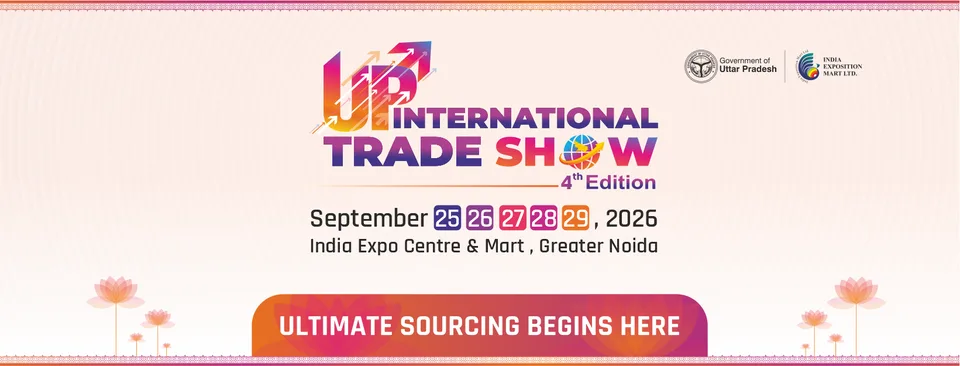
Platforms such as the UP International Trade Show are specifically positioned to support MSMEs alongside larger exhibitors, pairing sector-based pavilions with information on state-level industrial and export policies relevant to smaller businesses.
Making the Most of Buyer Programs
Structured buyer programs, sometimes called hosted buyer initiatives, are particularly valuable for MSMEs because they reduce the guesswork of finding relevant contacts. Instead of hoping the right buyer walks past a booth, these programs actively match exhibitors with buyers who have expressed interest in similar product categories.
Checking a show's hosted buyer program details ahead of time can help MSMEs understand how meetings are scheduled and what information to prepare in advance for those conversations.
Challenges MSMEs Should Plan For
- Limited staff to manage both the booth and daily operations back home
- Budget constraints for travel, accommodation, and display materials
- Language or documentation barriers when dealing with international buyers
- Difficulty following up on leads without a dedicated sales team
Being aware of these constraints in advance allows for better planning, whether that means bringing an extra team member, preparing translated materials, or setting a modest but achievable participation goal.
FAQs
Q1: What makes a trade show suitable specifically for MSMEs? Features like subsidized participation costs, sector-based pavilions, and access to government scheme information make a trade show more accessible and useful for small and medium enterprises.
Q2: Can a first-time exporter benefit from an MSME trade show? Yes, these events often include buyer-seller meeting programs and knowledge sessions on export documentation, which are particularly helpful for first-time exporters.
Q3: Are trade shows for MSMEs only for manufacturing businesses? No, they typically cover a wide range of sectors, including handicrafts, food processing, services, and technology-based small businesses.
Q4: How can MSMEs afford to exhibit on a limited budget? Look for shows offering subsidized booth rates for small businesses, and prioritize display materials over elaborate booth construction to control costs.
Q5: What's the best way to convert trade show leads into actual orders? Prompt, organized follow-up within days of the event, along with clear pricing and sample availability, significantly improves conversion from leads to orders.
Conclusion
For micro, small, and medium enterprises, a trade show is rarely just an exhibition, it's often one of the few affordable ways to reach buyers, government support programs, and industry peers all at once. With focused preparation, realistic goals, and consistent follow-up, MSMEs can use these platforms to build relationships and open markets that would otherwise take years to access independently.