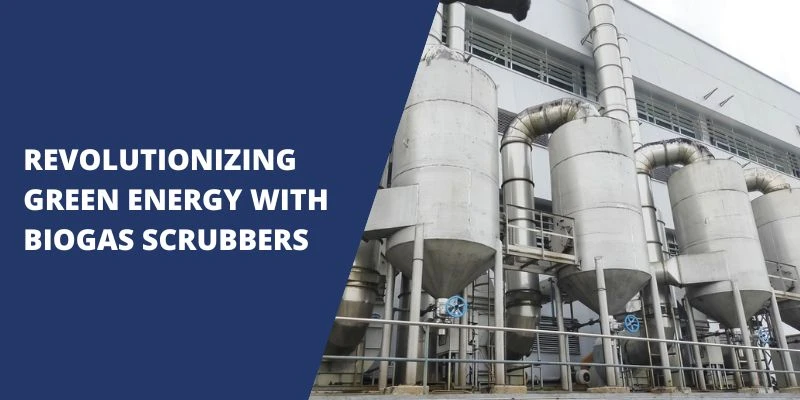
As the world shifts towards sustainable energy, biogas stands out as a powerful and eco-friendly alternative to conventional fossil fuels. Still, harnessing its full potential requires overcoming challenges like emissions control and environmental impact.
That's where the biogas scrubber system comes into play, revolutionizing the landscape of green energy by effectively mitigating emissions and maximizing environmental benefits.
Understanding Biogas Scrubber Systems
What are Biogas Scrubber Systems?
Biogas scrubber systems, or biogas cleaning or biogas purification systems, are innovative technologies that are engineered for biogas upgrading, processing raw biogas from organic waste sources. By removing impurities like hydrogen sulfide (H2S), carbon dioxide (CO2), and siloxanes, they produce clean, high-quality biogas that's ideal for power generation, heating, or vehicle fuel applications.
How Do Biogas Scrubber Systems Work?
The biogas scrubber system uses multiple treatment stages to eliminate impurities effectively—firstly, the biogas is desulfurized to remove hydrogen sulfide, typically through iron oxide scrubbing or activated carbon absorption
Then, CO2 removal techniques like pressure swing absorption (PSA) or membrane separation are employed to reduce carbon dioxide levels in gas stream. Lastly, siloxanes and other trace contaminants are removed with the help of specialised filters or absorbents, resulting in high-purity biogas.
Advantages of Biogas Scrubber Systems
Emission Reduction
One of the key benefits of the biogas scrubber system is its ability to drastically cut harmful emissions from biogas. By minimizing impurities like hydrogen sulfide and siloxanes, they reduce environmental impact and contribute to cleaner air.
Renewable Energy Production
Another advantage of biogas scrubber systems is that they convert organic waste materials into renewable energy sources like biogas and biomethane. This promotes circular economy principles by diverting waste from landfills and reducing reliance on fossil fuels for energy production.
Resource Recovery
Apart from generating renewable energy, biogas scrubber systems enable resource recovery from organic waste. By capturing methane and other valuable gases, they provide a clean fuel source and help lower greenhouse gas emissions.
Types of Biogas Scrubber Systems
Chemical Scrubbers
Chemical scrubbers are those that use reactive agents like iron oxide or activated carbon to remove impurities from biogas streams. These reactive agents chemically react with contaminants, forming stable compounds that can be easily separated from the gas stream.
Biological Scrubbers
Next are biological scrubbers, also called biological filters or biofilters, that rely on microbial activity to degrade pollutants present in biogas streams. Microorganisms within the scrubber media metabolize contaminants, converting them into non-toxic byproducts like water and carbon dioxide.
Conclusion
Biogas scrubber systems are an important innovation in renewable energy, efficiently treating raw biogas to produce clean energy while reducing environmental impact. As demand for sustainable solutions rises, they play a crucial role in advancing a greener future.