
Every truck owner learns the same lesson, and almost nobody learns it the easy way. You slide a pallet of pavers across a bare bed, hear that grinding shriek, and you already know what you will find when you unload. A gouge down to raw steel. Six weeks later there is a rust freckle. Two winters after that, the freckle has brought friends, and now you are wire-brushing a hole in the floor of a truck you still owe money on.
That is the entire argument for a bedliner, compressed. Nobody buys one because it is exciting. They buy one because they have seen what happens without it.
Bare Steel Never Stood a Chance
Factory bed paint is thin. Impressively thin, actually, once you consider what people ask a truck bed to survive: firewood, engine blocks, roofing tear-off, dog claws, road salt, sun, and the hundred pounds of gravel that never quite sweeps out of the corners. Paint is a cosmetic layer with a little corrosion resistance thrown in. It was never engineered to be a work surface.
Once that layer is breached, moisture gets underneath and starts creeping sideways. You can watch it happen along the seams and around the bolt holes. By the time rust is visible from the tailgate, it has usually been working quietly for a year or more.
Drop-In Versus Spray-In: The Argument That Refuses to Die
Drop-in liners are the plastic tubs you can buy at any parts counter and bolt in yourself on a Saturday. They are cheap, they are removable, and they do stop the first round of dents. That is the honest case for them.
The problem is the gap. A molded tray never sits perfectly flat against stamped metal, so you end up with a thin void between plastic and paint. Water finds that void. Sand and grit find it too, and every time you hit a pothole the liner shifts a millimeter and works like a slow sanding block. Plenty of guys have pulled a drop-in after five years and found a rust map underneath that looks worse than a bed with no liner at all.
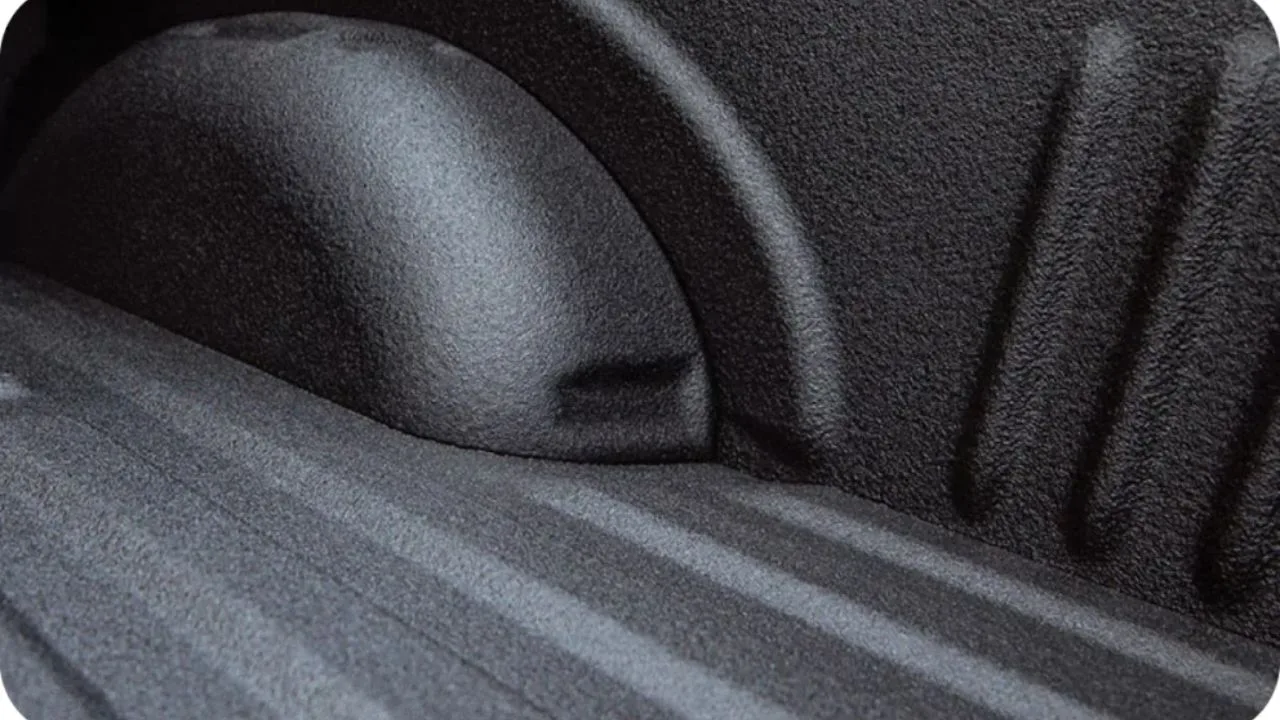
A sprayed coating has no gap because there is nothing to gap. It bonds to the metal itself, wraps around bolt heads, seals the seams, and follows every contour of the bed. That is the whole difference in one sentence. A quality spray on bedliner becomes part of the truck instead of a passenger riding along in it.
What Actually Happens on Spray Day
People assume the spraying is the hard part. It is not. Prep is.
A shop worth paying will pull the bed hardware, mask the rails and tailgate edges, then scuff or abrasive-blast every square inch so the coating has a mechanical profile to grab. Any wax, silicone, or road film that survives that step becomes a future failure point, usually a bubble that shows up in year two. Then the material goes down hot out of a plural-component gun, typically built to somewhere between 60 and 125 mils depending on how the truck earns its living.
It kicks fast. Most polyurea-based products are tack-free in under a minute and ready for light duty the same afternoon. If a shop is spraying twenty minutes after the truck rolled in the door, though, keep driving.
The Chemistry Nobody Bothers to Explain
This is where marketing gets loud and facts get quiet. Broadly, three families are in play.
- Polyurethane cures slower, levels out smoother, and stays forgiving on impact. It is also softer, and it fades faster in direct sun.
- Polyurea sets in seconds and brings serious tensile strength and abrasion resistance. It does not go brittle in January or greasy-soft in August.
- Hybrids split the difference, and they are what most reputable installers actually run day to day.
The spec people ignore is elongation versus tensile strength. A coating that tests at 2,000 psi but only stretches 100 percent will crack when the bed flexes under load. One that stretches 300 percent but tears easily will look chewed up by the second summer. Ask for the technical data sheet. A real installer hands it over without blinking.
What It Costs, and What Cheap Ends Up Costing
Budget roughly $450 to $750 for a professionally sprayed short bed, more if you want rails, tailgate, and rocker panels included. Quotes far below that range almost always mean thin material, skipped prep, or both.
Now compare that to the alternative. A rusted-through bed floor is a body shop job or a replacement bed, and either one lands in four figures fast. Resale matters too. Used listings with a clean, intact sprayed bed move quicker than the ones with a cracked plastic tray and a rust halo around the wheel well. Buyers can read a bed. It tells them how the last owner treated everything they cannot see.
These Coatings Left the Truck Bed Years Ago
The funny thing about this technology is how far it has wandered from its original job. The same materials now line trailer decks, horse floats, boat hulls, dumpsters, tool crib floors, playground equipment, and fuel containment berms. Cities spray them inside water tanks. Farmers put them on grain handling equipment. Once people saw that a sprayed in bedliner could survive a decade of shovels and salt, they started asking what else it could save.
Color has caught up as well. Black still dominates because it hides everything, but grays, tans, and body-matched shades are routine now, and aliphatic topcoats keep them from fading to that chalky purple you see on older jobs.
How to Pick an Installer Without Getting Burned
Three questions will filter out most of the bad shops immediately. What exactly does your prep process involve, and does it include blasting or scuffing? What thickness are you spraying, and where do you build it up, since floors and the area behind the wheel wells should be heavier than the rails? And is the warranty the shop's own or the manufacturer's, because a lifetime guarantee that dies when the doors close is not a guarantee at all.
Look at the booth, too. A clean, well-lit, temperature-controlled space says more about the finished product than any brochure ever will.
So Is It Worth It?
If your truck is a garage queen that hauls mulch twice a year, a drop-in will probably outlast your ownership. If it works, if it hauls, if it sits outside through February with a load of scrap in the back, the math is not close. Spend the money once on good material and honest prep, and that bed will still be solid long after the seats have given up.
Trucks earn their keep. A bedliner is just what keeps them earning it.