Every fleet manager knows the feeling: a vessel is delayed in port because one critical component failed, and the clock is ticking on charter obligations, crew schedules, and fuel costs. In an industry where downtime is measured in thousands of dollars per hour, the choice of a Marine Spare Parts supplier is not a minor procurement decision — it is a strategic one. Shipowners and fleet operators need a partner who understands urgency, technical accuracy, and the realities of global logistics. A dependable Marine Spare Parts supplier can mean the difference between a short, manageable delay and a costly off-hire period that ripples through an entire shipping schedule.
The global maritime industry runs on tight margins and even tighter timelines. Vessels operate across dozens of jurisdictions, each with its own port regulations, customs procedures, and availability constraints. When equipment fails mid-voyage or during a scheduled dry-docking, the pressure to source the correct part — not a close substitute, but the exact OEM-spec component — becomes intense. This is where the relationship between a shipowner and their spare parts partner is truly tested.
Common Challenges in Sourcing Marine Spares
Sourcing marine spare parts is rarely as simple as placing an order and waiting for delivery. Several recurring challenges make this one of the more complex procurement categories in shipping.
Delays and unpredictable lead times. Many spare parts are manufactured to order or sourced from a limited pool of certified suppliers. Without an established network, fleet managers can find themselves waiting weeks for components that should take days, especially when a vessel is berthed in a port with limited industrial infrastructure.
Counterfeit and substandard parts. The used and spare parts market has, unfortunately, attracted counterfeit suppliers who sell components that look correct but fail to meet manufacturer tolerances. Installing a counterfeit part can cause secondary damage to machinery, void warranties, and in worst cases, create safety hazards for the crew.
Complex logistics and customs clearance. Getting a part to a vessel isn't just about manufacturing or stocking it — it's about navigating international shipping, customs documentation, and last-mile delivery to a berth, anchorage, or even a vessel underway. A single missing certificate or mislabeled shipment can hold up delivery for days.
Inventory visibility gaps. Many suppliers simply don't stock what they claim to, forcing buyers to discover mid-transaction that the part they need isn't actually available, restarting the search process and burning valuable time.
These challenges are precisely why fleet operators increasingly prioritize long-term relationships with a proven Marine Spare Parts supplier rather than shopping around each time a need arises.
What Makes a Supplier Trustworthy
Not every parts vendor is built to handle the demands of modern shipping. A handful of characteristics separate a trustworthy Marine Spare Parts supplier from one that merely lists parts in a catalog.
Certifications and quality assurance. Reputable suppliers work with certified manufacturers and maintain documentation trails that verify authenticity. Adherence to internationally recognized shipping and safety standards, such as those maintained by the International Maritime Organization, gives shipowners confidence that the equipment aboard their vessels meets globally accepted safety and performance benchmarks.
Depth and breadth of inventory. A supplier with genuine stock across engine components, deck machinery, electrical systems, and safety equipment reduces the risk of a single point of failure in the supply chain. Depth of inventory also signals financial stability and long-term commitment to the marine parts business.
Turnaround time. Speed matters, but so does accuracy. The best suppliers combine fast quoting, efficient warehousing, and established freight relationships to get the right part moving as soon as an order is confirmed — not after days of internal back-and-forth.
Technical support and responsiveness. A trustworthy supplier doesn't just sell parts; they help identify the correct component, cross-reference part numbers, and advise on compatible alternatives when the exact OEM part isn't immediately available.
Transparent communication. From order confirmation through customs clearance to final delivery, a reliable ship spare parts supplier keeps the buyer informed at every stage, rather than leaving them to chase updates.
Introducing Konteck Marine
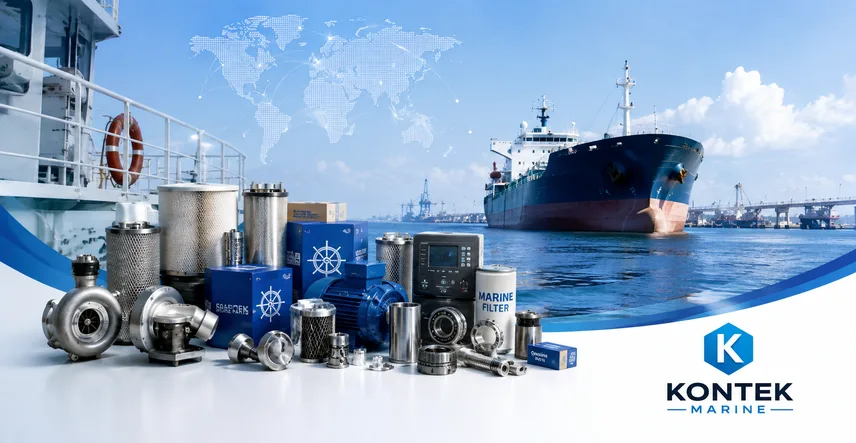
Konteck Marine has built its reputation on solving exactly these pain points for shipowners, ship managers, and procurement teams around the world. As a dedicated ship spare parts supplier, Konteck Marine maintains a wide inventory spanning engine parts, deck and navigation equipment, safety gear, and electrical components, sourced through verified manufacturer and distributor channels to minimize the risk of counterfeit goods reaching a vessel.
What sets Konteck Marine apart is the combination of technical expertise and logistical execution. The team works directly with fleet managers to identify the correct part specifications, cross-check compatibility, and coordinate delivery to ports and terminals across major global shipping routes. For operators who need more than a one-time transaction, Konteck Marine's marine spare parts services are designed around ongoing fleet support — covering everything from routine maintenance stock to urgent, time-critical replacements during unscheduled repairs.
This is particularly valuable for fleet operators managing multiple vessels across different regions, where a single point of contact for sourcing, documentation, and delivery coordination significantly reduces administrative overhead. Rather than juggling multiple vendors with inconsistent quality standards, shipowners can consolidate their spare parts procurement with a Marine Spare Parts supplier built specifically for the demands of global fleet operations.
When a vessel needs support quickly, response time is everything. Fleet managers and procurement teams can reach out directly for a quote or urgent parts request, and Konteck Marine's team works to confirm availability, pricing, and delivery timelines without unnecessary delay. For time-sensitive situations, this responsiveness often determines whether a vessel stays on schedule or faces an extended, costly delay.
Why the Right Supplier Partnership Matters
Choosing a Marine Spare Parts supplier is ultimately about risk management as much as it is about procurement. The right partner reduces the likelihood of counterfeit parts reaching critical systems, shortens the time between a failure and a fix, and provides the documentation and certifications needed to keep a vessel compliant with international standards. For fleet operators managing tight schedules and razor-thin margins, that reliability translates directly into operational and financial stability. Konteck Marine positions itself as that kind of long-term partner — one built on genuine inventory, technical know-how, and a logistics network capable of supporting vessels wherever they operate.
Frequently Asked Questions
1. What types of marine spare parts are typically in highest demand? Engine components, pumps, valves, filters, electrical parts, and safety equipment tend to see the most frequent replacement demand, largely due to routine wear and regulatory maintenance schedules.
2. How can I verify that a spare part is genuine and not counterfeit? Look for manufacturer documentation, traceable part numbers, and suppliers who source directly from certified manufacturers or authorized distributors rather than unverified secondary markets.
3. How quickly can spare parts typically be delivered to a vessel? Delivery timelines vary based on part availability, vessel location, and customs requirements, but an established supplier with strong logistics coordination can often significantly reduce standard lead times.
4. Do I need to provide technical specifications when requesting a quote? Providing model numbers, equipment specifications, or existing part numbers helps suppliers confirm compatibility faster and reduces the risk of ordering an incorrect component.
5. Can a supplier support multiple vessels across different regions? Yes — suppliers with established global logistics networks and multi-region delivery capability can support fleets operating across different ports and jurisdictions from a single procurement relationship.