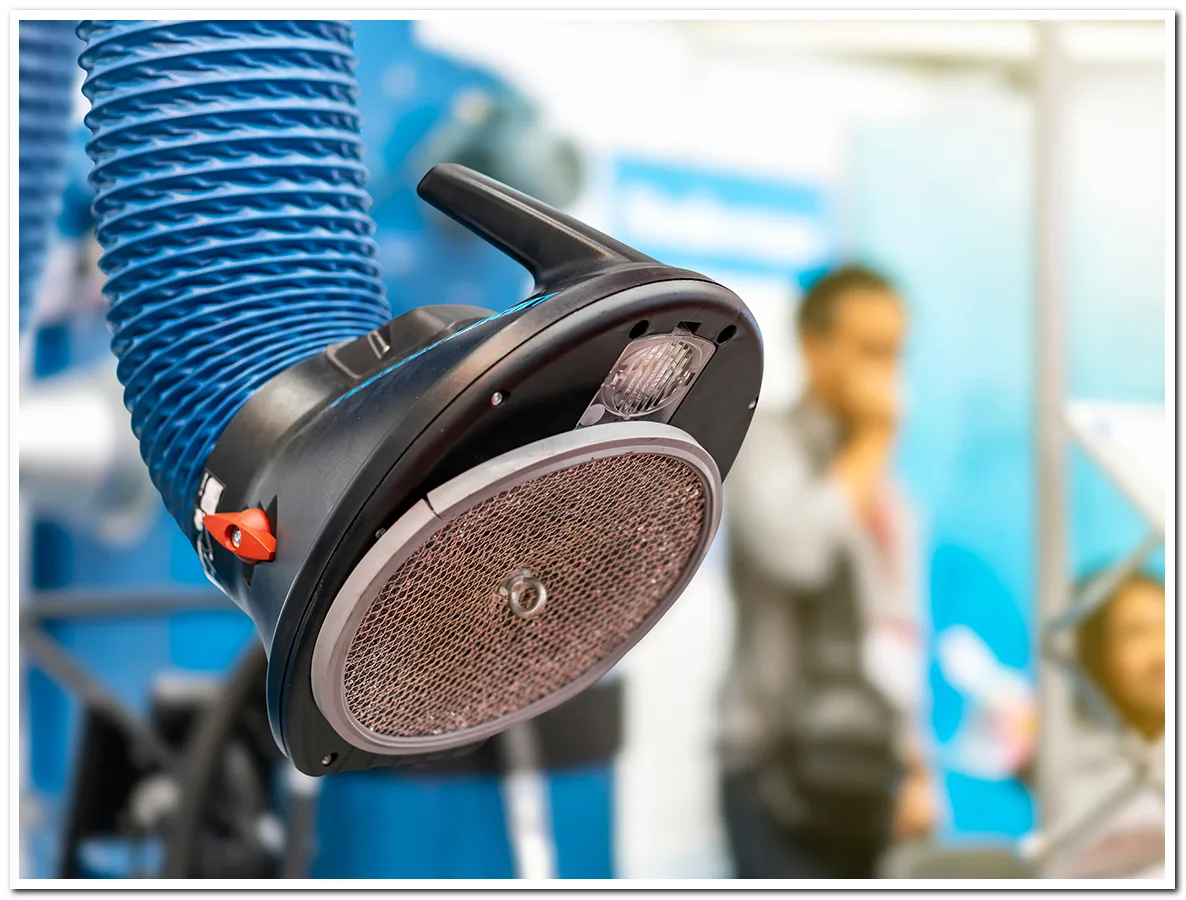
Industrial facilities often generate dust, fine particles, and airborne debris during manufacturing, processing, and material handling activities. Managing these particles is important for maintaining clean workspaces, protecting equipment, and supporting employee safety. Cyclone separators are widely used in industrial environments because they provide an effective way to remove larger dust particles from moving air before it reaches the filtration stage.
What Are Cyclone Separators?
A cyclone separator is a mechanical device designed to separate dust and solid particles from an air stream using centrifugal force. Unlike traditional filtration equipment, it does not depend on filter media to capture particles. Instead, it uses a circular airflow pattern to push heavier particles toward the outer wall of the separator.
As dusty air enters the cyclone through an inlet, it begins rotating rapidly inside the chamber. The heavier particles move outward due to centrifugal force and gradually fall into a collection hopper at the bottom. Meanwhile, cleaner air moves upward through the central outlet and continues through the system.
How Cyclone Separators Improve Dust Collection
Cyclone separators play an important role in improving the overall efficiency of industrial dust management. By removing larger particles early in the process, they reduce the amount of material reaching downstream filters.
This helps prevent filters from becoming overloaded too quickly and reduces the frequency of cleaning or replacement. In many industrial applications, cyclones are installed as pre-separators to support the performance of other filtration equipment.
When properly integrated, they help Dust collection systems manage high volumes of airborne particles while maintaining more consistent airflow and filtration performance.
Benefits of Using Cyclone Separators
One of the main advantages of cyclone separators is their relatively simple mechanical design. Since they have no moving internal components, they generally require less maintenance than some other separation technologies.
Other important benefits include:
Reduced filter loading: Removing larger particles before filtration helps extend the service life of downstream filters.
Lower maintenance requirements: Their simple construction makes inspection and routine maintenance easier.
Continuous operation: Cyclone separators can handle steady industrial airflow without frequent interruptions.
Improved equipment protection: Removing abrasive particles helps reduce wear in connected equipment.
Material recovery: Collected dust can sometimes be recovered and reused, depending on the material and application.
These advantages make cyclone separators useful in industries such as woodworking, metal processing, cement production, food manufacturing, and chemical processing.
Factors That Influence Cyclone Separator Performance
Although cyclone separators offer several advantages, their performance depends on proper design and operating conditions. Air velocity is one of the most important factors. If the airflow is too low, heavier particles may not separate effectively. Excessively high airflow can increase pressure losses and energy consumption.
The size and density of dust particles also influence separation efficiency. Larger and heavier particles are generally easier to remove than very fine particles. Therefore, facilities handling fine airborne dust may need additional filtration equipment.
The Importance of Proper Maintenance
Regular maintenance helps cyclone separators operate consistently over time. Although these devices have relatively few mechanical components, certain issues can affect their performance.
Operators should inspect the collection hopper to ensure that accumulated dust does not block the discharge area. Leaks around joints and connections should also be checked because unwanted air entry can disturb the internal airflow pattern.
It is equally important to monitor pressure differences and inspect the internal surfaces for excessive material buildup or wear. Establishing a regular inspection schedule helps identify problems before they affect the entire extraction process.
Integrating Cyclone Separators with Other Filtration Equipment
Cyclone separators are often used alongside baghouse filters and cartridge collectors to create a more effective dust management arrangement. The cyclone handles larger particles, while the secondary filtration equipment captures smaller airborne contaminants that pass through the separator.
This combination can be particularly useful in facilities where production processes generate substantial quantities of dust. Proper equipment selection and system design help maintain airflow balance and improve overall filtration results.
Modern Dust collection systems may also include automated controls, pressure sensors, and monitoring devices to track operating conditions. These features help operators identify airflow problems, monitor filter performance, and maintain reliable operation.
Final Thoughts
Cyclone separators are valuable components of industrial dust management because they provide an efficient method of separating larger particles from moving air. Their simple design, low maintenance requirements, and ability to reduce filter loading make them suitable for many industrial applications. Choosing the right separator and maintaining proper operating conditions can improve filtration performance, protect connected equipment, and support cleaner working environments. Integrating them with suitable filtration technology helps Dust collection systems deliver more consistent and dependable results over the long term.