
From Lecture Halls to Virtual Campuses: The Changing Face of University Education
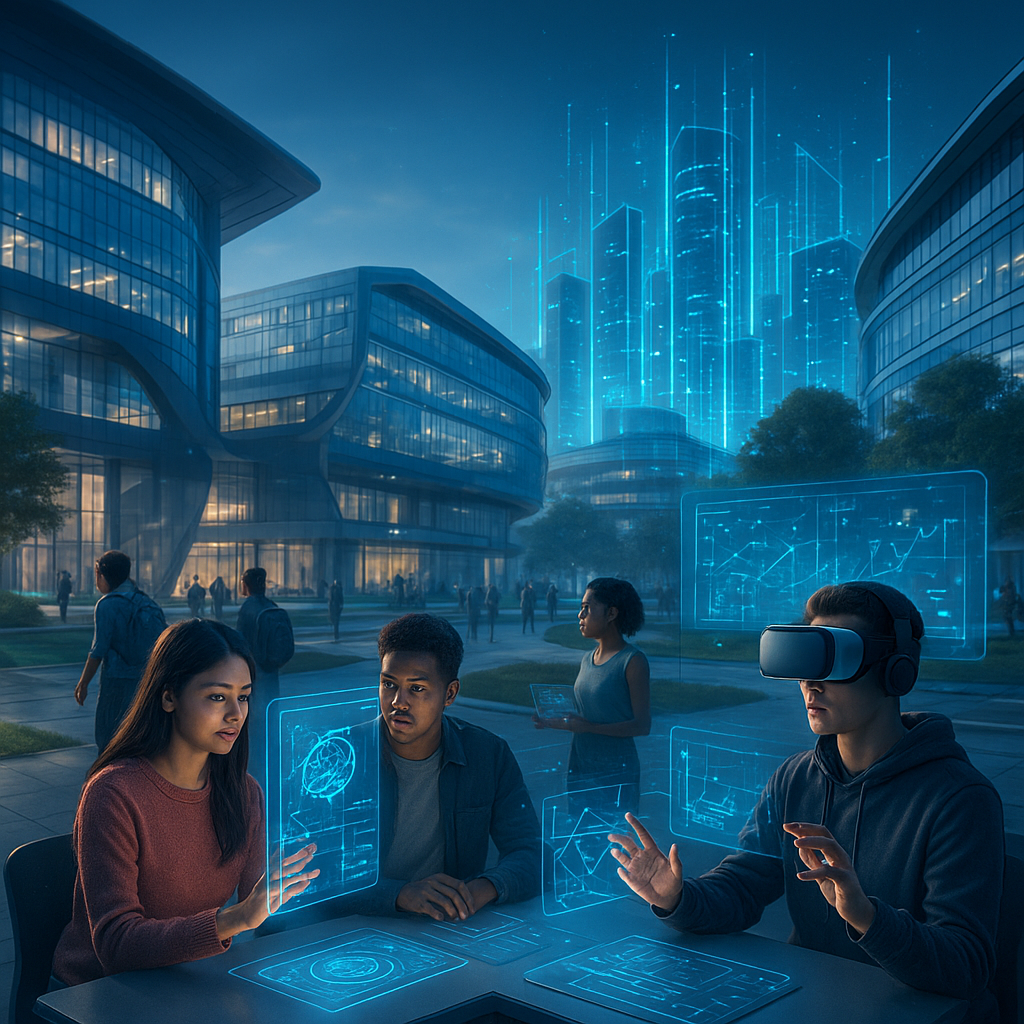
On a crisp September morning in 2026, the sprawling campus of the University of Edinburgh buzzes with a mix of traditional student chatter and the subtle hum of digital classrooms. Students, some physically present and others joining remotely from Mumbai, Nairobi, and São Paulo, engage simultaneously in a seminar on climate change policy. This scene, emblematic of modern universities, reflects a profound transformation in higher education. The university, once solely a physical place of learning, has become a hybrid ecosystem where physical and virtual realities converge.
This evolution is not merely technological; it challenges the very purpose and structure of university education. According to UNESCO statistics, global higher education enrollment surpassed 280 million in 2025, with over 40% participating in hybrid or fully online programs. The pandemic years accelerated this trend, but the momentum has continued unabated, driven by demands for flexibility, accessibility, and relevance in a rapidly changing world.
“Universities are no longer gatekeepers of knowledge confined to campuses; they are global platforms for lifelong learning and innovation,” remarks Dr. Helen Tran, a leading education futurist.
A Historical Arc: How Universities Arrived at This Crossroads
The modern university system traces back to medieval Europe, evolving through centuries as centers for scholarly inquiry and credentialing. The 19th and 20th centuries saw the rise of research universities, emphasizing specialized knowledge and the professionalization of disciplines. However, these institutions remained largely place-bound, with rigid academic calendars and face-to-face instruction.
The late 20th century introduced distance education, initially via correspondence courses and later through early online platforms. Yet, these efforts often functioned as supplements rather than core offerings. The COVID-19 pandemic catalyzed an unprecedented shift. Institutions worldwide were forced to pivot abruptly to remote learning, exposing both the potential and pitfalls of digital education.
Post-pandemic, universities recognized the need to rethink their models. Increasingly, they incorporated hybrid learning, flexible scheduling, and competency-based education. The rise of interdisciplinary studies and partnerships with industries further blurred traditional boundaries. As the World Bank's 2024 report highlights, universities that embraced digital transformation saw a 15% increase in enrollment and a 20% improvement in student retention rates.
Analyzing the Data: Enrollment, Access, and Outcomes in 2026
The university landscape in 2026 is quantitatively distinct from a decade ago. A recent OECD study reveals key trends shaping higher education:
- Enrollment Diversification: Women now represent 58% of university students globally, with growing participation from underrepresented regions including Sub-Saharan Africa and Southeast Asia.
- Hybrid Learning Adoption: 65% of universities offer fully integrated hybrid degree programs, combining asynchronous digital content with synchronous in-person sessions.
- Career Alignment: Over 70% of students engage in curricula co-designed with industry partners, enhancing employability and practical skills.
- Credential Innovation: Micro-credentials and stackable certificates account for 30% of all awarded qualifications, reflecting a shift toward modular learning paths.
Financially, the sector faces pressures. Public funding has plateaued or declined in many countries, pushing universities to diversify revenue through partnerships, commercial ventures, and alumni networks. Tuition fee dynamics vary widely: in Europe, free or low-cost education persists, while in the U.S. and parts of Asia, universities increasingly rely on international student fees and online program revenues.
“Data-driven decision-making is now central to university management, from enrollment strategies to curriculum development,” says Professor Marcus Li of the University of Toronto’s Centre for Educational Innovation.
2026 Developments: Technology, Policy, and Pedagogy in Focus
Technological advances underpin many 2026 university developments. Artificial intelligence (AI) tutors provide personalized learning experiences, adapting content to individual student needs. Virtual reality (VR) and augmented reality (AR) create immersive labs and simulations, particularly in fields like medicine, engineering, and environmental science.
The policy landscape also reflects change. Governments worldwide emphasize equitable access, digital infrastructure investment, and quality assurance for online offerings. The European Commission’s 2025 Digital Education Action Plan emphasizes cross-border collaboration among universities to foster innovation and mobility.
Pedagogically, there is a shift from passive lecture formats to active, project-based learning. Collaborative platforms enable students to work in global teams, often across time zones and cultural divides. Universities increasingly integrate sustainability into curricula, aligning education with the United Nations’ Sustainable Development Goals.
One notable initiative is the Global University Alliance (GUA), launched in 2024, which connects over 150 institutions to share resources, co-develop courses, and facilitate student exchange in hybrid formats. This network exemplifies the new model of university as a decentralized, yet interconnected, knowledge ecosystem.
- AI-driven academic advising systems reduce dropout rates by 12% on average.
- VR lab modules have led to a 25% improvement in student practical skills assessments.
- International hybrid programs grew by 30% from 2023 to 2026, according to the International Association of Universities.
Perspectives from Leaders and Experts
Voices from academia and industry emphasize the ongoing transformation’s complexity. Dr. Amina El-Sayed, provost of Cairo University, highlights challenges: “Balancing tradition with innovation requires navigating institutional inertia and resource constraints.” Meanwhile, Silicon Valley edtech entrepreneur Rajiv Menon believes universities must embrace openness: “The future belongs to institutions that can seamlessly integrate technology without compromising academic rigor.”
Industry experts underscore universities’ pivotal role in workforce development. The World Economic Forum’s 2026 Skills Report stresses that universities must continually update curricula to keep pace with technological change, especially in AI, biotechnology, and climate science. Partnerships between universities and corporations have become strategic priorities, with companies sponsoring research chairs and co-creating learning experiences.
Notably, some universities have pioneered social impact ventures. Tuskegee University, for example, has collaborated with Amazon Web Services to develop AI and machine learning programs tailored for underrepresented communities, a story explored in depth in our feature How Tuskegee University and AWS Are Shaping AI and Machine Learning Education. These initiatives demonstrate higher education’s potential to drive equity alongside innovation.
“Universities that fail to evolve risk irrelevance in a knowledge economy defined by speed and adaptability,” warns Dr. El-Sayed.
Future Outlook: What Universities Must Prioritize Moving Forward
Looking ahead, universities face critical choices to remain relevant and impactful. Key areas to watch include:
- Hybrid Learning Models: Refining pedagogies that blend physical presence with remote engagement.
- Credentialing Innovations: Expanding recognition for micro-credentials and lifelong learning pathways.
- Global Collaboration: Deepening cross-border partnerships to democratize education access.
- Inclusion and Diversity: Ensuring digital transformation bridges rather than widens equity gaps.
- Environmental Sustainability: Embedding climate action in campus operations and academic programs.
Universities must also cultivate agility. The ability to rapidly update programs, incorporate emerging technologies, and respond to shifting labor market demands will separate leaders from laggards. Institutions that embrace data analytics and student-centered design will improve outcomes and satisfaction.
Students, too, will need to adapt, developing skills in self-directed learning, digital literacy, and intercultural communication to thrive in these evolving environments. For incoming freshmen, resources like our guide Starting University: Practical Steps and Insights for a Successful Launch offer essential strategies for navigating this dynamic landscape.
Ultimately, universities hold a unique mandate: to educate, innovate, and serve society’s broader needs. In the digital era, fulfilling this mission demands bold reimagining balanced with respect for core academic values.
Case Studies: Innovation at Leading Institutions
Several universities exemplify successful adaptation:
- University of Helsinki: Introduced AI-driven personalized study plans, resulting in a 20% increase in graduation rates over three years.
- National University of Singapore: Launched a global hybrid MBA program with real-time virtual internships, attracting students from 50+ countries.
- University of Cape Town: Developed an open-access digital library platform, increasing research citation rates by 35% and supporting knowledge equity.
These examples illustrate how strategic innovation can enhance quality and accessibility. They align with broader trends discussed in our analysis Rethinking University: How Institutions Are Transforming Education and Opportunity, which explores systemic shifts reshaping higher education.