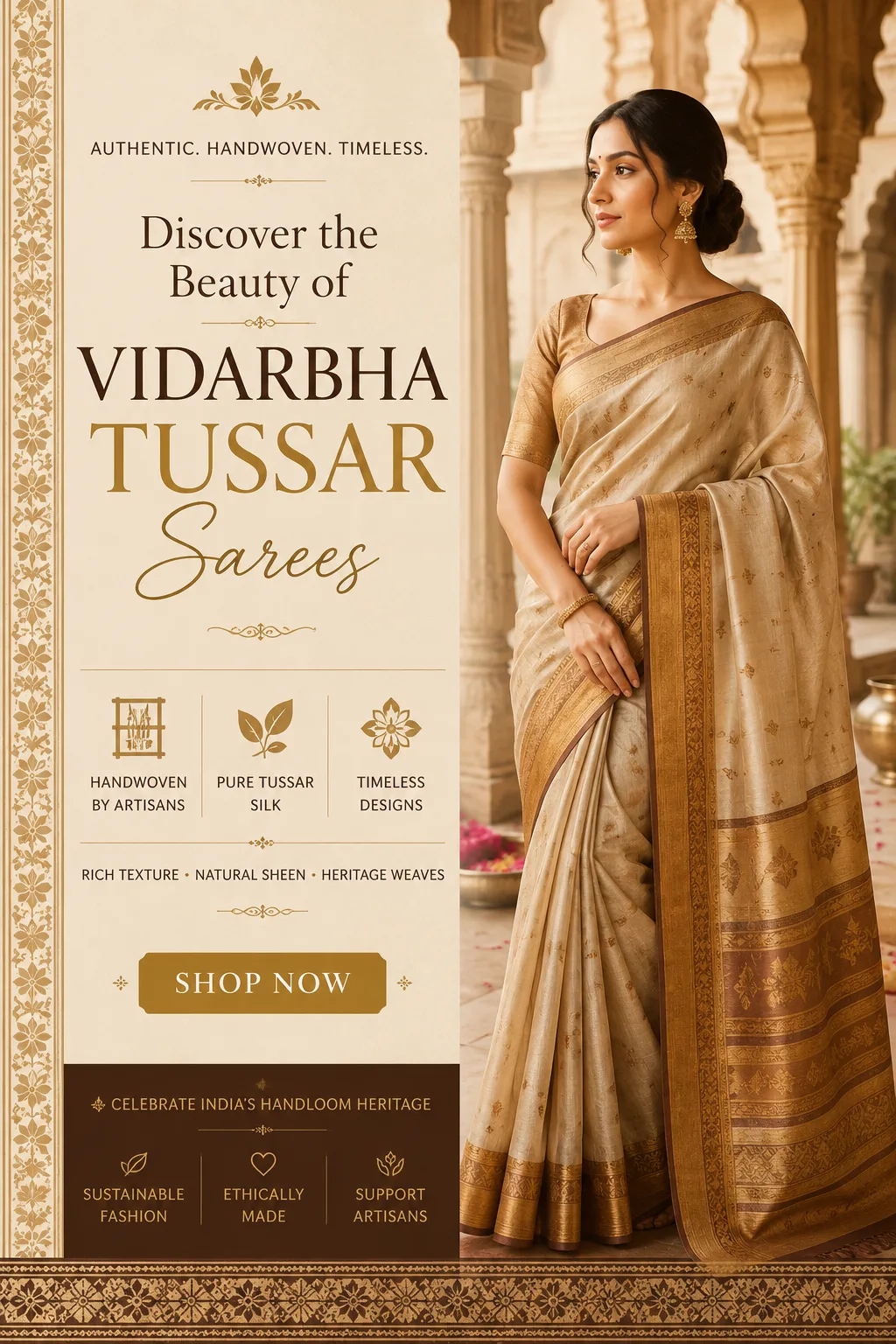
Indian women seeking elegant, versatile sarees for both everyday wear and special occasions often struggle to find authentic handloom pieces that balance tradition, quality, and convenience. In a market flooded with machine-made or blended alternatives, identifying genuine Vidarbha Tussar sarees online can feel overwhelming. These sarees, known for their distinctive natural texture and Karvati Kinar borders, represent a rich weaving heritage from Maharashtra’s Vidarbha region.
This guide draws on verifiable details about their origin, characteristics, and purchasing best practices. It helps you make informed choices when searching for Vidarbha Tussar sarees online, Vidarbha sarees, or from Vidarbha Tussar sarees manufacturers.
What Are Vidarbha Tussar Sarees and Why Are They Unique?
Vidarbha Tussar sarees (also called Karvati Kinar or Karvat Kathi sarees) are handwoven using tussar (or tasar) silk, a wild silk produced from silkworms in forest regions. The silk comes from Antheraea species that feed on trees like Terminalia, giving the fabric a characteristic deep-gold hue, rich texture, and muted sheen distinct from smoother mulberry silk.
These sarees originate primarily from the Vidarbha region of Maharashtra, notably Bhandara and Nagpur districts. Weavers, often from the Halba community who migrated from Bastar in the 17th century, use a three-shuttle loom technique. The iconic “Karvati Kinar” (saw-tooth border) is a hallmark, frequently paired with Ganga-Jamuna borders or temple motifs. The body typically uses natural tussar silk, with contrasting cotton borders aided by dobby attachments.
According to sources on the craft, a single handloom Karvati saree takes about 8-10 days to weave. The Karvati Kinar weave from Bhandara holds Geographical Indication (GI) tag number 390.
How to Identify Authentic Vidarbha Tussar Sarees Online
“How can I tell if a Vidarbha Tussar saree is real?” is a common search.
Look for these verifiable markers:
- Texture and appearance: Uneven, slightly coarse texture with natural grip and muted luster, not overly shiny or uniform like synthetics.
- Silk Mark certification: Issued by the Silk Mark Organisation of India under the Central Silk Board, this label confirms pure silk content.
- GI tag reference: Authentic pieces from Bhandara/Nagpur often mention the GI status for Karvati Kinar.
- Weave details: Three-shuttle technique, saw-tooth borders, and natural tussar yarn sourced from regional forests.
Reputed platforms and sellers provide close-up images, fabric details, and certifications. Avoid overly glossy images or suspiciously low prices that suggest blends or fakes.
Vidarbha Tussar Sarees vs. Other Tussar or Silk Varieties: A Comparison
Use this decision matrix to evaluate options:
CriterionVidarbha Tussar (Karvati Kinar)Other Tussar (e.g., Bhagalpur)Mulberry Silk SareesOrigin & GIVidarbha (Bhandara/Nagpur), GI 390Bihar/West Bengal, etc.Multiple regions, no specific GI for this styleTexture & SheenCoarse, natural gold, distinctive gripSimilar wild silk textureSmoother, higher lusterBorder StyleSignature saw-tooth Karvati KinarVaries, often simplerZari or woven patternsWeaving Time8-10 days per sareeVariesVariesBest ForOffice, small functions, everyday eleganceFestive wearTraditional heavy occasionsPrice Range (approx., based on market listings)Mid to premium (varies by embroidery)CompetitiveOften higher for pure
Note: Exact pricing depends on current market and embellishments; always check seller listings for specifics.
This table highlights why Vidarbha variants stand out for their regional identity and versatile drape.
Benefits of Choosing Vidarbha Tussar Sarees
Tussar silk’s wild origin makes it breathable and suitable for various climates. The fabric drapes elegantly, offers a sophisticated look for professional or casual settings, and supports sustainable handloom practices. India’s broader silk sector provides livelihoods to millions; the Central Silk Board (established 1948 under the Ministry of Textiles) oversees development through schemes like Silk Samagra.
According to the Press Information Bureau (PIB), India’s raw silk production rose from 31,906 MT in 2017-18 to 38,913 MT in 2023-24, with silk goods exports reaching ₹2,027.56 crores in 2023-24. Tussar silk forms a niche but culturally significant part of this ecosystem, with the global tussar market showing steady growth projections.
Common Mistakes to Avoid When Buying Vidarbha Tussar Sarees Online
Industry patterns and buyer reports highlight these pitfalls:
- Ignoring certifications: Purchasing without Silk Mark or clear authenticity details risks receiving blends or fakes that lose texture quickly.
- Relying solely on photos: Low-resolution images hide weave quality; request videos or detailed descriptions.
- Chasing unrealistically low prices: Genuine handloom pieces reflect labor and material costs; suspiciously cheap options are often not pure or handwoven.
- Overlooking care instructions: Tussar requires gentle handling—dry cleaning recommended, proper storage to prevent damage.
- Skipping seller reputation: Avoid unverified Instagram shops or marketplaces without return policies; opt for established platforms with transparent sourcing.
Where and How to Buy Vidarbha Tussar Sarees Online
Search for platforms specializing in handloom sarees. Look for sellers who source directly or work with Vidarbha weavers in Bhandara and Nagpur. Check for mentions of Vidarbha Tussar sarees manufacturers or cooperatives. Platforms like indeloom curate authentic options with proper documentation. Always verify current stock, shipping to India, and return policies.
FAQ
What is special about Vidarbha Tussar sarees? They feature wild tussar silk from Vidarbha forests and the distinctive Karvati Kinar saw-tooth border, woven on three-shuttle looms with GI tag protection for the Bhandara variant.
Are Vidarbha Tussar sarees suitable for daily wear? Yes. Their breathable texture and elegant yet understated look make them ideal for office or small occasions, unlike heavier traditional silks.
How do I verify authenticity when buying Vidarbha tussar sarees online? Seek Silk Mark certification, GI references, fabric swatches or videos, and buy from reputable sellers. Test for natural uneven texture and grip.
What is the difference between Vidarbha Tussar and other tussar sarees? Vidarbha versions emphasize the regional Karvati Kinar style and specific weaving community heritage, setting them apart in border design and cultural specificity.
How should I care for a Vidarbha Tussar saree? Follow gentle dry cleaning, avoid direct sunlight, and store folded with acid-free paper. Consult seller guidelines for specific pieces.
Conclusion
Vidarbha Tussar sarees offer a perfect blend of heritage craftsmanship, natural beauty, and modern versatility for Indian women. By focusing on certifications like Silk Mark and GI indicators, and choosing trusted sources such as indeloom, you can confidently add these timeless pieces to your collection. Explore authentic Vidarbha Tussar sarees online today and experience the elegance of this handloom treasure.