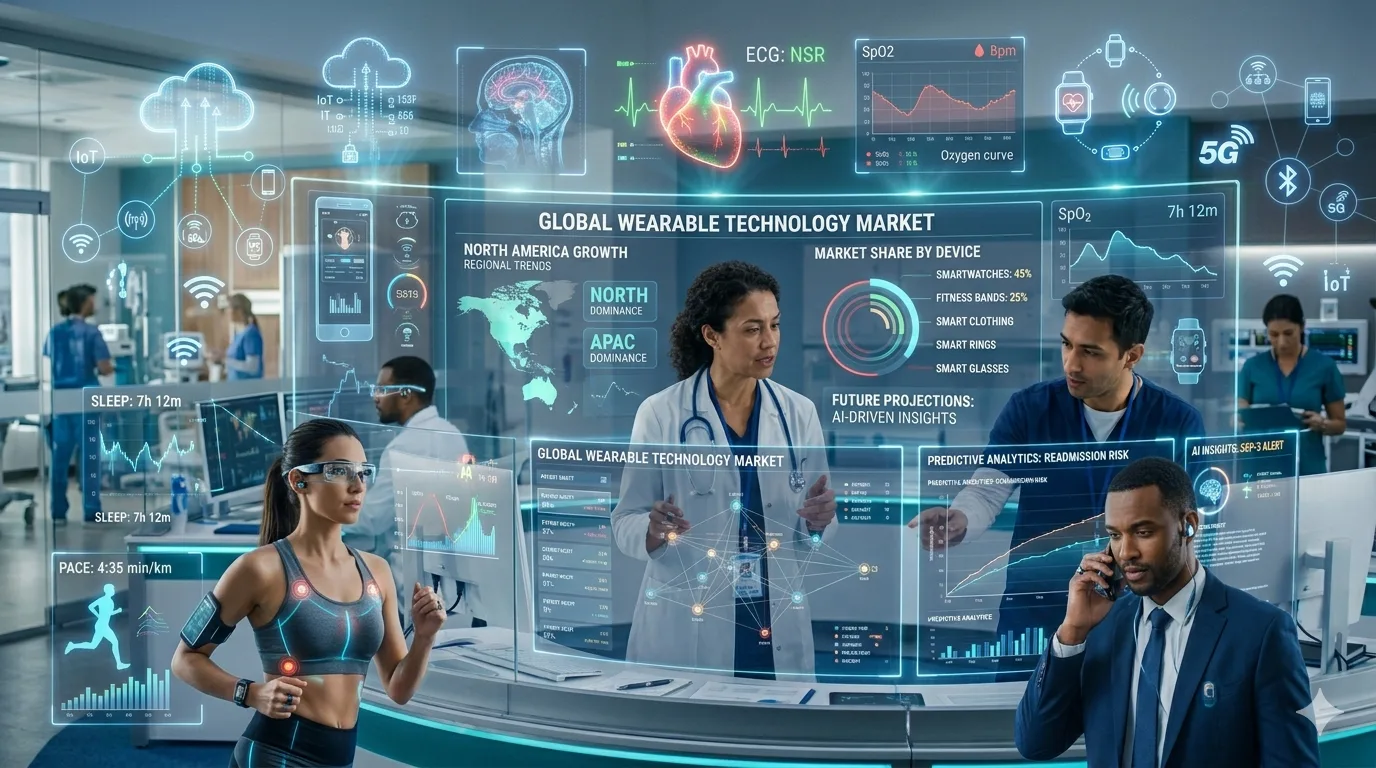
The Global Wearable Technology Market is witnessing remarkable growth as consumers increasingly adopt connected devices to monitor health, fitness, productivity, and overall lifestyle. The market is projected to reach a value of USD 85.8 billion in 2024 and is anticipated to expand substantially, reaching USD 305.3 billion by 2033, growing at a compound annual growth rate (CAGR) of 15.1% during the forecast period.
Wearable technologies have evolved significantly over the past decade, transforming from simple fitness trackers into sophisticated smart devices equipped with sensors, artificial intelligence capabilities, and seamless connectivity features. These devices are becoming an integral part of daily life, enabling users to track vital signs, receive notifications, improve athletic performance, and even support medical diagnostics.
Rapid advancements in miniaturization, sensor technologies, wireless communication, and cloud computing continue to enhance wearable device functionality. The increasing emphasis on preventive healthcare, digital wellness initiatives, and personalized user experiences is further contributing to the market's robust expansion.
Understanding Wearable Technology
Wearable technology refers to smart electronic devices that can be comfortably worn on the body and are designed to collect, transmit, and analyze data in real time. These products often incorporate advanced sensors, connectivity modules, and software applications to deliver valuable insights to users.
Common wearable devices include:
- Smartwatches
- Fitness bands
- Smart glasses
- Smart clothing
- Hearables
- Medical wearables
- Sports performance monitors
- Smart rings
These devices are increasingly used across healthcare, consumer electronics, industrial operations, defense applications, and entertainment sectors.
Key Factors Driving Market Growth
Rising Focus on Health and Wellness
Consumers are becoming increasingly health-conscious and proactive in managing their wellbeing. Wearables provide continuous monitoring of various health metrics such as:
- Heart rate
- Blood oxygen saturation
- Sleep quality
- Stress levels
- Physical activity
- Calorie expenditure
The ability to access real-time health information empowers individuals to make informed lifestyle choices and maintain healthier routines.
Growing Adoption of Remote Patient Monitoring
Healthcare providers are increasingly leveraging wearable devices to monitor patients remotely. This capability has become particularly valuable for managing chronic diseases and reducing hospital readmissions.
Medical-grade wearables enable healthcare professionals to collect patient data continuously, facilitating early intervention and personalized treatment plans.
Benefits include:
- Improved patient engagement
- Reduced healthcare costs
- Better disease management
- Enhanced treatment outcomes
Advancements in Sensor Technologies
Continuous innovation in sensor technologies is significantly enhancing wearable capabilities.
Modern devices now integrate:
- ECG sensors
- Temperature sensors
- Motion tracking sensors
- Hydration monitoring sensors
- Glucose monitoring technologies
- Bioelectrical impedance analysis
These advancements are expanding the use cases of wearable devices beyond fitness applications.
Expansion of Connected Ecosystems
The growing penetration of smartphones, IoT platforms, and cloud services has strengthened wearable device ecosystems.
Users can seamlessly synchronize data between:
- Smartphones
- Tablets
- Smart TVs
- Healthcare applications
- Enterprise platforms
Enhanced interoperability improves user convenience and supports long-term device adoption.
Emerging Trends Shaping the Wearable Technology Market
Artificial Intelligence Integration
Artificial intelligence is becoming a defining feature of modern wearable devices.
AI-powered wearables can:
- Detect irregular heart rhythms
- Predict health anomalies
- Provide personalized fitness coaching
- Analyze sleep patterns
- Optimize workout routines
Machine learning algorithms continue to improve device accuracy and personalization capabilities.
Growth of Smart Clothing
Smart textiles represent one of the fastest-growing wearable categories.
Applications include:
- Sports performance optimization
- Rehabilitation monitoring
- Military applications
- Occupational safety
- Industrial workforce management
Embedded sensors within fabrics allow users to monitor physiological conditions without relying on traditional wearable accessories.
Increased Demand for Hearables
Hearables are gaining substantial popularity due to their multifunctionality.
Features commonly include:
- Voice assistants
- Real-time language translation
- Noise cancellation
- Fitness tracking
- Communication support
As audio technologies continue evolving, hearables are expected to become an important growth segment.
Development of Non-Invasive Monitoring Solutions
Consumers increasingly prefer convenient, non-invasive monitoring technologies.
Manufacturers are investing heavily in innovations aimed at enabling:
- Blood glucose tracking
- Blood pressure measurement
- Hydration monitoring
- Stress detection
Successful commercialization of these capabilities could significantly expand market opportunities.
Challenges Impacting Market Expansion
Data Privacy Concerns
Wearable devices collect extensive amounts of personal information.
Consumers remain concerned about:
- Unauthorized data sharing
- Cybersecurity vulnerabilities
- Privacy breaches
- Inadequate consent management
Manufacturers must prioritize robust security measures to maintain user trust.
Battery Life Limitations
Battery performance remains a major challenge for wearable manufacturers.
Users increasingly expect:
- Longer usage durations
- Faster charging technologies
- Lightweight batteries
- Enhanced energy efficiency
Addressing these expectations is critical for sustaining user satisfaction.
High Product Costs
Premium wearable devices often carry elevated price points, limiting accessibility in price-sensitive markets.
Reducing production costs while maintaining advanced functionality will remain an important strategic focus.
Download a Complimentary PDF Sample Report: https://dimensionmarketresearch.com/request-sample/wearable-technology-market/
Market Segmentation Analysis
By Product Type
SmartwatchesSmartwatches represent the dominant product category due to their extensive feature sets and strong consumer appeal.
Features typically include:
- Messaging support
- Health monitoring
- Mobile payments
- GPS tracking
- Voice assistants
Fitness trackers remain popular among consumers seeking affordable health monitoring solutions.
They primarily focus on:
- Step counting
- Sleep analysis
- Activity tracking
- Exercise monitoring
Smart glasses are gradually gaining traction across enterprise and industrial environments.
Applications include:
- Remote assistance
- Navigation
- Training simulations
- Field operations
By Application
Consumer ElectronicsConsumer electronics continue to account for the largest market share due to widespread adoption among tech-savvy individuals.
HealthcareHealthcare applications are experiencing rapid growth as wearable technologies become integrated into clinical workflows.
Sports and FitnessAthletes increasingly utilize wearables to enhance training efficiency and optimize performance.
Industrial ApplicationsIndustries are deploying wearables to improve worker safety, productivity, and operational efficiency.
Competitive Landscape
The wearable technology industry remains highly competitive, characterized by continuous innovation and product differentiation.
Companies are focusing on:
- Advanced health monitoring capabilities
- Strategic collaborations
- Software ecosystem development
- Artificial intelligence integration
- Subscription-based wellness services
Continuous investment in research and development is expected to intensify market competition over the coming years.
Regional Analysis
North America
North America is projected to dominate the global wearable technology market, accounting for 33.80% of the market share in 2024.
Several factors contribute to regional leadership.
The region is home to numerous technology innovators and established companies actively engaged in wearable device development. Strong innovation ecosystems support continuous product launches and technological advancements.
North America also benefits from:
- High disposable income levels
- Strong consumer awareness
- Significant healthcare digitization initiatives
- Broad smartphone penetration
- Growing interest in preventive healthcare
The presence of a large technology-oriented population further strengthens market demand.
Europe
Europe represents another significant regional market driven by increasing healthcare investments and growing wellness awareness.
Countries across the region are embracing wearable technologies for remote patient management and elderly care solutions.
Asia-Pacific
Asia-Pacific is anticipated to witness the fastest growth throughout the forecast period.
Growth drivers include:
- Expanding middle-class populations
- Increasing internet connectivity
- Rising health consciousness
- Growing manufacturing capabilities
Several emerging economies are expected to offer substantial opportunities for market participants.
Latin America
Latin America continues to demonstrate steady adoption as digital healthcare infrastructure improves and consumer purchasing power gradually increases.
Middle East and Africa
The Middle East and Africa region is witnessing increasing investments in healthcare modernization, supporting the adoption of wearable technologies.
Frequently Asked Questions (FAQs)
1. What is driving the growth of the wearable technology market?
The primary growth drivers include increasing health awareness, advancements in sensor technologies, growing demand for remote patient monitoring, and expanding connected ecosystems.
2. How large is the wearable technology market expected to become?
The market is projected to grow from USD 85.8 billion in 2024 to approximately USD 305.3 billion by 2033, registering a CAGR of 15.1%.
3. Which region leads the wearable technology market?
North America is expected to maintain its leadership position, accounting for 33.80% of the global market share in 2024.
4. What are the most commonly used wearable devices?
Popular wearable products include smartwatches, fitness trackers, smart glasses, hearables, smart clothing, and medical monitoring devices.
5. What challenges does the wearable technology industry face?
Major challenges include data privacy concerns, battery limitations, high product costs, and cybersecurity risks.
Key Takeaways
The Global Wearable Technology Market is entering a high-growth phase fueled by technological innovation, increasing health consciousness, and expanding digital ecosystems. Artificial intelligence, smart textiles, remote healthcare applications, and non-invasive monitoring technologies are expected to redefine future market dynamics. With North America leading adoption and Asia-Pacific emerging as a high-potential growth region, wearable technologies are poised to become an indispensable component of modern lifestyles, healthcare systems, and connected environments worldwide.
Purchase the report for comprehensive details: https://dimensionmarketresearch.com/checkout/wearable-technology-market/