
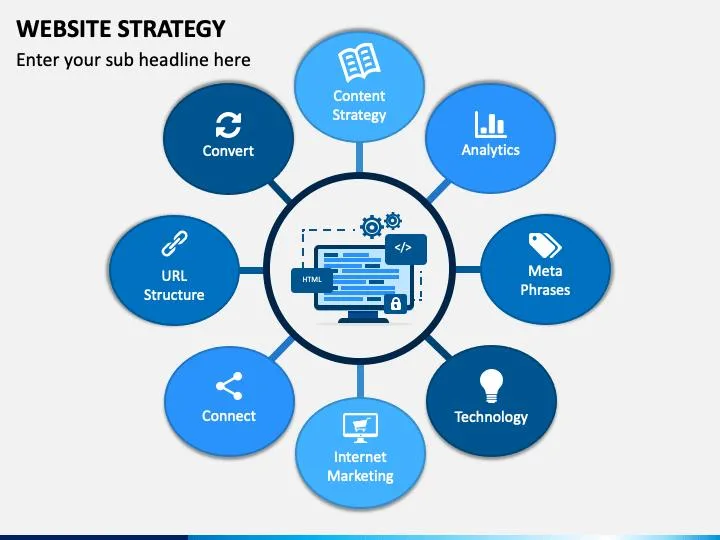
Most businesses invest significant time and money into building a website. Yet many websites fail to generate leads, attract the right audience, or support long-term business growth. A successful website starts with a clear website strategy. It provides direction, aligns business goals with user needs, and ensures every decision contributes to measurable outcomes.
In this guide, we'll explore what website strategy really means, why it matters, and how to create a strategic foundation that helps your website become a valuable growth asset rather than just an online presence.
What Is a Website Strategy?
A website strategy is the plan that guides how your website supports your business objectives.
It is not simply about choosing colours, layouts, or technologies. Instead, it focuses on making intentional decisions about who your website serves, what actions visitors should take, and how the site contributes to overall business growth.
An effective website strategy answers key questions such as:
- Why does this website exist?
- Who is the primary audience?
- What business goals should the website support?
- What actions should visitors take?
- How will success be measured?
Without clear answers to these questions, websites often become collections of pages with no clear purpose or direction.
Why Website Strategy Matters More Than Design
Many businesses start a website project by discussing visual inspiration, page layouts, or features. While these elements are important, they should never come before strategy.
When businesses skip the planning stage, they often experience challenges such as:
- Confusing navigation structures
- Unfocused messaging
- Poor user experience
- Low conversion rates
- Ineffective SEO performance
- Costly redesigns shortly after launch
A strong website strategy creates clarity before execution begins. It ensures that every design, content, and development decision serves a larger objective.
Define the Primary Purpose of Your Website
Every successful website has a primary objective. Before planning pages or content, determine the main role your website will play within your business.
Common website objectives include:
Lead Generation: Designed to attract potential customers and encourage enquiries, consultations, or quote requests.
Ecommerce Sales: Focused on converting visitors into paying customers through online purchases.
Brand Authority: Build to establish credibility, showcase expertise, and position the business as an industry leader.
Customer Support : Provides resources, documentation, and assistance for existing customers.
Portfolio or Showcase: Highlights previous work, case studies, and achievements to build trust.
While a website can support multiple goals, one objective should remain the priority. This creates clarity for both users and internal teams.
Understand Your Audience Before Creating Pages
One of the biggest mistakes businesses make is building a website around what they want to say rather than what users need to know.
A successful website strategy starts with understanding the audience.
Consider:
- Who are your ideal customers?
- What problems are they trying to solve?
- What information are they looking for?
- What concerns might prevent them from taking action?
- What motivates them to trust a business?
When you understand your audience, it becomes easier to create content, navigation, and user journeys that genuinely support their decision-making process.
Create a Website Design Strategy That Supports User Experience
A website design strategy goes beyond visual appearance.Its purpose is to create an experience that helps visitors achieve their goals while supporting business objectives.
An effective website design strategy focuses on:
Clear Navigation: Visitors should quickly understand where they are and where to go next.
Consistent Visual Hierarchy: Important information should stand out naturally, guiding users through the page.
Mobile Responsiveness: With mobile traffic continuing to grow, every page should perform seamlessly across devices.
Accessibility: Websites should be usable by all visitors, regardless of ability.
Fast Loading Speeds: Performance directly impacts user satisfaction, engagement, and search visibility.
Design should always support strategy, not compete with it.
Develop a Website Content Strategy That Builds Trust
Content is one of the most influential elements of any website.
A well-planned website content strategy ensures that every page serves a purpose and helps users move closer to a decision.
Effective content should:
- Address customer questions
- Explain solutions clearly
- Demonstrate expertise
- Build trust through evidence and case studies
- Encourage meaningful action
Instead of creating content simply to fill pages, focus on providing information that helps visitors make informed decisions.
Plan a Website Conversion Strategy Early
Many websites attract visitors but struggle to generate enquiries or sales. This often happens because conversion planning is treated as an afterthought. A website conversion strategy focuses on turning traffic into measurable business outcomes.
Key elements include:
Strategic Calls-to-Action: Every important page should guide users toward a logical next step.
Trust Signals: Reviews, testimonials, certifications, and case studies help reduce uncertainty.
Simplified User Journeys: Removing unnecessary steps can significantly improve conversion rates.
Clear Value Propositions: Visitors should immediately understand why your solution is relevant to them.
Data-Driven Optimization: Conversion improvements should be based on user behaviour and performance data rather than assumptions.
When conversion strategy is integrated from the beginning, websites become more effective at generating business results.
When You Need a Website Redesign Strategy
A redesign should never be based solely on aesthetics.
Many businesses assume that a new look will automatically improve performance, but visual updates alone rarely solve underlying issues.
A website redesign strategy should begin by identifying:
- Current performance gaps
- User experience issues
- Conversion bottlenecks
- SEO limitations
- Content weaknesses
- Changes in business goals
By understanding why the existing website underperforms, businesses can create a redesign plan focused on outcomes rather than appearance.
Setting Goals That Guide Website Decisions
Every strategic website project requires measurable goals.
Examples include:
- Increasing monthly lead generation by 25%
- Improving organic traffic growth
- Reducing bounce rates
- Increasing ecommerce sales
- Growing newsletter subscriptions
- Improving customer retention.
Without measurable objectives, it becomes difficult to determine whether a website is actually delivering value.
How SEO Fits Into Website Strategy
Search engine optimization should never be treated as a separate activity. SEO is most effective when integrated into the website strategy from the beginning.
This includes:
- Keyword research
- Site architecture planning
- Internal linking structure
- Content development
- Technical optimization
- User experience improvements
When SEO considerations are included early, businesses avoid costly restructuring later and create stronger foundations for long-term organic growth.
Signs Your Website Strategy Needs Improvement
Your current website strategy may need attention if:
- Traffic is growing but conversions remain low
- Visitors leave quickly without engaging
- Messaging feels inconsistent
- Business goals have changed significantly
- Content no longer reflects customer needs
- The website lacks a clear conversion path
Recognizing these signs early allows businesses to make strategic improvements before performance declines further.
Final Thoughts
A thoughtful website strategy aligns design, content, SEO, user experience, and Custom. Instead of relying on generic solutions, custom development allows businesses to create a website that is specifically tailored to their unique goals, workflows, and customer expectations. By optimizing functionality, performance, security, and scalability, Custom It also provides greater flexibility for integrating advanced features, improving user experiences, and supporting long-term digital marketing efforts. When combined with a strong strategic foundation, custom web development helps create a website that not only looks professional and reflects the brand effectively but also generates leads, improves conversions, enhances customer engagement, and actively supports sustainable business growth for years to come.