Concrete slabs shift over time. Driveways sink, patios tilt, and garage floors develop gaps along their edges. Property owners dealing with this kind of settlement often look into polyjacking services as a way to fix the problem without replacing the concrete entirely. This article explains what the process involves, how it works step by step, and how it compares to older repair methods.
What Is Polyjacking?
Polyjacking is a concrete leveling method that uses high-density polyurethane foam to raise sunken slabs back to their original position. Contractors drill small holes into the concrete, then pump the foam underneath. As the foam expands, it fills gaps in the soil and lifts the slab from below.
The term "polyjacking" comes from combining "polyurethane" with "jacking," which refers to the lifting action. This process is used on driveways, sidewalks, patios, pool decks, garage floors, and building foundations. The process addresses the underlying cause of settlement, which is usually soil that has washed away, compacted, or shifted due to moisture changes.
Why Concrete Slabs Sink
Concrete itself rarely fails on its own. Most sinking happens because the soil underneath loses volume or stability. A few common causes include:
Soil erosion. Water runoff can wash soil particles out from under a slab, leaving voids that the concrete eventually falls into.
Poor compaction. If soil was not compacted properly before the concrete was poured, it settles over time under the weight of the slab.
Moisture changes. Soil expands when wet and contracts when dry. Repeated cycles of expansion and contraction can create gaps beneath concrete.
Tree roots. Roots can absorb moisture from soil near a slab, causing the ground to dry out and shrink unevenly.
Once a void forms, the slab above it no longer has full support. Over time, foot traffic, vehicle weight, and gravity cause the unsupported section to sink.
How Polyjacking Services Work
The process generally follows four main stages. Each stage plays a role in getting the slab back to level without damaging the surrounding concrete.
Step 1: Site Assessment
A technician first inspects the slab to determine how much it has settled and why. This includes checking for cracks, measuring the height difference between sunken and level sections, and identifying the likely cause of soil loss. This step also helps the technician decide how much foam the job will require and where injection points should be placed.
Step 2: Drilling Injection Holes
Once the assessment is complete, the crew drills small holes into the concrete, typically about the size of a coin. These holes are spaced based on the size of the slab and the pattern of settlement. Compared to slabjacking with cement-based grout, polyjacking holes are noticeably smaller because the foam expands to fill space rather than being poured in bulk.
Step 3: Injecting the Foam
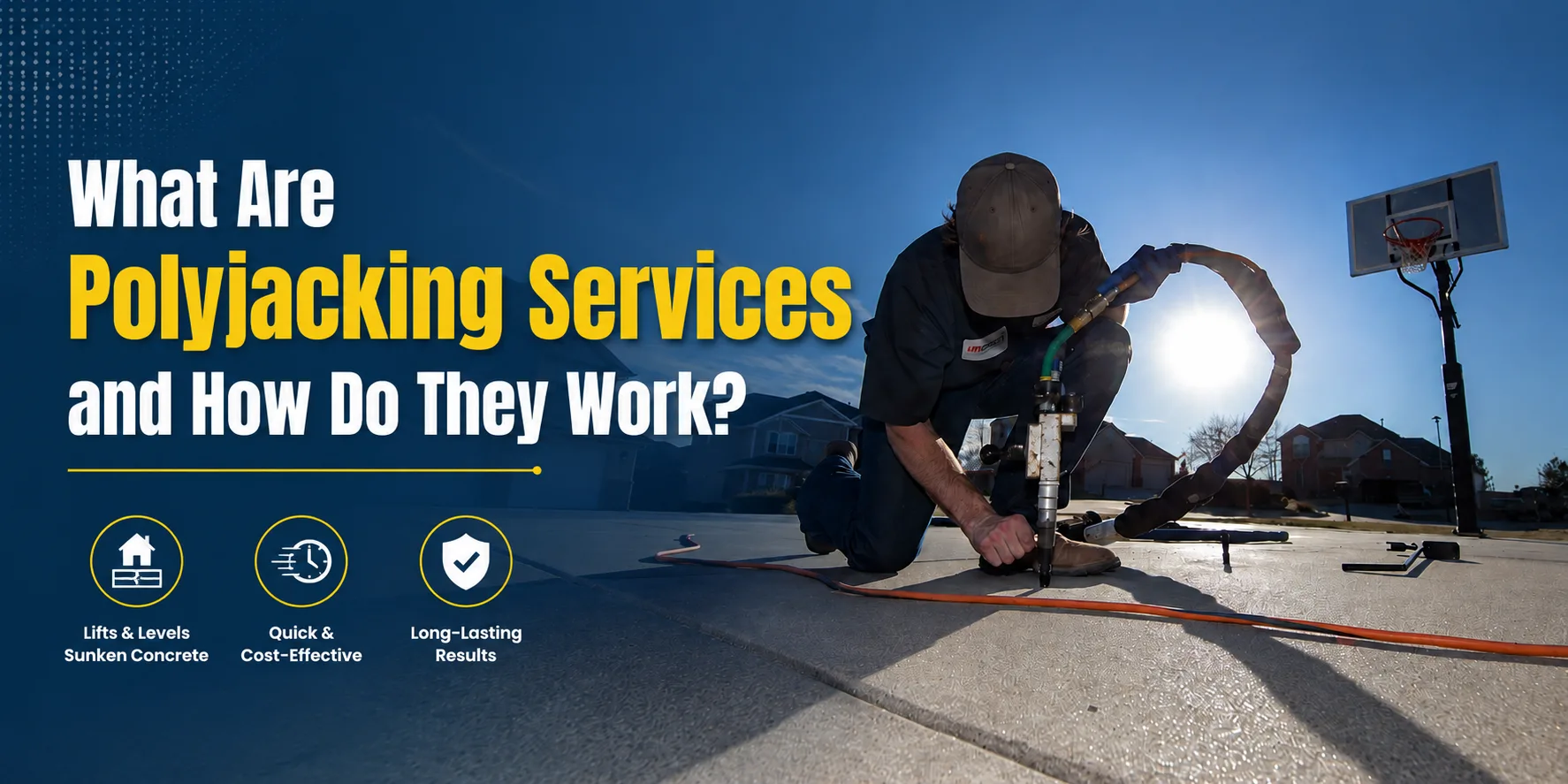
A two-part polyurethane foam is mixed and injected through the drilled holes using a specialized pump and hose system. The foam is a liquid at the point of injection. Within seconds, it begins to react and expand, filling voids in the soil and applying upward pressure on the slab. Technicians monitor the lift closely, checking the slab level with tools as the process continues so they can stop injecting once the surface reaches the desired height.
Step 4: Curing and Sealing
Polyurethane foam cures fast, often within 15 minutes. This means the area can typically be used again shortly after the work is finished, unlike some traditional methods that require a longer waiting period. Once the foam has set, the technician seals the injection holes with a matching material so the repair blends in with the rest of the slab.
Polyjacking Compared to Traditional Mudjacking
Before this method became widely available, mudjacking was the standard method for lifting sunken concrete. Mudjacking uses a slurry made of cement, soil, and water, pumped through larger holes drilled into the slab.
Material weight. Polyurethane foam weighs a fraction of what mudjacking slurry weighs. This lighter weight means the foam is less likely to cause additional settlement over time, since it does not add significant load to the soil below.
Hole size. Mudjacking requires holes roughly two inches wide. Polyjacking holes are much smaller, which leaves less visible patching on the finished surface.
Cure time. Mudjacking slurry can take days to fully cure, during which the area should not be used. Polyurethane foam cures within minutes, allowing faster return to normal use.
Water resistance. Foam does not absorb water and will not break down when exposed to moisture, while mudjacking slurry can wash out again if soil conditions have not been fully addressed.
Because of these differences, many contractors and property owners now consider polyjacking the more practical choice for residential and light commercial concrete repair, though mudjacking is still used in some larger-scale projects.
Common Applications for Polyjacking Services
This method applies to a wide range of concrete surfaces, including:
- Residential driveways with sunken sections or trip hazards
- Sidewalks and walkways that have separated from adjoining slabs
- Patios and pool decks affected by soil erosion
- Garage floors that have pulled away from the foundation wall
- Interior floor slabs in basements or crawl spaces
- Commercial parking areas and loading docks
The method works best on slabs that are structurally sound but have settled due to soil issues. It is not intended to repair concrete that is severely cracked, crumbling, or structurally compromised, since foam injection cannot fix damage to the concrete itself.
Benefits and Limitations
This approach offers several practical advantages. The process is faster than slab replacement, generates far less debris, and allows the area to be used again soon after the work is done. The foam is also resistant to water damage and does not add meaningful weight to the soil, which reduces the chance of repeat settlement caused by the repair material itself.
That said, polyjacking has limits. It cannot correct problems with the concrete's structural integrity, such as deep cracking or reinforcement failure. It also depends on stable soil conditions surrounding the void being filled. In cases where the underlying soil is still actively eroding, additional drainage work may be needed alongside the foam injection to prevent the problem from recurring.
Choosing a Provider for Polyjacking Services
Because the quality of a polyjacking repair depends heavily on technician experience and equipment, property owners should look for a contractor with a documented history of concrete leveling work. Questions worth asking include how long the company has performed this type of work, what type of foam they use, and whether they offer any warranty on the completed work.
Lift It Pro is one example of a company that specializes in polyurethane foam injection for concrete leveling, working on driveways, patios, garage floors, and foundation repair. Providers like this typically walk property owners through the assessment and injection process before work begins, so there are no surprises about how the slab will be treated.
Conclusion
Polyjacking services give property owners a way to correct sunken or uneven concrete without tearing out and repouring the slab. By injecting expanding polyurethane foam beneath the surface, technicians fill soil voids and raise the concrete back into position, often within a single visit. Compared to older methods like mudjacking, polyjacking tends to involve smaller holes, faster cure times, and a lighter material that holds up well against moisture. For concrete that is structurally sound but has settled due to soil loss, polyjacking offers a practical and less disruptive repair option than full slab replacement.