
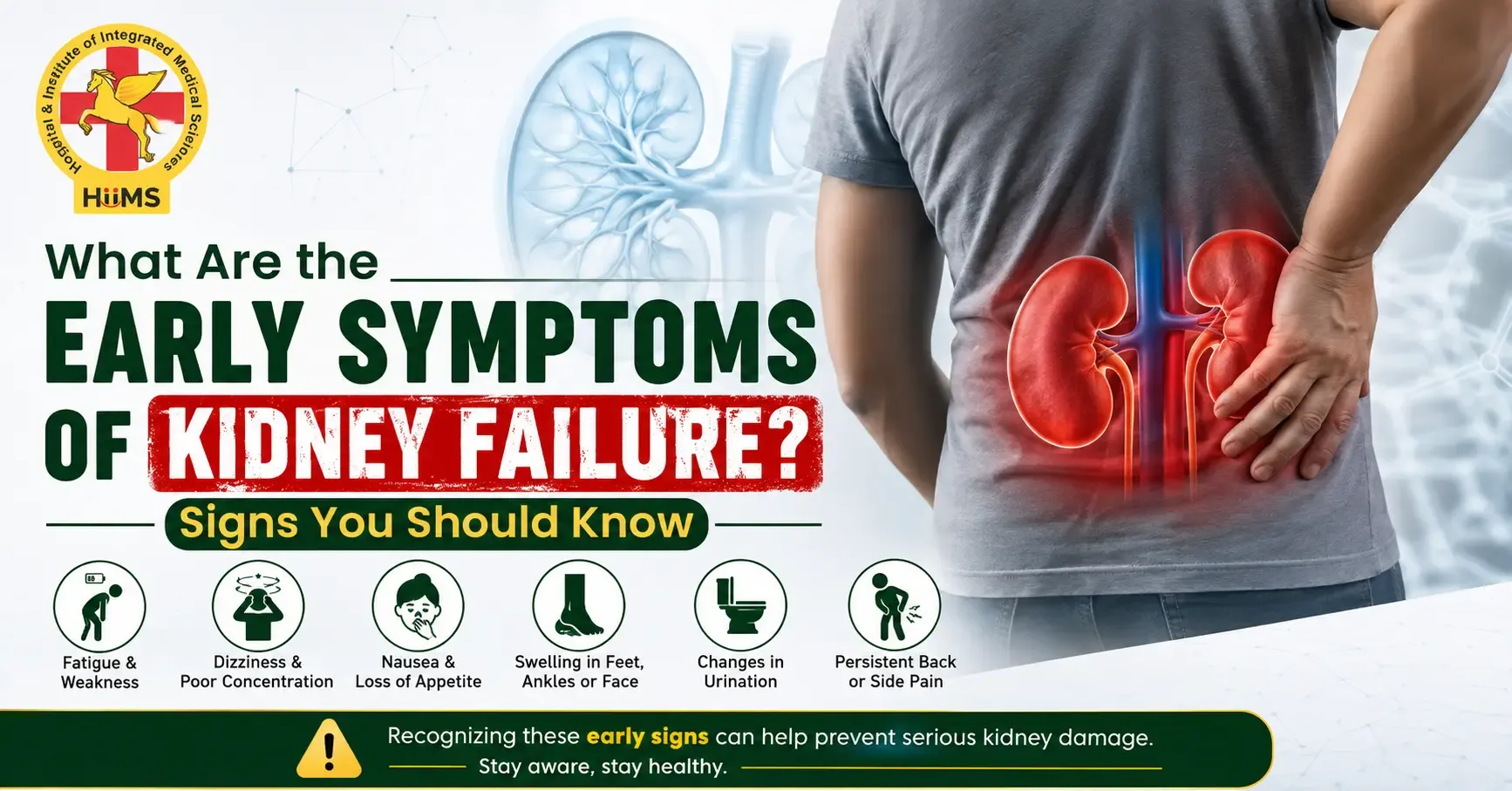
Kidneys play an important role in maintaining overall health. They filter waste and excess fluids from the blood, help balance minerals, support healthy blood pressure, and contribute to the production of certain hormones. When kidney function gradually declines, the body may begin to show different warning signs. However, early kidney problems may develop without obvious symptoms, which is why awareness and timely evaluation are important.
Understanding the early symptoms of kidney failure can help a person recognize changes in their health and seek appropriate medical guidance. Jeena Sikho HiiMS focuses on holistic health management and emphasizes the importance of understanding the underlying factors that may affect kidney health.
What Is Kidney Failure?
Kidney failure occurs when the kidneys lose a significant amount of their ability to perform their normal functions. Waste products and excess fluid can then build up in the body.
Kidney function can decline suddenly or gradually. Sudden loss of kidney function may develop over a short period, while chronic kidney problems can progress over months or years. Conditions such as diabetes, high blood pressure, recurrent kidney problems, dehydration, and certain other health issues may increase the risk of kidney damage.
Because early kidney disease can sometimes remain unnoticed, recognizing possible warning signs is important.
1. Changes in Urination
One of the noticeable changes associated with kidney problems can be a change in urination. A person may experience increased or decreased urine frequency, particularly at night.
Other changes may include:
- Urinating more frequently than usual
- Producing less urine
- Increased night time urination
- Foamy or unusually bubbly urine
- Darker or reddish urine
- Difficulty urinating
Changes in urine do not always indicate kidney failure. They can occur for several other reasons, but persistent or unusual changes should be discussed with a qualified healthcare professional.
2. Swelling in the Body
Healthy kidneys help remove excess fluid from the body. When kidney function becomes impaired, fluid may accumulate in tissues.
This can lead to swelling, particularly around the:
- Feet and ankles
- Legs
- Hands
- Face or area around the eyes
Swelling that continues or repeatedly occurs should not be ignored, especially when it appears alongside changes in urination or unexplained tiredness.
3. Persistent Fatigue and Weakness
Feeling unusually tired can be another possible sign of reduced kidney function. When the kidneys are not functioning properly, waste products may accumulate in the blood, which can contribute to feelings of weakness, low energy, or difficulty concentrating.
A person may notice that normal daily activities feel more exhausting than before. Persistent fatigue can have many causes, so it should be evaluated rather than automatically attributed to kidney problems.
4. Changes in Appetite
Reduced appetite or a sudden change in eating habits may occur when kidney function declines. Some people may also experience an unpleasant or metallic taste in the mouth.
These changes can make food less appealing and may eventually contribute to unintended weight loss. Persistent appetite changes, particularly when combined with other symptoms, deserve medical attention.
5. Nausea or Vomiting
As kidney function declines, waste products can accumulate in the bloodstream. In some cases, this may contribute to digestive symptoms such as nausea, vomiting, or a general feeling of discomfort.
Frequent nausea should not be assumed to be caused by kidney problems because digestive disorders, infections, medications, and other conditions can produce similar symptoms.
6. Dry or Itchy Skin
Persistent itching or unusually dry skin can sometimes occur in people with impaired kidney function. Changes in mineral and fluid balance may affect the skin.
If itching continues without an obvious skin-related cause, especially when accompanied by swelling, fatigue, or changes in urination, it is worth discussing with a healthcare professional.
7. Difficulty Concentrating
Kidney problems can sometimes be associated with difficulty concentrating, reduced alertness, or a feeling of mental sluggishness. This may become more noticeable as waste products accumulate in the body.
A person may feel less focused at work, have trouble remembering routine tasks, or experience unusual mental tiredness.
8. Muscle Cramps and Changes in Muscle Function
Kidneys help regulate minerals and electrolytes in the body. When kidney function is impaired, mineral balance can become disturbed.
Some people may experience muscle cramps, weakness, or unusual sensations. These symptoms can also result from dehydration, nutritional deficiencies, physical activity, or other health conditions, so proper evaluation is important.
9. Breathlessness or Changes in Breathing
Fluid accumulation can sometimes affect the lungs and contribute to breathlessness. Changes in the body's fluid and mineral balance may also affect how a person feels physically.
Unexplained or persistent breathing difficulty should always be taken seriously and assessed promptly, particularly when it occurs with swelling, chest discomfort, severe weakness, or other concerning symptoms.
10. Sleep Problems
Changes in kidney function may be associated with difficulty sleeping. Some people may experience restless sleep, frequent nighttime urination, itching, muscle discomfort, or daytime tiredness.
Sleep disturbances are common and can have numerous causes. However, persistent sleep problems alongside other kidney-related symptoms should not be overlooked.
Who May Be at Higher Risk?
Some people have a greater likelihood of developing kidney problems. Risk factors can include:
- Diabetes
- High blood pressure
- A family history of kidney disease
- Previous kidney problems
- Recurrent urinary or kidney-related infections
- Heart-related health conditions
- Obesity
- Increasing age
- Long-term exposure to factors that may affect kidney function
Having a risk factor does not necessarily mean that kidney failure will develop. It does, however, make regular health monitoring more important.
How Can Kidney Health Be Supported?
Supporting kidney health involves maintaining healthy daily habits and addressing risk factors early. Adequate hydration, a balanced diet, regular physical activity, healthy body weight, good sleep, and avoiding unnecessary substances that may place stress on the kidneys can all be part of a kidney-friendly lifestyle.
It is also important to monitor conditions such as blood sugar and blood pressure when applicable. Regular health assessments can help identify changes before they become more advanced.
Jeena Sikho HiiMS emphasizes a holistic approach to health that considers lifestyle, nutrition, daily habits, and overall well-being as important components of long-term health management.
When Should You Seek Medical Attention?
Early kidney disease may not always produce clear symptoms. Therefore, waiting for severe symptoms before seeking guidance is not advisable.
You should consider prompt medical evaluation if you experience persistent swelling, significant changes in urination, blood in the urine, unexplained fatigue, repeated nausea, severe weakness, or other unusual symptoms.
Severe breathlessness, confusion, very little or no urine, or sudden significant changes in health require urgent medical attention.
How Are Kidney Problems Evaluated?
A healthcare professional may consider a person's symptoms, medical history, lifestyle, and risk factors before recommending appropriate evaluation. Kidney health may be assessed through blood and urine tests and other investigations when clinically appropriate.
These evaluations can provide information about how well the kidneys are functioning and whether further assessment is necessary.
Final Thoughts
Recognizing the early symptoms of kidney failure can encourage timely attention to kidney health. Changes in urination, swelling, persistent fatigue, appetite changes, nausea, itching, muscle cramps, sleep problems, and difficulty concentrating may occur with kidney problems, although these symptoms can also have other causes.
Because kidney disease may progress silently, awareness and regular health monitoring are important, especially for people with known risk factors. Jeena Sikho HiiMS promotes a holistic perspective on health that includes balanced nutrition, healthy lifestyle habits, and attention to the body's warning signs.
If you notice persistent or unexplained symptoms, seek guidance from a qualified healthcare professional rather than attempting to determine the cause on your own.