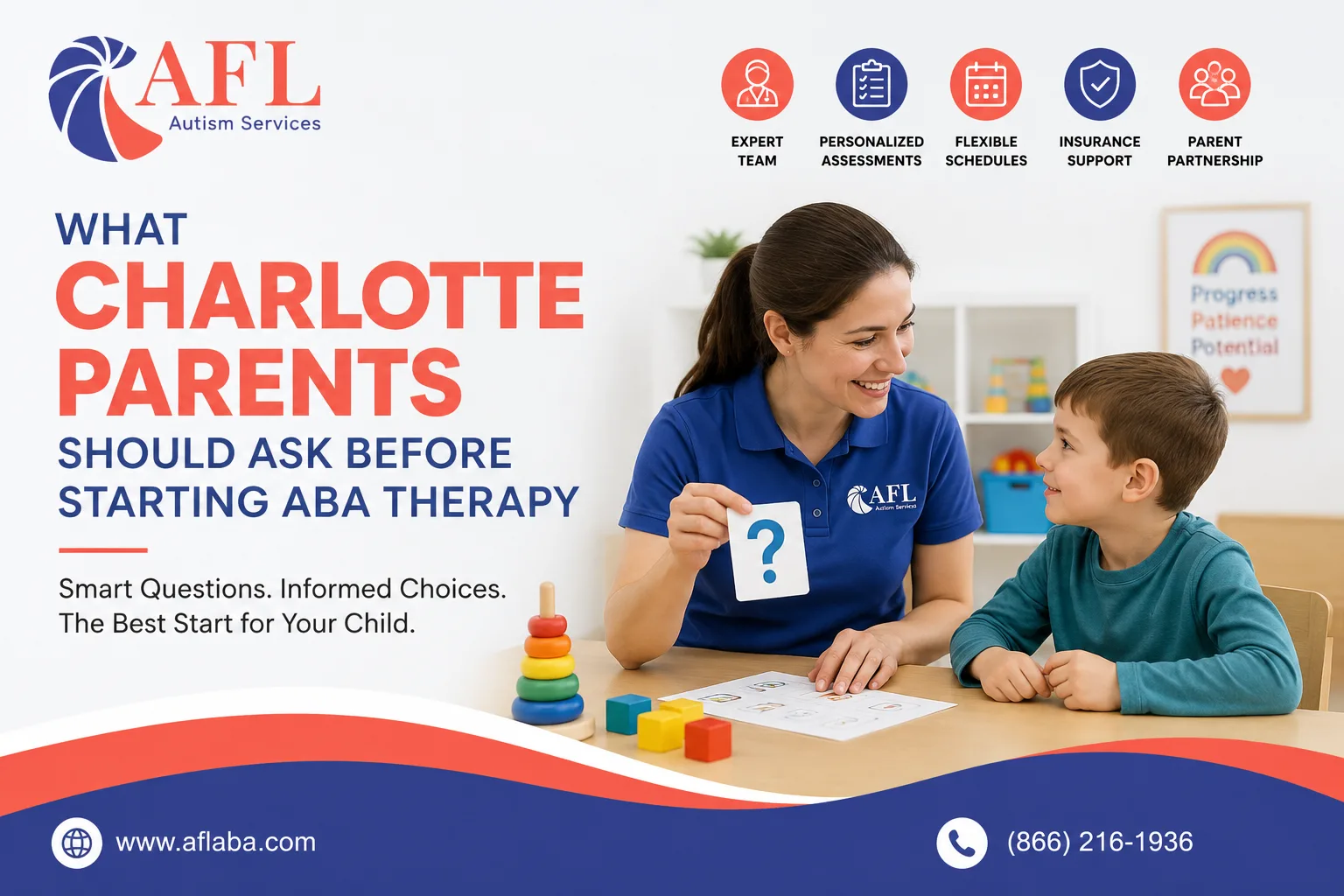
Starting ABA therapy for your child is a big decision. You want to feel confident about where your child will spend their time, who will be working with them, and whether the investment makes sense for your family. The good news is that you do not need to figure this out alone. Asking the right questions upfront makes the process much clearer.
This guide walks you through what to ask, what to look for, and what to expect when exploring ABA therapy in Charlotte, NC.
Start With the Basics: Who Will Work With My Child?
One of the first things to understand is who actually delivers therapy and who oversees it.
ABA therapy is typically provided by a Registered Behavior Technician (RBT), a trained therapist who works directly with your child during sessions. Their work is designed and supervised by a Board Certified Behavior Analyst (BCBA), a clinician with advanced training in behavior analysis. If you want a deeper look at how these roles work together inside a session, What Is Clinic-Based ABA Therapy? Inside the Sessions, the Team, and the Results breaks it down clearly.
Ask the provider:
- Who is the supervising BCBA for my child's case?
- How often will the BCBA observe sessions and update the treatment plan?
- Can I verify the BCBA's credentials through the BACB registry?
You can check any BCBA's certification status for free at bacb.com. It takes less than a minute and gives you peace of mind before you commit to anything.
Ask About the Assessment Process
Before therapy begins, a qualified provider will assess your child. This is not a formality. The assessment is how the clinical team learns about your child's current skills, daily routines, strengths, and areas where they need support. It is also how they determine how many therapy hours your child actually needs.
Be cautious of any provider that offers a set number of hours before completing an assessment. Therapy intensity should come from your child's clinical needs, not a standard package.
Ask:
- What does the assessment involve and how long does it take?
- Who conducts it and what areas does it cover?
- How will the results be explained to us as parents?
- How will the assessment findings shape the treatment plan?
If your child has not yet received a formal autism diagnosis, AFL also offers Autism Diagnostic Services to help families get the clarity they need before therapy begins.
A good provider will take time to explain what they found and why they are recommending a particular approach. You should leave that conversation feeling informed, not rushed.
Understand the Schedule Before You Commit
ABA therapy often involves a significant time commitment, sometimes 15 hours or more per week depending on your child's needs. Before enrolling, make sure the schedule is something your family can realistically manage.
Ask:
- What schedule is being recommended for my child and why?
- How does the clinic accommodate school hours, other therapies, or family needs?
- What happens if we need to cancel or reschedule a session?
- Is there flexibility as our child's needs change over time?
Clinic-based ABA therapy provides a structured, distraction-free environment that works especially well for children who thrive on routine and consistency. There is no single right answer here, but an honest conversation about scheduling early on prevents a lot of stress later.
Get Clear on Insurance and Costs
This is the part many parents find confusing, and understandably so. Insurance coverage for ABA therapy varies by plan, and what one family pays can look very different from what another family pays.
In North Carolina, many state-regulated health plans are required to cover autism treatment, including ABA. NC Medicaid also covers ABA for eligible members with an autism diagnosis. That said, coverage still depends on your specific plan, your child meeting clinical criteria, and sometimes prior authorization from the insurer.
Ask the intake team:
- Is your clinic in-network with my child's specific insurance plan?
- What is our likely out-of-pocket cost, including deductible and copay?
- Does our plan require prior authorization, and how does your team handle that?
- Are assessment sessions and caregiver training billed separately?
- Can you provide a written estimate of what we should expect to pay?
Have your insurance card ready when you call. A good intake team will walk through benefits with you and give you real numbers, not vague reassurances.
Ask How Progress Will Be Shared With You
As a parent, you are part of the therapy team. What happens at home and in the community matters just as much as what happens in the clinic. You should always know how your child is doing and have a clear way to ask questions or raise concerns.
Ask:
- How often will we receive updates on our child's progress?
- What does data collection look like, and will we have access to reports?
- How are goals reviewed and adjusted over time?
- Who do we contact if we have a concern between sessions?
Some clinics offer parent portal access, regular BCBA meetings, or pickup conversations after sessions. What matters is that the communication routine is clear and consistent from the start. AFL's Parent Resources hub is also a good place to understand what ongoing family support looks like throughout the therapy journey.
One More Thing: Trust Your Instincts
Credentials and processes matter, but so does how you feel after that first conversation. Did the intake team listen to your concerns? Did the BCBA explain things in plain language? Did you feel like your child was seen as an individual, not just a case?
You do not have to make a decision under pressure. A provider that is the right fit will welcome your questions and give you time to think.
If you are exploring ABA therapy for your child in Charlotte, NC, AFL Charlotte–Matthews offers clinic-based autism therapy with credentialed staff, regular progress updates, and an intake team that can walk you through insurance, scheduling, and next steps. For a complete breakdown of costs, insurance, and what the first 30 days look like, read the full ABA Therapy in Charlotte, NC parent guide.
You can reach the team at (866) 216-1936 or get started today.