
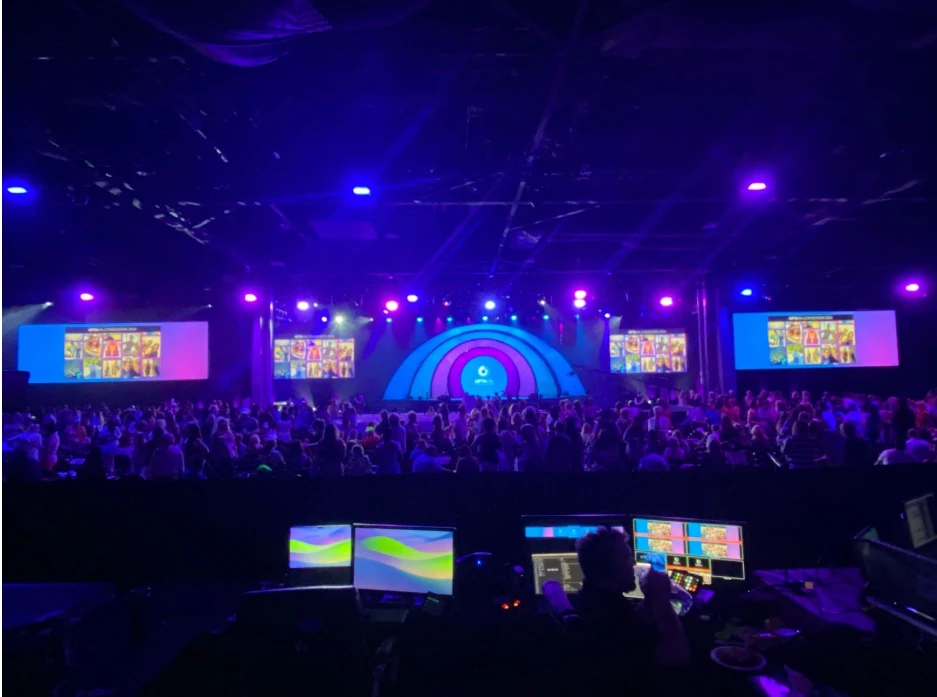
In today’s digital-first world, brands constantly search for ways to stand out — not just with ads, but with real, vibrant community engagement. A social media wall offers exactly that: a dynamic space where user‑generated content, brand posts, and live reactions converge into one visual experience. Whether you’re hosting an event, running a campaign, or refreshing your website, a social media wall can help amplify authenticity, build trust, and boost engagement in a way static content rarely does.
What Is a Social Media Wall?
A social media wall for events is basically a live — or near‑real‑time — feed that aggregates social media posts (user‑generated or brand content) tied to a specific brand, event, hashtag, or campaign.
What makes it powerful: the wall automatically collects relevant posts (for example, using a campaign hashtag), filters them (to show only the ones you approve or that meet criteria), and displays them — often on a big screen at an event, or embedded on a website.
In effect, it bridges the online and offline worlds — bringing social buzz directly into a physical space (like an event venue), or blending it seamlessly into your online presence.
Why Should You Use a Social Wall?
Here are some of the biggest benefits of using a social media wall:
- Boost engagement — When attendees or customers see their own posts appear live (or soon after posting), it encourages more people to participate and share.
- Leverage user‑generated content (UGC) effectively — Social walls pull in real content from real people: reviews, photos, testimonials, experiences. UGC tends to feel more authentic than polished brand ads.
- Extend reach and visibility — Every time someone posts about your brand/event and that post shows up on the wall, it can reach not just in‑venue attendees but also their social circles — amplifying visibility beyond immediate participants.
- Create community and social proof — A wall full of real people’s posts builds a sense of belonging and trust. Potential customers or attendees see others engaging — that builds credibility.
- Reuse content long after the event — If you embed the social wall on your website, the content doesn't vanish after the event ends. It becomes a living showcase — great for brand storytelling, testimonials, and ongoing marketing.
In short — a social wall helps you get more out of every event or campaign with minimal effort, while boosting authenticity, engagement, and long-term value.
When Should You Use a Social Media Wall?
There are many situations when a social media wall makes sense. Here are common use cases:
- Live events & product launches — Big gatherings (product launches, conferences, festivals, launches) benefit greatly. As soon as people post with your event hashtag, their posts show on the wall — building live buzz.
- Campaigns with a branded hashtag — If you run a marketing or social campaign and want to encourage user participation (for example, asking users to post with a specific hashtag), a social wall helps surface and display all those posts.
- On websites or e‑commerce stores — Embedding a social wall on your website helps display real user experiences, social proof, and dynamic content to visitors — useful for product brands, retail, D2C, etc.
- Ongoing brand engagement/community building — Beyond events — for building community, showcasing reviews or testimonials, sharing fan content or influencer mentions. A social wall keeps your social presence alive and interactive.
If your goal is to increase participation, build trust, generate organic content, or just make interactions more visible — a social wall is a good tool.
How to Use a Social Wall
Using a social media wall effectively involves a few steps and best practices:
Choose a tool / platform — Many social‑wall tools exist that aggregate posts based on hashtags, handles, platforms. Decide whether you want the wall to auto-refresh or curated manually.
Define filters: hashtags, handles, platforms, content type — That ensures you only display relevant, high‑quality content. Filtering helps maintain brand safety and relevance.
Moderation (optional / recommended) — To avoid spam or irrelevant posts, it’s good to review incoming posts when needed (or use tools that offer moderation.
Embed or display — Use the social wall on a large screen (if you have a physical event), or embed it in a website or microsite (if you want digital visibility).
Encourage participation — Use prompts such as hashtags, calls-to-action, contests, polls or giveaways. That motivates people to post so they see themselves on the wall.
Leverage content later — After the event or campaign, you can repurpose UGC collected via the wall for marketing materials, testimonials, social proof, case studies.
Social Media Wall Examples
Here are a few real-world social wall examples of how brands and events have used social walls effectively:
- Tampa Bay Lightning — They created a social media wall called “Bolts Social Central” that aggregated fan posts from Twitter and Instagram (even Facebook check-ins) and displayed them during events, giving fans a chance to see themselves on the big screen.
- Tomorrowland — For its 2020 virtual event, Tomorrowland used a social wall to bring together posts tagged with the event hashtag across Facebook, Instagram, Twitter — integrating both user-generated and sponsor content seamlessly.
- Harvard Kennedy School (Class of 2020) — During their virtual graduation, they used a social wall (hashtag #HKSGrad) to showcase graduate posts, enabling community celebration and visibility even in a remote format.
- Rebel Ice Cream — Even without a big live event, they embedded a social wall on their website to showcase user-generated content — reviews, photos, testimonials — thereby using social proof to attract and convince potential customers.
These examples show how versatile social walls are — from sports arenas to festivals, from virtual graduations to food brands — and how they can be adapted to different audiences and goals.
Conclusion
A social media wall is more than just a feed — it’s a dynamic, interactive bridge between your brand, your audience, and their networks. By aggregating real user-generated content and displaying it live (or on your site), you not only boost engagement and social proof, but also turn your audience into storytellers and promoters.
For brands, especially those investing in events, campaigns, community building or digital presence — a social wall offers a powerful way to amplify reach, build trust, and continuously leverage authentic content.
If you haven’t already, integrating a social media wall could be one of the smartest moves to boost your brand’s engagement and visibility — without needing to constantly create new content from scratch.
![Scale Your Mental Health Practice: Top U.S. Digital Marketing Agencies [2026]](/data/post/162239/c1ade43c4d65e5476c4d52e1.webp)