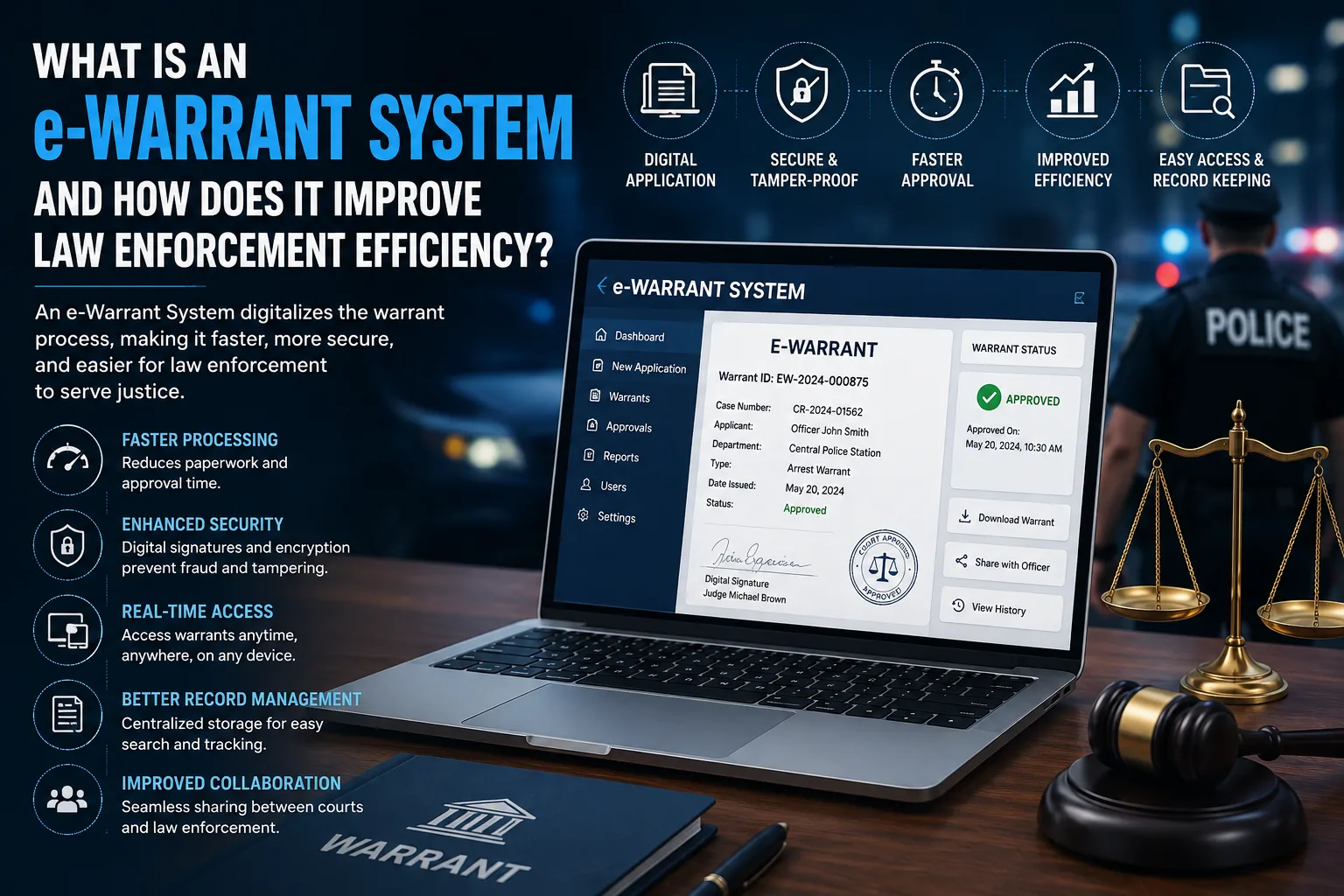
Law enforcement agencies are under constant pressure to respond quickly, protect public safety, and handle legal processes accurately. At the same time, courts and police departments must manage increasing workloads while ensuring every action complies with legal requirements. This is where an e-warrant system makes a meaningful difference.
An e-warrant system is a secure digital platform that allows law enforcement officers, prosecutors, and judges to create, review, approve, and manage warrants electronically. Instead of relying on paper forms, in-person signatures, or lengthy administrative procedures, agencies can complete the warrant process faster while maintaining a complete digital record.
As public agencies continue their digital transformation, electronic warrants are becoming an essential part of modern law enforcement. They improve efficiency, strengthen accountability, and help officers focus more on protecting their communities.
What Is an e-Warrant System?
An e-warrant system is a digital solution designed to replace traditional paper-based warrant processing. It enables authorized personnel to prepare, submit, review, approve, and store warrants securely through an online platform.
The system connects multiple stakeholders involved in the warrant process, including:
- Law enforcement officers
- Supervisors
- Prosecutors
- Judges
- Court administrators
Once an officer submits a warrant request electronically, the appropriate reviewer can examine the information, request revisions if needed, and approve the warrant using a secure electronic signature. The finalized warrant is immediately available to authorized users.
This streamlined workflow significantly reduces delays while maintaining legal integrity.
How Does an e-Warrant System Work?
Although workflows vary between jurisdictions, the basic process typically includes the following steps:
1. Digital Warrant Preparation
An officer completes a secure electronic warrant application using standardized digital forms.
2. Supporting Evidence Upload
Relevant reports, photographs, affidavits, and other evidence can be attached directly to the application.
3. Secure Review Process
Supervisors or prosecutors review the request before forwarding it to the judge if required.
4. Electronic Judicial Approval
The judge reviews the documents remotely and signs the warrant electronically after confirming legal requirements are satisfied.
5. Immediate Distribution
Once approved, the warrant becomes instantly available to authorized personnel for execution and future reference.
This digital workflow eliminates unnecessary paperwork and reduces processing time dramatically.
Key Benefits of an e-Warrant System
Faster Warrant Processing
Improved Law Enforcement Efficiency
Greater Accuracy
Better Accountability
Enhanced Security
Conclusion
An e-warrant system represents a significant step forward for modern law enforcement. By replacing slow, paper-based workflows with secure digital processes, agencies can improve efficiency, reduce administrative burdens, strengthen accountability, and support faster judicial decisions.
Most importantly, electronic warrant technology helps officers, prosecutors, and judges work together more effectively while preserving the legal safeguards that protect the justice system. As public safety organizations continue modernizing their operations, investing in efficient digital warrant management is becoming an increasingly practical and valuable solution.
Palatine Technology Group
800-610-7897