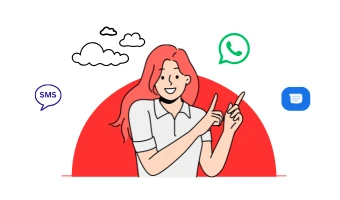
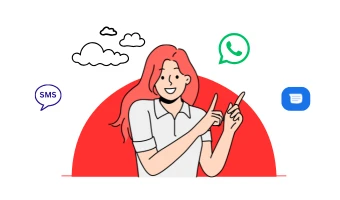
In a digital-first world where customer attention spans are shrinking, SMS remains one of the most powerful tools in a marketer’s arsenal. But manually sending texts to hundreds or thousands of users? That’s not scalable. That’s where an SMS provider API becomes a game-changer.
What is an SMS Provider API?
An SMS provider API is a software interface that connects your applications to a third-party SMS gateway. It enables your system to automatically send, receive, and manage SMS communications without human intervention.
Think of it as the bridge that lets your CRM, website, or app send messages like:
- OTPs and 2FA codes
- Order confirmations
- Appointment reminders
- Promotional offers
- System alerts
And it all happens with just a few lines of code.
How an SMS Provider API Boosts Business Communication
Here's why businesses of all sizes are integrating SMS APIs into their digital systems:
✅ 1. Real-Time Engagement
SMS has a 98% open rate and most texts are read within 3 minutes. An API helps automate delivery at the right time, increasing response and conversion rates.
✅ 2. Seamless Automation
Trigger-based workflows (e.g., "send a reminder 1 day before the event") are easy to set up using an SMS provider API. No need for manual effort.
✅ 3. Scalable Messaging
Whether you’re sending 100 or 1 million messages, APIs let you scale effortlessly — perfect for marketing campaigns or customer support.
✅ 4. Personalized Messages at Scale
You can dynamically personalize messages using customer data from your CRM, enhancing engagement and user experience.
Use Cases Across Industries
E-commerce
→ Send order updates, payment alerts, and delivery notifications.
Finance
→ Dispatch OTPs, transaction alerts, and credit score reminders.
Healthcare
→ Automate appointment bookings, lab result updates, and medicine refills.
EdTech & Coaching
→ Remind students of classes, assignments, or payment deadlines.
Travel
→ Push real-time itinerary changes and check-in alerts.
How Does SMS Provider API Work?
Here’s a quick step-by-step of how it functions:
- Your system (e.g., CRM, eCommerce app) triggers an event.
- That event sends a request to the SMS provider API.
- The API routes the message via the provider’s SMS gateway.
- The message is delivered to the recipient’s mobile phone.
- The provider API returns a status (Delivered, Failed, Queued, etc.).
Real-World Example
Let’s say you run a fitness app. You can use an SMS provider API to automatically:
- Welcome new users via SMS.
- Remind them about upcoming training sessions.
- Notify them of membership renewals or special offers.
All while saving hours of manual work every week.
Real-World Example
Let’s say you run a fitness app. You can use an SMS provider API to automatically:
- Welcome new users via SMS.
- Remind them about upcoming training sessions.
- Notify them of membership renewals or special offers.
All while saving hours of manual work every week.