
Customer service teams handle different types of customer queries every day. Some calls are simple while others need expert support. When an agent struggles to resolve a customer issue, a supervisor may need to step in and guide the conversation. This is where call barging becomes useful.
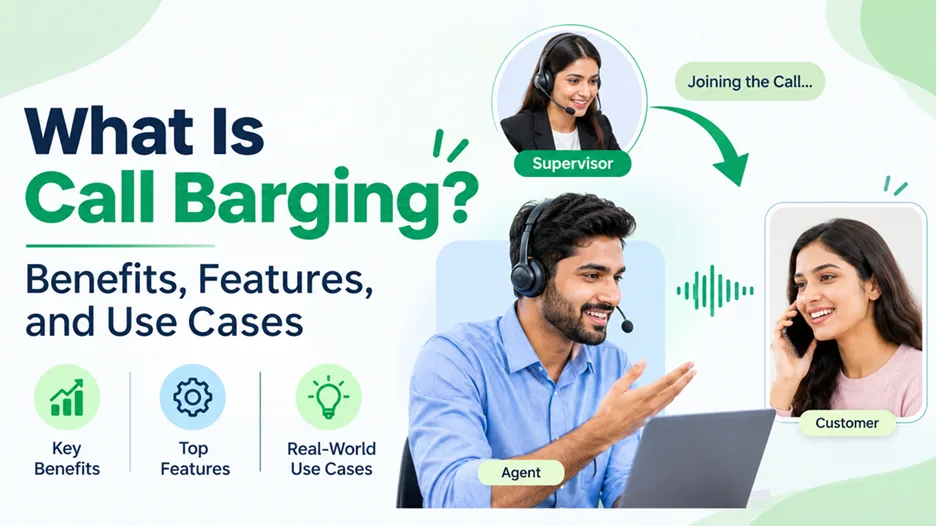
Call Barging is a call center feature that allows supervisors or managers to join an ongoing customer call and speak directly with both the agent and the customer. It helps resolve complex queries, improve agent performance, and provide better customer support. Instead of waiting for a call to end, supervisors can join the conversation at the right time and offer immediate assistance.
With the right Call Barging Software, businesses can improve team coordination, reduce call handling time, and maintain better service quality.
What Is Call Barging?
Call Barging is an advanced call centre feature that allows supervisors or managers to join an ongoing conversation between a customer and an agent. Once connected, the supervisor can interact with both parties, provide real-time guidance, and help resolve customer queries or complex issues.
Unlike call monitoring, which allows supervisors to listen to conversations silently, Call Barging enables them to actively participate in live calls. This makes it easier to support agents during challenging interactions, handle escalated complaints, and ensure customers receive timely assistance.
For businesses, Call Barging is an effective way to improve agent performance, reduce call resolution time, and deliver a better customer experience.
How Does Call Barging Work?
The process of using Call Barging is simple. It allows supervisors to join ongoing calls through a call center platform.
Here is how it generally works:
- Agent Handles the Call: An agent receives an inbound call or makes an outbound call to a customer.
- Supervisor Monitors the Call: The supervisor uses the call monitoring software to listen to live conversations.
- Identifies an Issue: If the agent needs help or the customer has a complex query, the supervisor decides to intervene.
- Joins the Conversation: The supervisor activates the call barging feature and joins the active conversation.
- Provides Assistance: The supervisor speaks directly with the customer and agent to explain the solution or resolve the issue.
This process helps businesses provide real-time support while maintaining a smooth customer experience.
Key Benefits of Call Barging
Using a Call Barging Solution offers several benefits for businesses that want to improve customer service and team performance.
1. Faster Issue Resolution
Some customer problems require expert knowledge or approval from senior staff. When agents cannot resolve these issues on their own, supervisors can join the conversation and provide immediate assistance.
This reduces unnecessary call transfers and helps customers get answers faster.
2. Improves Agent Performance
New agents may find it difficult to handle complex customer conversations. Supervisors can use call barging to guide them during live interactions.
They can explain the right approach, suggest better responses, and help agents manage difficult situations. Over time, this improves agent confidence and communication skills.
3. Better Customer Experience
Customers expect quick and helpful responses when they contact a support team. Long waiting times and repeated explanations can create frustration.
Call Barging allows supervisors to step in when needed and help agents provide better solutions. This creates a smoother support experience and builds customer trust.
4. Real-Time Team Support
Supervisors do not need to wait until a call ends to help an agent. They can join the conversation whenever additional support is required.
This makes communication between agents and managers faster and improves teamwork across the contact center.
5. Reduces Call Handling Time
When an agent cannot answer a question, the customer may need to wait for another department or make a second call. A supervisor can help resolve the issue during the same conversation.
This can reduce average handling time and improve overall team productivity.
6. Better Quality Management
Businesses can combine call barging with call recording software and call monitoring software to understand how agents interact with customers.
Supervisors can review conversations, identify common problems, and provide feedback to improve service quality.
Important Features of Call Barging Software
A reliable Call Barging Software platform should offer features that help supervisors manage calls and support agents effectively.
1. Live Call Monitoring
Supervisors can listen to ongoing customer conversations without interrupting them. This helps them understand how agents handle different situations.
2. Real-Time Call Intervention
This feature allows supervisors to join active calls and speak with both the agent and customer whenever assistance is required.
3. Call Recording
Call recording helps businesses save customer conversations for future review. Managers can use recorded calls for agent training, quality checks, and service improvement.
4. Supervisor Dashboard
A centralized dashboard allows supervisors to view active calls, check agent status, and identify conversations that may require attention.
5. Agent Performance Tracking
Managers can track important call metrics such as call duration, average handling time, and agent activity. These insights help identify areas where agents need additional training.
6. Easy Integration
Call Barging Software should work with existing call center software and business communication tools. This allows teams to manage customer interactions from one platform.
Common Use Cases of Call Barging
Call barging can support different industries where businesses handle regular customer calls.
1. Banking and Financial Services
Banking customers often contact support teams for payment issues, account queries, loan details, and transaction problems. Supervisors can join complex calls to provide accurate information and help agents handle sensitive customer concerns.
2. Healthcare
Hospitals and clinics receive calls related to appointments, medical services, billing, and patient support. Supervisors can assist agents when they face complex queries or need help coordinating with different departments.
3. E-commerce and Retail
Online shopping customers may contact support teams about delayed orders, refunds, cancellations, and product issues. Supervisors can join difficult conversations and help resolve complaints quickly.
4. Telecom Industry
Telecom support teams handle network complaints, billing questions, service requests, and technical issues. Call barging helps supervisors guide agents when customers need advanced technical support.
5. Sales and Lead Generation
Sales teams often handle customer objections, pricing questions, and product-related discussions. Managers can join important calls to guide agents, answer advanced questions, and support better sales conversations.
Call Barging vs. Call Monitoring vs. Call Whispering
These three features help supervisors manage customer conversations, but they work differently.
| Feature | How It Works |
| Call Monitoring | Supervisors listen to live calls without speaking. |
| Call Whispering | Supervisors speak privately to agents without the customer hearing them. |
| Call Barging | Supervisors join the conversation and speak with both parties. |
Businesses can use all three features to improve agent training, call quality, and customer support.
How to Choose the Right Call Barging Solution?
Choosing the right Call Barging Solution is important for businesses that want to improve their call center operations.
Consider these factors before selecting a platform:
- Easy-to-use Interface: Choose software that allows supervisors to access active calls quickly.
- Real-Time Monitoring: Make sure managers can monitor agent conversations and identify calls that need attention.
- Call Recording: Look for recording options to review conversations and improve service quality.
- Performance Reports: Select a solution that provides useful reports and call analytics.
- Scalability: Choose a platform that can support more agents and higher call volumes as your business grows.
- Integration Support: Ensure the platform works with your existing contact center solution and communication tools.
Conclusion
Call Barging is an important feature for modern call centers that want to improve customer service and agent performance. It allows supervisors to join live conversations, support agents, and resolve complex customer issues without unnecessary delays.
From banking and healthcare to e-commerce and telecom, businesses can use this feature to improve call quality and create better customer experiences.
With the right Call Barging Software, companies can combine live call monitoring, call recording software, and real-time supervisor support within their call center operations. This helps teams work more efficiently, improve service quality, and build stronger customer relationships.