
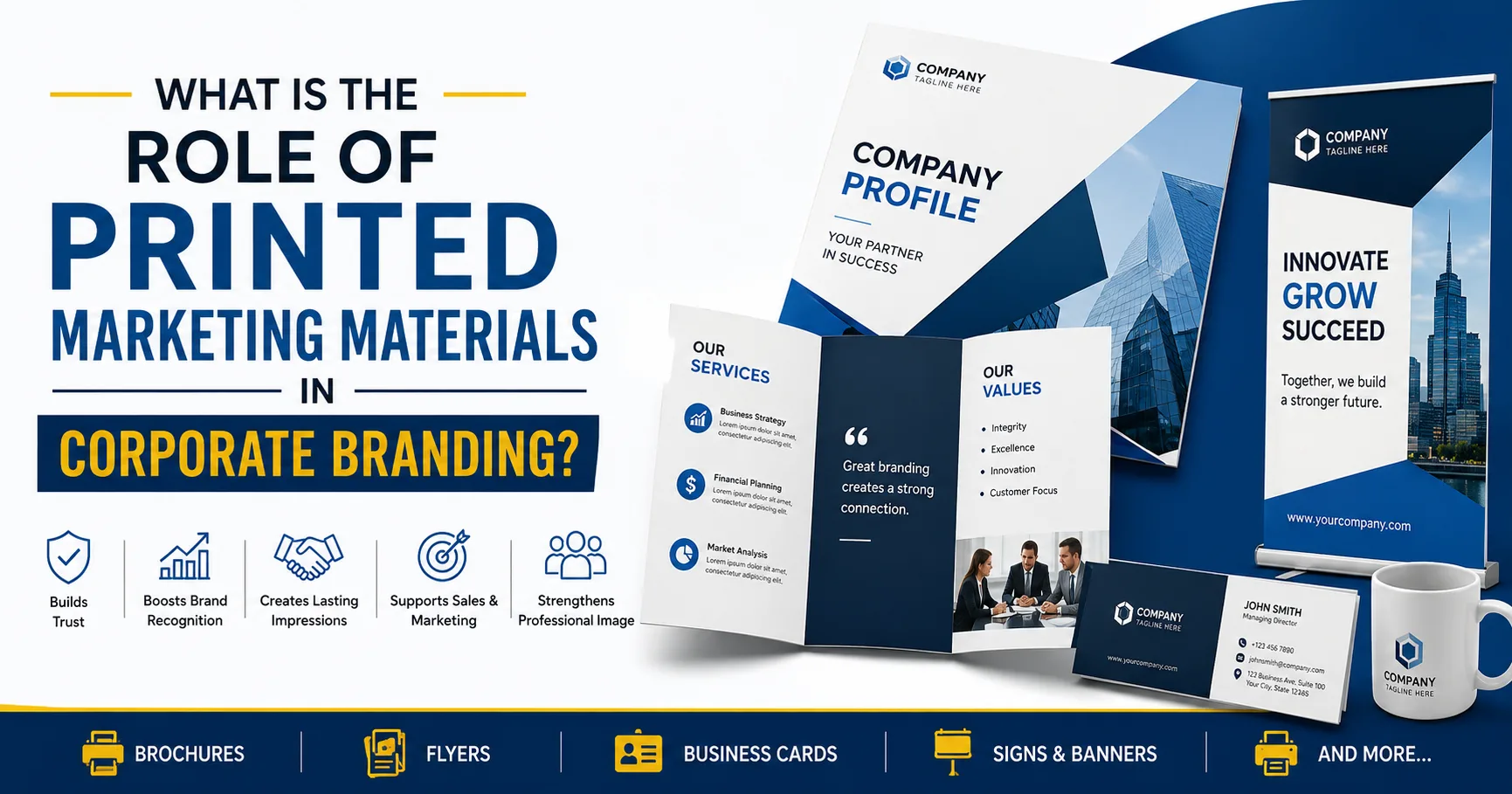
In today's digital-first world, many businesses focus heavily on online marketing. Social media, email campaigns, and digital advertising are valuable tools, but printed marketing materials continue to play a critical role in building strong corporate brands. From brochures and flyers to business cards and signage, professionally printed materials help businesses establish credibility, create memorable experiences, and strengthen brand recognition.
Companies that combine digital and print marketing often achieve better engagement because print provides a tangible connection that digital channels cannot fully replicate. For corporate businesses looking to stand out in competitive markets, printed marketing materials remain a powerful branding asset.
Understanding Corporate Branding
Corporate branding is the process of creating a consistent identity that represents a company's values, mission, and personality. It includes visual elements such as logos, colors, typography, and messaging, as well as the overall experience customers associate with the brand.
A strong corporate brand helps businesses:
- Build trust with customers
- Increase brand recognition
- Differentiate from competitors
- Improve customer loyalty
- Support long-term growth
Every interaction with a customer contributes to brand perception, including the printed materials they receive.
Why Printed Marketing Materials Still Matter
Despite the growth of digital marketing, print remains highly effective. Research from marketing studies consistently shows that consumers often perceive printed materials as more trustworthy and credible than digital advertisements.
When a potential client receives a professionally designed brochure or sees high-quality corporate signage, they gain a physical representation of the company's professionalism. This tangible experience creates a lasting impression that is difficult to achieve through digital channels alone.
For industries such as finance, healthcare, legal services, real estate, and professional consulting, credibility is especially important. Printed materials help reinforce that credibility at every customer touchpoint.
Building Brand Recognition Through Consistency
One of the most important functions of printed marketing materials is maintaining brand consistency.
Imagine a company that uses one logo on its website, different colors on its flyers, and inconsistent messaging on its brochures. Such inconsistencies can confuse customers and weaken the brand.
Printed materials provide an opportunity to reinforce:
- Brand colors
- Logo placement
- Typography
- Brand messaging
- Visual style
When customers repeatedly see the same branding elements across brochures, flyers, business cards, banners, and signs, they begin to recognize and remember the company more easily.
Example
A financial consulting firm may use:
- Navy blue and silver brand colors
- A consistent logo design
- Professional imagery
- Clear messaging focused on trust and expertise
When these elements appear consistently across all printed materials, the brand becomes more recognizable and trustworthy.
Creating a Professional First Impression
First impressions matter in business.
Whether meeting a prospect at a conference, networking event, or corporate meeting, printed materials often represent the first physical interaction a customer has with a company.
High-quality printed materials communicate:
- Professionalism
- Attention to detail
- Reliability
- Commitment to quality
For example, a premium business card printed on durable cardstock can leave a stronger impression than simply exchanging contact information digitally.
Similarly, a well-designed company brochure can demonstrate expertise and showcase services in a professional format.
Supporting Sales and Business Development
Printed marketing materials are not just branding tools; they are also valuable sales assets.
Sales teams frequently use:
- Product brochures
- Service catalogs
- Corporate presentations
- Flyers
- Promotional handouts
These materials help explain products and services in a clear, organized manner.
Unlike digital content that may be quickly forgotten or ignored, printed materials can remain on a prospect's desk for weeks or months, increasing the likelihood of future engagement.
Example
A corporate software company attending a trade show may distribute brochures outlining key services, customer success stories, and pricing options. Attendees can review the information later, increasing the chances of conversion.
Enhancing Trust and Credibility
Trust is one of the most valuable assets a brand can have.
Professionally printed marketing materials help build trust because they demonstrate investment in quality communication.
Customers often associate well-designed print materials with established, reputable companies.
This is particularly important for businesses operating in highly competitive industries such as:
- Financial services
- Insurance
- Healthcare
- Legal services
- Corporate consulting
When clients receive informative brochures, annual reports, or branded presentations, they are more likely to view the organization as credible and dependable.
Strengthening Event and Trade Show Marketing
Corporate events, conferences, and trade shows remain important marketing opportunities.
Printed materials play a central role in these environments by helping businesses attract attention and communicate key information quickly.
Popular event marketing materials include:
- Retractable banners
- Trade show displays
- Brochures
- Flyers
- Product sheets
- Branded signage
These materials create a professional booth presence while ensuring attendees remember the company after the event.
Businesses that invest in attractive event signage often experience higher visitor engagement and stronger brand recall.
Driving Local Brand Visibility
Printed signs continue to be one of the most effective tools for local brand awareness.
Businesses regularly use:
- Building signs
- Yard signs
- Window graphics
- Vehicle graphics
- Directional signs
These visual assets expose the brand to thousands of potential customers every day.
Example
A corporate accounting firm using branded outdoor signage near a busy commercial district can generate continuous visibility among local businesses and decision-makers.
Unlike online advertisements that stop generating impressions when budgets run out, signs can provide long-term exposure with a one-time investment.
Supporting Multi-Channel Marketing Campaigns
The most successful marketing strategies integrate both digital and print channels.
Printed materials can complement digital efforts by directing customers to:
- Company websites
- Landing pages
- Online stores
- Social media profiles
- Event registration pages
Many businesses now include QR codes on brochures and flyers, allowing customers to instantly access additional information online.
This combination creates a seamless customer experience while improving campaign effectiveness.
Example
A corporate training company might distribute printed brochures at an industry event while encouraging attendees to scan a QR code to register for webinars or download resources.
Types of Printed Marketing Materials for Corporate Branding
Businesses can choose from a wide range of print products to support branding efforts:
Brochures
Ideal for presenting detailed information about products, services, and company capabilities.
Flyers
Cost-effective for promotions, announcements, and local marketing campaigns.
Business Cards
Essential for networking and professional relationship building.
Corporate Signage
Improves visibility and reinforces brand identity.
Presentation Folders
Enhance professionalism during client meetings and sales presentations.
Annual Reports
Help communicate financial performance and corporate achievements.
Trade Show Displays
Support brand visibility at events and exhibitions.
Measuring the Value of Print Marketing
Many businesses assume print marketing is difficult to measure, but modern tracking methods provide valuable insights.
Organizations can track performance through:
- QR codes
- Custom landing pages
- Promotional codes
- Dedicated phone numbers
- Customer surveys
These methods help businesses evaluate how printed materials contribute to lead generation and brand awareness.
Conclusion
Printed marketing materials remain a vital component of successful corporate branding. While digital marketing continues to evolve, print offers unique advantages that help businesses build trust, improve brand recognition, and create lasting impressions. From brochures and flyers to business cards, banners, and signage, professionally printed materials help businesses communicate their message with consistency and credibility.
Organizations that combine print and digital marketing often achieve stronger brand visibility and better customer engagement. By investing in high-quality printed marketing materials, companies can strengthen their professional image, support sales efforts, and build long-term customer relationships.
For businesses looking for reliable printing solutions, All Seasons Signs and Printing in Joplin offers a wide range of custom printing and signage services. From corporate brochures and marketing flyers to banners, business signs, vehicle graphics, and promotional materials, their team helps businesses create impactful branding that stands out. Whether you're launching a new marketing campaign or enhancing your corporate identity, All Seasons Signs and Printing provides the professional print solutions needed to support your brand's growth and success.