
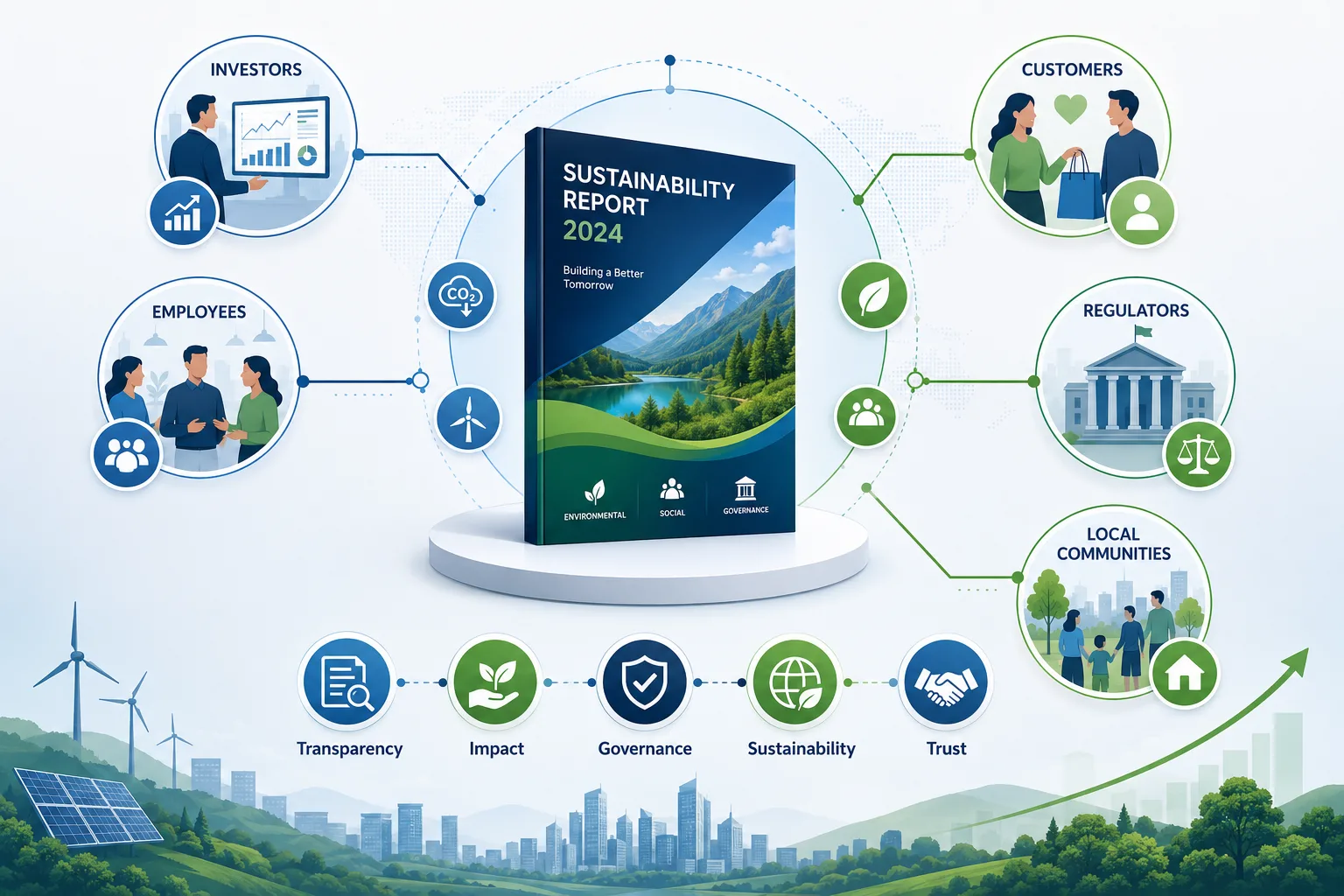
Corporate Social Responsibility has evolved far beyond charitable donations and community initiatives. Today, stakeholders expect organizations to demonstrate how their business activities create measurable social, environmental, and economic value. As a result, a CSR report has become an important communication tool that helps organizations showcase their commitments, performance, and long-term impact.
Investors, customers, employees, regulators, and local communities increasingly rely on CSR disclosures to evaluate whether a company operates responsibly and aligns its business objectives with broader sustainability goals. However, stakeholders are no longer satisfied with broad statements or promotional claims. They expect transparency, measurable outcomes, and clear evidence of accountability.
A well-structured CSR report should therefore provide meaningful insights into how an organization manages its responsibilities, measures its impact, and addresses stakeholder concerns.
Key Elements Stakeholders Look for in a CSR Report
A CSR report serves multiple stakeholder groups, each with different expectations and priorities. Investors may focus on governance and risk management, while customers and communities often pay closer attention to social impact and environmental responsibility. Despite these differences, most stakeholders look for one common factor: credible evidence that the organization is delivering meaningful outcomes rather than simply communicating good intentions.
To evaluate this, stakeholders typically focus on several core areas within the report that help them assess transparency, accountability, and long-term commitment.
Clear CSR Strategy and Business Alignment
Stakeholders want to understand why the company has chosen specific CSR priorities and how those priorities relate to its overall business strategy. A well-developed CSR framework demonstrates that social responsibility initiatives are aligned with long-term organizational objectives rather than being isolated activities undertaken for compliance or reputation management purposes.
Measurable Impact and Performance Data
Modern stakeholders expect organizations to support their claims with data. Reporting on key performance indicators, project outcomes, beneficiary reach, environmental improvements, or social impact metrics helps stakeholders evaluate whether CSR initiatives are producing meaningful and measurable results.
Transparency in Resource Allocation
Transparency remains one of the most important expectations in CSR reporting. Stakeholders want clarity regarding how funds are allocated, how projects are implemented, and whether resources are being used efficiently. Detailed disclosures strengthen credibility and reinforce trust in the organization's CSR governance practices.
Stakeholder Engagement and Community Impact
Stakeholders increasingly expect organizations to demonstrate that CSR programs are designed around genuine community and stakeholder needs. Reporting on consultations, partnerships, feedback mechanisms, and beneficiary engagement helps show that initiatives are both relevant and responsive to real-world challenges.
Future Commitments and Long-Term Goals
Beyond reviewing past performance, stakeholders also want insight into future direction. Clear disclosure of upcoming initiatives, sustainability targets, and improvement plans demonstrates that the organization views CSR as an ongoing commitment rather than a one-time effort.
Bottom Line
Today, a CSR report is expected to provide far more than a summary of social initiatives. Stakeholders use it to assess how effectively an organization manages its responsibilities, measures its impact, and creates long-term value for society. Reports that combine transparency, measurable outcomes, strategic alignment, and forward-looking commitments are more likely to build trust and strengthen stakeholder confidence with time.