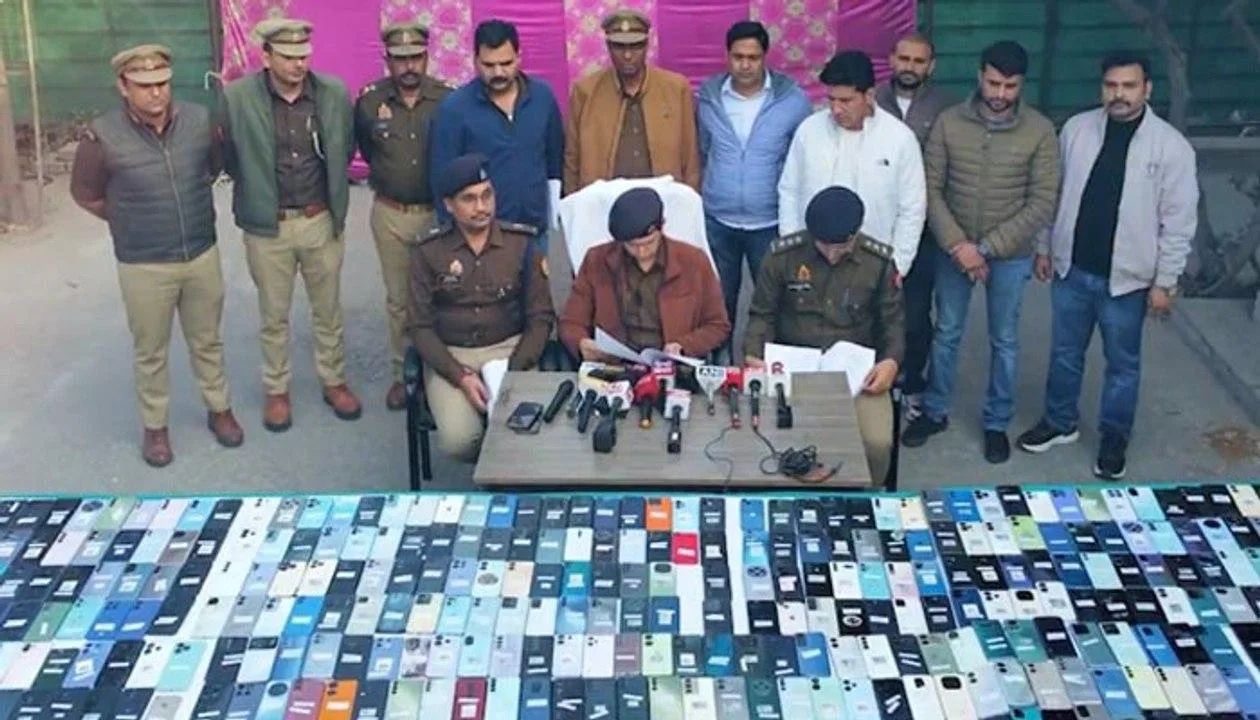
If you've ever lost a smartphone or had one stolen, you've probably wondered whether the police can locate it using its IMEI number. It's one of the most searched questions online, and it's also surrounded by misinformation. Many websites claim that an IMEI number tracker can instantly reveal a phone's location, while others suggest the police can track any phone at any time.
The truth lies somewhere in between.
An IMEI (International Mobile Equipment Identity) is a unique 15-digit number assigned to every mobile device. It acts as the phone's permanent identity on cellular networks. Unlike a SIM card, which can be removed or replaced, the IMEI stays with the device throughout its lifetime.
Police can use IMEI information during investigations, but only under specific legal and technical conditions. They generally work with mobile network operators, who maintain records of devices connecting to their networks. This process is governed by local laws, privacy regulations, and judicial procedures.
In this guide, you'll learn how police use IMEI data, when they can track IMEI number activity, what limitations exist, and what you should do if your phone is lost or stolen.
How Does an IMEI Number Tracker Work?
Before understanding police investigations, it's important to know what an IMEI actually does.
Every smartphone has a unique identifier that is transmitted whenever it connects to a mobile network.
The IMEI itself does not contain:
- GPS coordinates
- Your address
- Personal data
- Photos or files
- Contact information
Instead, it simply identifies the physical device.
When your phone connects to a cellular tower, the network records information such as:
- IMEI number
- SIM card (IMSI)
- Time of connection
- Nearby cellular tower
- Mobile operator
These records help telecom providers manage their networks and can become valuable during legitimate investigations.
When Can Police Track a Phone Using IMEI?
The answer depends on the country's laws and the circumstances of the case.
Police generally cannot type an IMEI into a public system and instantly view a live map.
Instead, they usually request assistance from mobile network operators after a formal complaint has been filed.
Common situations where IMEI tracking may be used include:
- Reported mobile phone theft
- Lost phones with official complaints
- Criminal investigations
- Kidnapping or missing-person cases
- Fraud involving stolen devices
- National security investigations
The legal process varies across jurisdictions, but law enforcement typically needs an official reason to request network information.
What Happens After You Report Your Phone?
The recovery process usually follows several steps.
Step 1 – File a Police Complaint
Provide:
- IMEI number
- Device model
- Brand
- Purchase receipt (if available)
- Last known location
- Date and time of loss
Having proof of ownership helps investigators verify that the phone belongs to you.
Step 2 – Notify Your Mobile Carrier
Your carrier can:
- Suspend your SIM card
- Record the IMEI as lost
- Explain local recovery procedures
- In some regions, initiate IMEI blacklisting
Prompt reporting reduces the risk of unauthorized use.
Step 3 – Investigation Begins
Depending on local laws and the seriousness of the case, police may ask the mobile operator to monitor whether the reported IMEI reconnects to the network.
If someone inserts a different SIM card into the phone, the IMEI remains the same, allowing the device to be identified even though the subscriber has changed.
Real-World Example
Imagine that Aman leaves his smartphone in a rideshare vehicle.
After trying unsuccessfully to contact the driver, he:
- Reports the loss to the police.
- Shares the IMEI number.
- Contacts his carrier.
- Uses Google's Find My Device.
A week later, another SIM card is inserted into the phone.
The mobile network identifies the same IMEI connecting with a new subscriber account.
Following legal procedures, investigators request network information from the telecom operator and identify the user associated with the new SIM.
This doesn't mean the IMEI acted like GPS. Instead, it helped investigators identify the device after it reappeared on the network.
Can Police Track a Phone If the SIM Card Is Removed?
Yes—but only under certain conditions.
Removing the SIM does not remove the IMEI.
The phone still keeps its permanent hardware identity.
However, if the phone:
- Is switched off,
- Never reconnects to a network,
- Or remains disconnected,
then there may be no new network activity to investigate.
If another SIM card is inserted later, the IMEI remains unchanged, making it possible for the device to be recognized again.
Research and Industry Statistics
Smartphone theft remains a significant global issue.
Industry reports estimate:
- More than 70 million smartphones are lost or stolen each year worldwide.
- Around 1.4 billion smartphones are shipped annually.
- Billions of active mobile devices use IMEI-based identification.
- Many countries participate in shared IMEI blacklist databases to reduce the resale of stolen devices.
Several telecom regulators have also introduced centralized equipment identity registers to help carriers block stolen devices from accessing participating networks.
These initiatives have made it more difficult to profit from stolen smartphones, although recovery rates still depend heavily on timely reporting.
Can Police Track a Switched-Off Phone?
This is another common misconception.
If a phone is completely powered off:
- It does not communicate with cellular towers.
- It cannot transmit GPS information.
- It cannot exchange network data.
- It cannot update its location.
Investigators may still access historical records showing the phone's last known network connection, but they cannot receive live updates until the device is switched back on.
Legal Limitations of IMEI Tracking
Police cannot access mobile network records without following legal procedures.
Depending on local regulations, they may require:
- An official complaint
- Internal authorization
- Court approval (in some jurisdictions)
- Cooperation from the telecom provider
These safeguards protect user privacy while allowing legitimate investigations into theft and other crimes.
The exact process differs from country to country, but IMEI-based investigations are generally subject to legal oversight rather than unrestricted access.
Why Public IMEI Tracking Websites Cannot Replace Police Investigations
Many websites advertise instant phone tracking using only an IMEI number.
In reality, public services do not have access to:
- Cellular tower databases
- Subscriber identity records
- Telecom operator systems
- Law enforcement investigation tools
Legitimate IMEI lookup tools can usually provide:
- Device model
- Manufacturer details
- Network compatibility
- Blacklist status (where supported)
- Warranty information (for some brands)
They cannot legally display the real-time location of someone else's device based solely on its IMEI.