
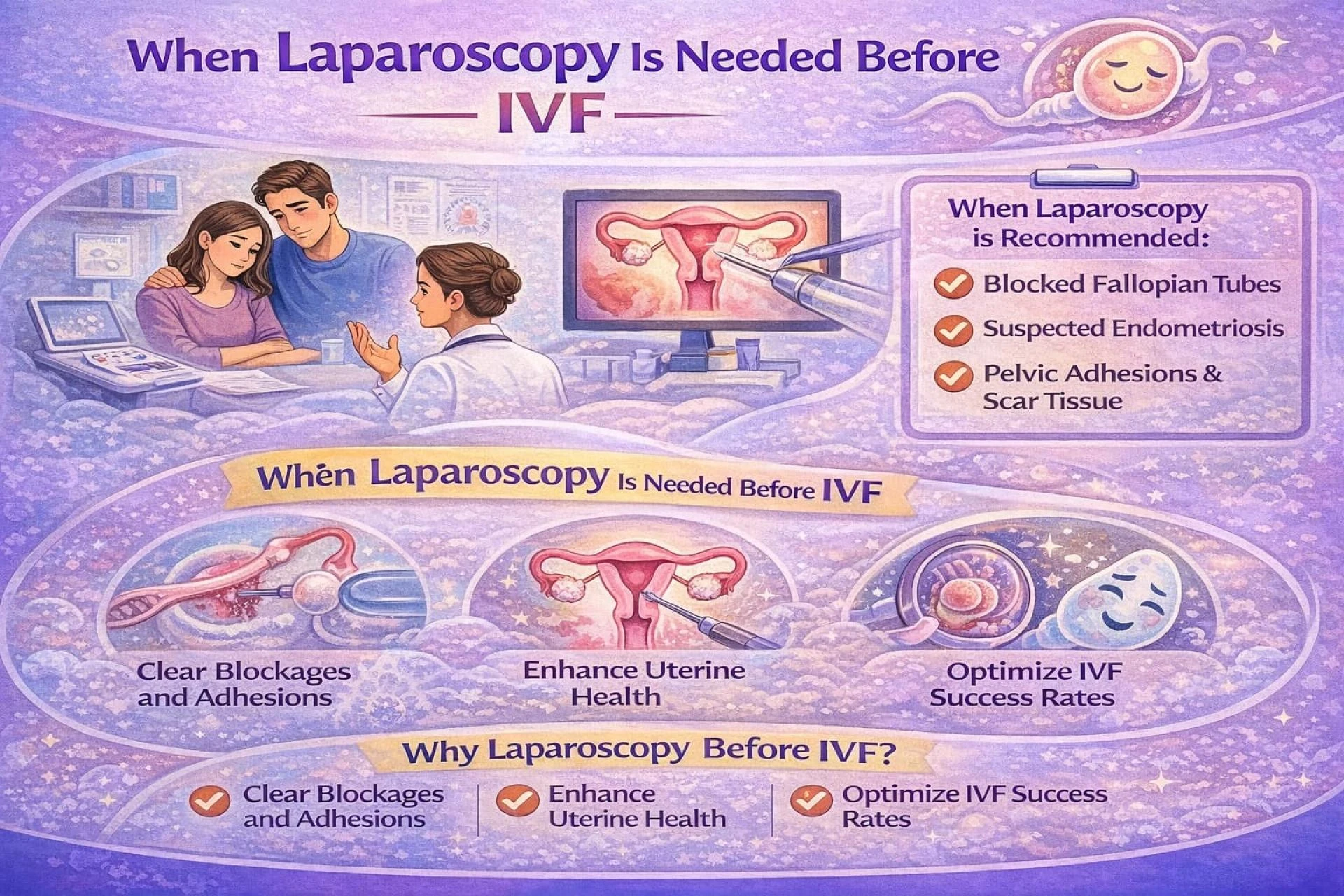
IVF is a powerful fertility treatment, but in some cases, doctors recommend laparoscopy before starting IVF to improve the chances of success. Laparoscopy helps identify and correct hidden pelvic problems that may affect egg retrieval, fertilization, implantation, or pregnancy outcomes.
Repeated IVF or IUI Failures
If a woman has undergone multiple failed fertility treatments without a clear reason, laparoscopy may be advised to look for hidden issues like endometriosis or pelvic adhesions.
Suspected Endometriosis
Symptoms such as severe period pain, pelvic pain, or painful intercourse may indicate endometriosis. Laparoscopy confirms and treats it, creating a better environment for IVF.
Hydrosalpinx (Fluid-Filled Fallopian Tubes)
Blocked tubes filled with fluid can leak into the uterus and reduce IVF success. Laparoscopy helps diagnose and treat hydrosalpinx before IVF.
Pelvic Adhesions or Previous Surgeries
Women with a history of pelvic surgery, infections, or tuberculosis may have adhesions that affect fertility. Laparoscopy helps assess and correct these problems.
Unexplained Infertility
When all tests are normal but pregnancy does not occur, laparoscopy may reveal subtle issues missed by scans.
Improving Implantation Chances
Treating pelvic problems before IVF can improve implantation rates and reduce the risk of IVF failure.
Consulting a specialized IVF treatment centre in Bangalore ensures proper evaluation and helps decide whether laparoscopy is truly necessary or if IVF can proceed directly.
Laparoscopy is not required for every IVF patient. When recommended, it is usually to remove obstacles that could reduce IVF success, helping couples move forward with better confidence and outcomes.