
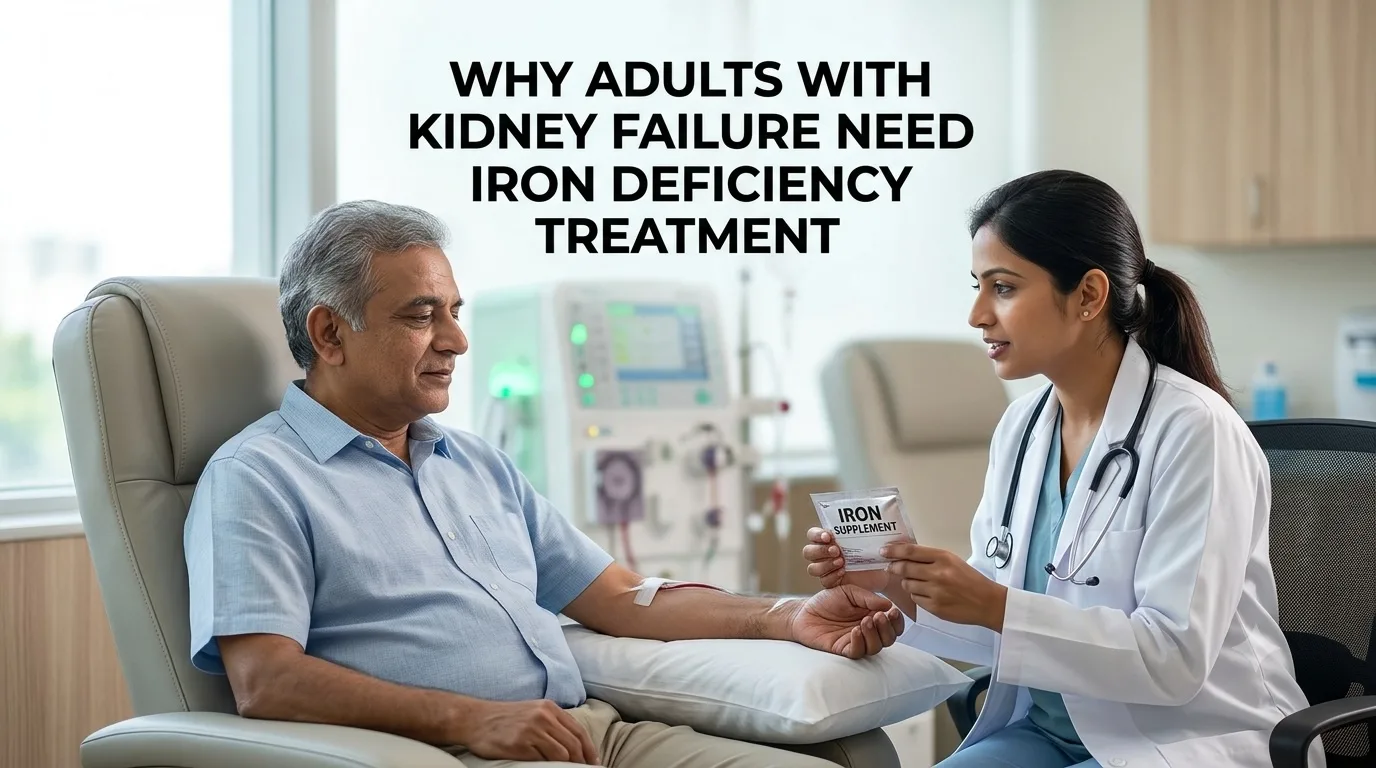
Adults with kidney disease frequently experience iron deficiency due to decreased erythropoietin production, impaired intestinal iron absorption, and episodes of blood loss during dialysis. As a result, iron deficiency exacerbates symptoms such as fatigue, heart strain, and overall poor health. Injectable iron formulations can be administered to restore appropriate iron-status markers in these individuals. Early recognition, effective treatment, and monitoring of iron status will collectively increase access to energy and improve overall quality of life and health outcomes.
Living with kidney failure is not just about managing one condition. It often brings along several hidden challenges that can quietly affect daily life. One of the most common yet overlooked issues is iron deficiency. Many adults with kidney problems feel constantly tired or weak, assuming it is just part of the condition, but there is often a deeper reason behind it.
Iron plays a vital role in keeping the body energised and functioning properly. When levels drop, especially in people with kidney failure, it can significantly worsen overall health.
What Happens in Kidney Failure?
The kidneys not only filter our waste but also make an important hormone, called erythropoietin, which tells our bodies how many red blood cells we should have.
When the kidneys don't work properly:
- Less erythropoietin is made
- Red blood cells are made more slowly
- There is less oxygen throughout the body
These three factors can cause a common complication of chronic kidney disease: anaemia.
Why Iron Deficiency Is So Common
Multiple factors contribute to patients' experience of kidney failure rather than a single cause of iron deficiency.
This includes multiple reasons, but primarily, patients do not consume a diet adequate in iron due to a lack of appetite and dietary restrictions as a result of kidney disease.
Inflammation also impairs the body's ability to absorb and use iron.
Additionally, patients undergoing dialysis lose small amounts of blood with each treatment, further decreasing overall iron levels over the long term.
How It Affects the Body
Low iron levels make it difficult to produce high-quality red blood cells, leading to symptoms that affect both mental and physical health.
Many adults have chronic fatigue that does not improve with sleep and become exhausted even by the simplest tasks, like walking, going up stairs, and concentrating at work. Some adults may have shortness of breath, pale skin, or experience an increased heart rate.
Because these symptoms develop gradually, they often go unnoticed or are attributed to the normal course of kidney disease.
Why Treatment Becomes Essential
Serious complications can occur when you ignore iron deficiency due to chronic kidney disease (CKD). Chronic kidney disease (CKD) not only affects your energy levels but can also lead to additional pressure on the heart.
What happens as anaemia increases in severity:
- The heart will need to work harder to pump oxygenated blood throughout the body.
- Increased risk of developing cardiovascular disease.
- Significant reduction in quality of life.
Treating iron deficiency can restore your energy levels and improve your ability to deliver oxygen throughout your body, which contributes to your overall health.
How Iron Deficiency Is Treated
Treatment for a deficiency depends on its severity and the body's response to treatment.
A physician often treats mild deficiencies with dietary changes or oral iron supplements, but patients with kidney failure often do not benefit from oral iron due to limited absorption.
This is why advanced treatment options will be utilised.
One example of a more advanced treatment option that may be available is Irny 500mg, which contains ferric carboxymaltose as an active molecule. This injectable iron preparation is more effective than a tablet for replenishing iron stores in patients who are unable to adequately absorb iron from oral supplementation.
Other advanced treatments are usually given in a supervised medical setting with appropriate follow-up and dosing.
The Importance of Regular Monitoring
Maintaining adequate iron levels in individuals with kidney failure is an ongoing process that requires continuous assessment and laboratory monitoring.
Physicians usually will evaluate the:
- Hemoglobin concentration
- Iron status in the individual
- Effectiveness of the treatment
Continued follow-up evaluations will help maintain appropriate iron levels and reduce the risk of complications.
Supporting Treatment Through Daily Habits
Although medical care is an integral part of improving your health, there are daily steps we can take to become healthier.
Eating healthy foods, taking your medications as prescribed, and visiting your doctor regularly will all contribute to your health. If your doctor has told you that you have an iron deficiency, be sure to take your medication and see your doctor regularly.
What’s Worth Remembering?
Adults who have kidney failure regularly experience an iron deficiency, which may not be readily apparent as a problem. An untreated iron deficiency can affect your energy levels and reduce your quality of life, as well as damage your overall health and increase your risk of developing co-morbidities due to inadequate iron levels.
With appropriate treatment and an ongoing monitoring plan, iron deficiency is easily managed. Identifying symptoms early and following the physician's directions to treat your iron deficiency will improve your overall health and quality of life.
Disclaimer
The information presented in this article is strictly intended for general informational purposes. It should never be considered as a substitute for obtaining due diligence from a qualified healthcare professional regarding any healthcare decisions or actions taken based upon the contents of this document.