TL;DR
- Trekking shoes are designed to provide stability and protection on uneven terrain.
- Proper cushioning and arch support reduce fatigue during long outdoor activities.
- Durable materials help trekking shoes withstand rough and wet conditions.
- Lightweight construction improves movement without adding strain.
- Versatile trekking footwear can also complement everyday outdoor use, especially during the monsoon.
Introduction
The ground outdoors is unpredictable. Loose gravel, uneven trails, slippery terrain and sudden changes in weather can quickly turn a simple walk into a demanding physical effort. Ordinary footwear is not designed to handle these conditions, which is why trekking shoes play a critical role in outdoor movement and protection.
At the same time, modern trekking footwear has long developed from its old heavy and rigid designs. Today’s options focus on durability while remaining comfortable enough for long hours of use. This balance allows trekking shoes to support outdoor performance without slowing movement or causing unnecessary fatigue.
What Makes Trekking Shoes Different from Regular Footwear?
Trekking shoes are designed specifically to handle outdoor terrain and environmental stress.
- Deep tread patterns improve grip on loose soil, rocks, gravel and uneven surfaces.
- Reinforced soles protect feet from sharp objects and ground impact.
- Strong outer materials maintain durability in rough conditions.
- Ankle and arch support improve balance and reduce strain.
- Waterproof outdoor shoes offer protection from moisture during wet conditions.
These features make trekking shoes more reliable than standard casual footwear in demanding environments.
How Do Trekking Shoes Improve Stability and Safety?
Stability is essential when walking on unpredictable terrain. Trekking shoes help maintain control and balance.
- High-traction soles reduce the risk of slipping on uneven or wet surfaces.
- Firm midsole construction prevents excessive foot movement.
- Proper grip improves confidence while walking on steep or loose trails.
- Reinforced toe areas protect against accidental impact.
- Balanced design distributes body weight equally during movement.
This combination improves both safety and comfort during outdoor activity.
Why Is Comfort Important in Trekking Footwear?
Long hours outdoors place continuous pressure on the feet. Comfort helps maintain endurance and reduces fatigue.
- Cushioned midsoles absorb shock during repeated steps.
- Breathable athletic footwear allows air circulation and reduces overheating.
- Lightweight sports sneakers reduce overall strain on legs.
- Flexible construction allows natural foot movement.
- Proper fit prevents friction and discomfort over time.
Comfort-focused trekking shoes allow longer activity without unnecessary strain.
What Materials Are Used in High-Quality Trekking Shoes?
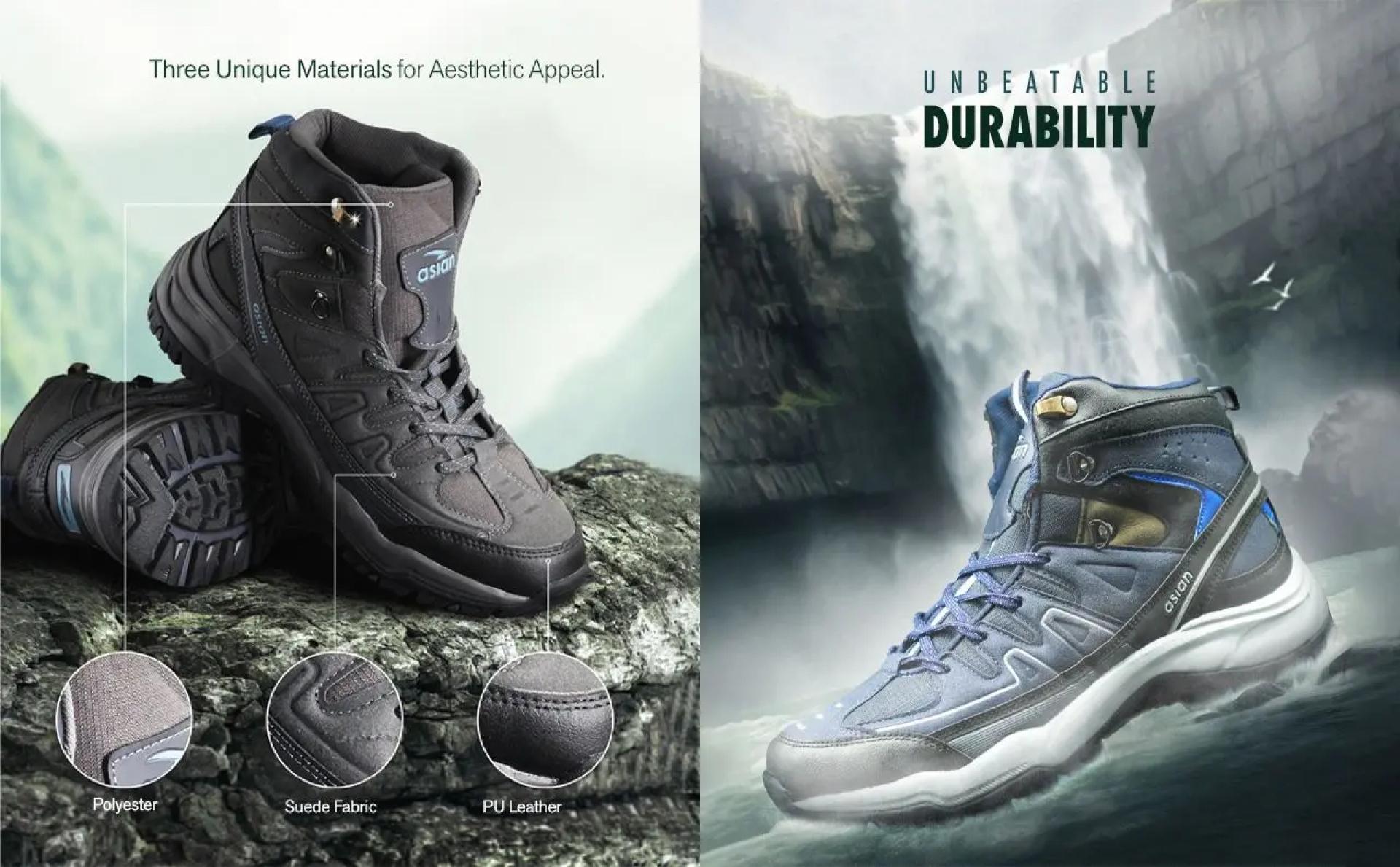
Material selection determines durability, protection and long-term performance.
- Synthetic mesh improves breathability while maintaining strength.
- Rubber outsoles provide reliable grip and damage resistance.
- Waterproof layers protect against rain and wet terrain.
- Reinforced stitching improves structural durability.
- Lightweight components improve movement efficiency.
These materials help hiking boots for men perform reliably across different outdoor conditions.
How Do Trekking Shoes Perform in Different Weather Conditions?
Outdoor environments often involve unpredictable weather. Trekking shoes are designed to adapt to these changes.
- Waterproof outdoor shoes prevent moisture from entering during rain.
- Breathable materials help regulate temperature in warm conditions.
- Durable soles maintain grip on wet and dry surfaces.
- Strong outer layers resist damage from rough terrain.
- Proper ventilation helps maintain comfort during extended wear.
This adaptability makes trekking footwear suitable for year-round outdoor use.
Can Trekking Shoes Be Used for Everyday Activities?
Modern trekking shoes offer versatility and can be used for places other than hiking trails. Their design helps with daily movement as well.
- Durable soles make them suitable for long walks and travel.
- Comfortable cushioning supports extended daily wear.
- Lightweight construction allows natural movement.
- Versatile appearance complements casual outdoor clothing.
- Performance features provide reliability across different environments.
Some users also alternate trekking footwear with running shoes depending on activity level and terrain.
Conclusion
Trekking shoes are designed to handle conditions that ordinary footwear cannot. Their grip, durability and protective features allow safer and more comfortable movement across uneven and unpredictable terrain.
With improvements in lightweight materials, breathable athletic footwear design and waterproof protection, trekking shoes now provide both outdoor performance and everyday usability. Whether used for hiking, travel or extended walking, quality trekking footwear remains an essential part of an active lifestyle.
FAQs
How are trekking shoes different from running footwear?
Trekking shoes focus on grip, protection and durability for uneven terrain, while running footwear prioritises flexibility and cushioning for forward motion on smoother surfaces
Are waterproof trekking shoes necessary for all outdoor use?
Waterproof outdoor shoes are especially useful in wet, muddy or unpredictable weather conditions, but may be less necessary in dry environments.
How should trekking shoes fit for maximum comfort?
They should fit securely without tight pressure, allowing slight toe movement while maintaining stable heel support.
Can trekking shoes be used on paved surfaces?
Yes, trekking shoes can be used on paved surfaces, although their grip features are designed primarily for natural terrain.
How long do trekking shoes usually last?
High-quality trekking shoes can last several years depending on frequency of use, terrain conditions and maintenance.