
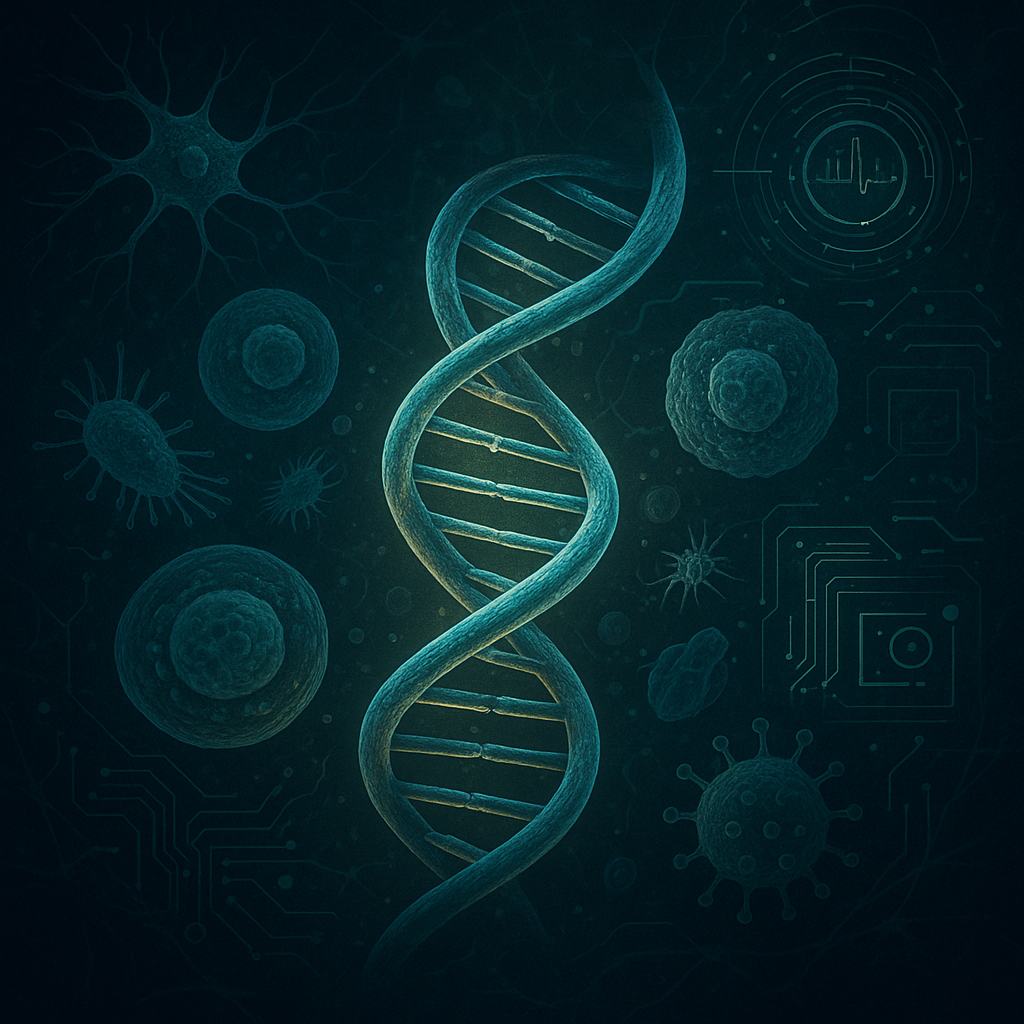
Unlocking the Living World: A Glimpse into Biology’s Depth
Imagine a single strand of DNA stretching almost two meters long when unraveled, intricately coiling within a microscopic nucleus packed into each of your cells. This elegant molecular blueprint not only defines who we are but also governs the astonishing diversity of life on Earth. Biology, the science of life, is a realm where complexity and simplicity dance together, revealing secrets that have fascinated humanity for centuries. From the earliest fossil records to modern genetic engineering, biology continues to unravel the mysteries of existence and illuminate paths for innovation.
In 2026, biology remains a vibrant and rapidly evolving discipline, bridging molecular minutiae with ecosystem-wide phenomena. It challenges researchers, policymakers, and society to rethink health, environment, and technology. As we embark on this exploration, we delve into biology’s intricate layers, tracing its journey, contemporary breakthroughs, and its profound implications for our collective future.
“Biology is not merely the study of life; it is the study of what it means to be alive,” remarks Dr. Lina Torres, a leading molecular biologist at the Global Institute for Life Sciences.
From Darwin to CRISPR: Tracing Biology’s Transformational Arc
The foundation of modern biology was laid in the 19th century, with Charles Darwin’s theory of evolution by natural selection revolutionizing how we understand the origin and adaptation of species. Yet, biology’s roots stretch further back to early naturalists who catalogued flora and fauna meticulously, providing the scaffolding for systematic study.
Fast-forward to the 20th century, the discovery of the DNA double helix by Watson and Crick in 1953 catalyzed a molecular revolution. This breakthrough unveiled the genetic code, transforming biology into a data-rich discipline capable of decoding life’s instructions. The Human Genome Project, completed in 2003, further accelerated this momentum, mapping the entirety of human DNA and opening unprecedented avenues for personalized medicine.
Today, the pace of advancement is staggering. Techniques like CRISPR-Cas9 have democratized gene editing, allowing precise alterations in genetic material with far-reaching potential. Synthetic biology now enables the design of novel organisms, while systems biology integrates complex data to understand biological networks holistically.
“The narrative of biology is one of continuous discovery, where each breakthrough redefines the boundaries of what we thought possible,” notes Professor Akira Yamamoto, a historian of science at Kyoto University.
Biology’s 2026 Landscape: Cutting-Edge Developments Reshaping Science
The year 2026 marks a watershed in biological research, characterized by unprecedented integration of artificial intelligence, advanced imaging, and multi-omics technologies. Laboratories worldwide harness machine learning algorithms to analyze vast datasets from genomics, proteomics, metabolomics, and epigenomics, revealing patterns and causal relationships previously unseen.
One notable development is the maturation of in vivo single-cell sequencing, allowing scientists to monitor gene expression dynamics in individual cells within living organisms. This technique has transformed our understanding of developmental biology, cancer progression, and immune responses.
Additionally, advances in bioinformatics have led to the creation of comprehensive digital twins of biological systems. These virtual models simulate physiological processes and disease pathways, enabling precise predictions of therapeutic outcomes.
In environmental biology, synthetic ecosystems designed to restore biodiversity and carbon sequestration are being trialed on multiple continents. These initiatives leverage engineered microbes and plants to combat climate change effects, showcasing biology’s expanding role beyond human health.
Key 2026 Biological Breakthroughs:
- Neural Regeneration: Breakthroughs in reprogramming glial cells into functional neurons offer hope for treating neurodegenerative diseases.
- Microbiome Engineering: Tailored microbial consortia are now used therapeutically to modulate human immunity and metabolism with precision.
- Biological Data Security: Novel encryption protocols embed secure codes within genetic material, pioneering bioinformatics privacy.
- Climate-Resilient Crops: CRISPR-driven editing has produced multiple strains capable of thriving under extreme drought and salinity.
These advances highlight biology’s dynamic frontier, underscoring its dual role in understanding life’s fundamentals and addressing global challenges.
Biology’s Influence Across Industries: Expert Insights and Societal Impact
Biology’s ripple effects extend far beyond academia, profoundly shaping industries from medicine to agriculture, energy, and even data science. The pharmaceutical sector, for example, increasingly relies on biologics and gene therapies, which constitute over 45% of new drug approvals in recent years, according to industry reports. Personalized medicine, driven by individual genomic profiles, has become standard practice in oncology and rare diseases.
In agriculture, biological innovations underpin sustainable practices. Biopesticides and biofertilizers derived from naturally occurring organisms reduce chemical reliance, improving environmental outcomes. Synthetic biology companies like GenHarvest and BioAgra lead the way in engineering nitrogen-fixing cereals, potentially transforming food security.
Furthermore, biological principles inspire biomimetic engineering, influencing robotics and materials science. Neural networks modeled on brain architecture advance artificial intelligence, while spider silk proteins guide the creation of ultra-strong, flexible materials.
Industry experts emphasize:
- Integration of biology with AI and quantum computing is accelerating discovery and application.
- Ethical frameworks must evolve to keep pace with biological capabilities, particularly gene editing.
- Public engagement and education remain critical to ensuring responsible innovation and societal trust.
These perspectives underscore biology’s transformative power and the responsibilities it entails.
Case Studies: Real-World Applications Illustrating Biology’s Reach
Examining concrete examples illustrates biology’s tangible impact on human life and the environment. The recent success of a gene therapy for spinal muscular atrophy, developed by BioGenix, showcases the potential to cure previously intractable genetic disorders. Clinical trials in 2025 reported a 90% improvement in motor function among treated infants, heralding a new era of curative medicine.
In environmental restoration, the Oceanic Reef Revival Project in Australia employs genetically engineered coral strains resistant to bleaching. This initiative has increased reef resilience by 30% over two years, demonstrating a successful interface between synthetic biology and conservation.
Another compelling example is the rise of biofabrication in textiles. Companies like EcoWeave produce biodegradable fabrics from bacterial cellulose, reducing pollution and dependence on petrochemicals. This innovation aligns with global sustainability goals and consumer demand for eco-friendly products.
“Biology’s real power lies in its application to real problems, turning knowledge into solutions,” asserts Dr. Mei Chen, director of the Center for Biological Innovation.
The Road Ahead: What to Watch in Biology’s Unfolding Journey
Looking forward, biology’s trajectory promises both remarkable opportunities and complex challenges. Key areas to monitor include:
- Ethical Governance: As gene editing technologies mature, frameworks balancing innovation with moral considerations will become paramount.
- Convergence Science: Interdisciplinary collaborations among biology, physics, computer science, and engineering will deepen understanding and application.
- Global Health Equity: Ensuring that biological breakthroughs benefit diverse populations globally remains a critical imperative.
- Climate Adaptation: Biological solutions to environmental crises will be tested and scaled, shaping planetary resilience.
Engagement with these themes will shape policies, research priorities, and societal attitudes toward biology.
For readers seeking a comprehensive exploration of biology’s foundational elements and future frontiers, TheOmniBuzz’s in-depth feature Decoding Life: An In-Depth Exploration of Biology’s Foundations and Frontiers offers valuable insights. Meanwhile, Unlocking Life’s Code: How Biology is Revolutionizing Science and Society examines how recent discoveries catalyze societal transformation.
Biology continues to challenge our understanding of life in ever more intricate ways, inviting us to rethink what it means to be alive and how we steward the living world. As this journey unfolds, it demands a blend of curiosity, rigor, and responsibility from scientists and society alike.