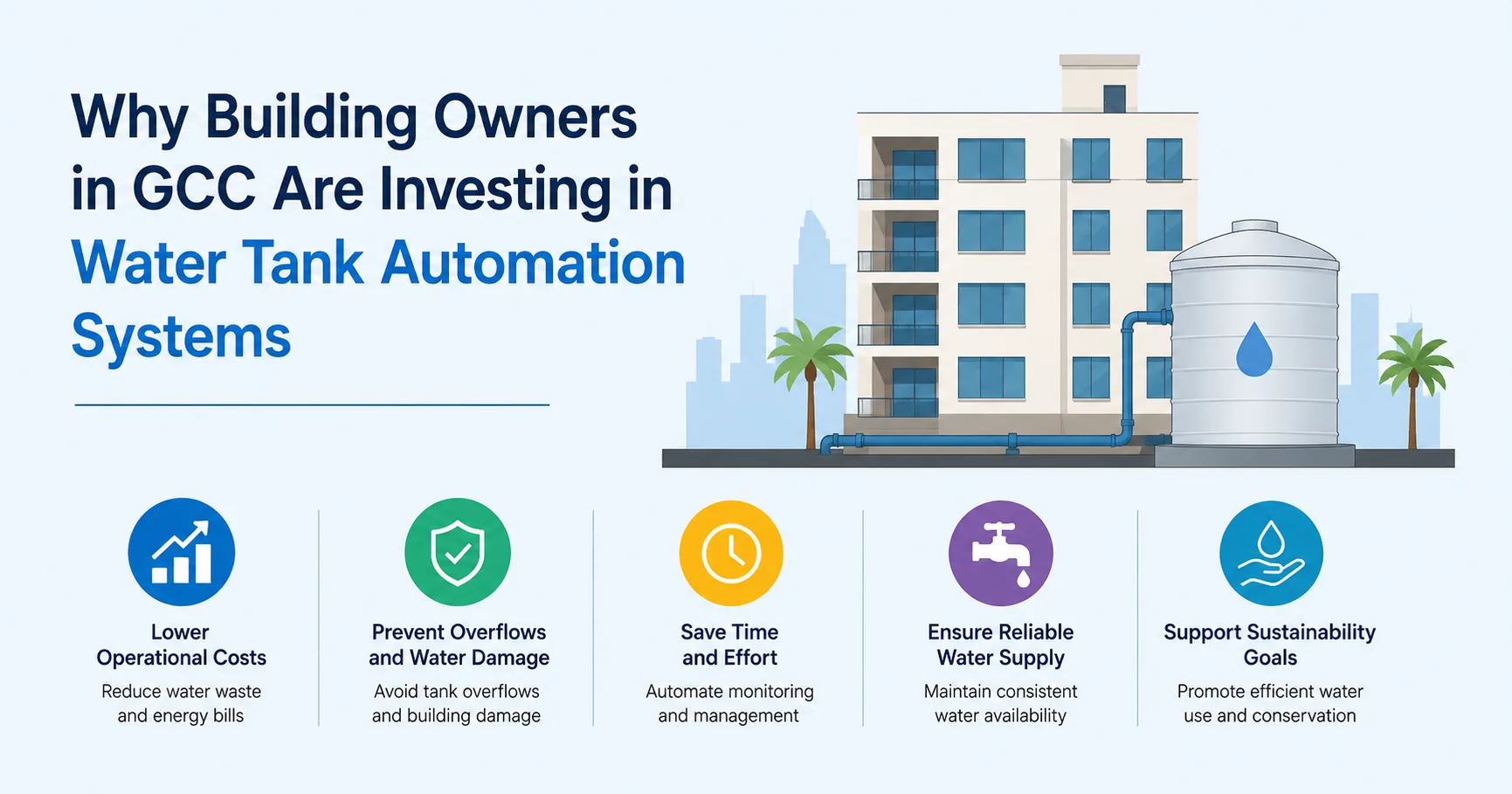
Water is one of the most valuable resources across the Gulf Cooperation Council (GCC) region. With rapid urbanization, expanding infrastructure projects, and increasing demand from residential, commercial, and industrial sectors, efficient water management has become a top priority. As a result, many building owners in the UAE, Saudi Arabia, Qatar, Kuwait, Bahrain, and Oman are investing in Water tank automation systems to improve operational efficiency, reduce water waste, and ensure a reliable water supply.
Modern automation technologies are transforming how buildings manage water storage and distribution, making traditional manual monitoring methods increasingly outdated.
Growing Need for Smarter Water Management
Many GCC buildings rely heavily on water storage tanks to maintain a continuous supply of water. Managing these tanks manually can be time-consuming and often leads to problems such as overflows, water shortages, and inefficient pump operations.
A water tank automation system provides real-time visibility into tank levels and automatically controls water flow based on predefined settings. This helps building owners maintain optimal water levels without constant manual intervention.
Preventing Water Waste and Tank Overflows
Water wastage remains a significant concern across the GCC due to limited natural freshwater resources. Tank overflows can result in thousands of liters of water being lost unnecessarily, increasing operational costs and placing additional pressure on water supplies.
Automated monitoring and control systems help prevent overflows by continuously tracking tank levels and automatically stopping water inflow when tanks reach maximum capacity. This improves water conservation while reducing utility expenses.
Ensuring Reliable Water Availability
Water shortages can create serious disruptions for residential towers, hotels, hospitals, shopping centers, and industrial facilities. Manual monitoring methods may fail to detect declining water levels until it is too late.
With real-time water tank monitoring, building owners receive instant notifications when water levels fall below critical thresholds. Automated pump controls can also activate water replenishment processes when needed, ensuring a consistent and reliable water supply.
Reducing Operational and Maintenance Costs
Building management teams often spend significant time inspecting tanks, checking pumps, and responding to water-related issues. Automation reduces these manual tasks by providing continuous monitoring and intelligent control.
Early detection of abnormal water usage, pump failures, or system irregularities helps prevent costly repairs and equipment damage. As a result, building owners can reduce maintenance expenses and improve the lifespan of their water infrastructure.
Supporting Smart Building Initiatives
Many GCC countries are actively investing in smart city and smart building projects. Water tank automation systems align perfectly with these initiatives by integrating with building management systems, cloud platforms, and digital infrastructure.
Building owners can access water data remotely through mobile devices or web dashboards, enabling more efficient facility management and faster decision-making.
Enhancing Sustainability and Compliance
Sustainability is becoming an important focus for both government authorities and private organizations throughout the GCC. Automated water management solutions help organizations track consumption, reduce waste, and support environmental objectives.
By implementing smart water monitoring systems, building owners can demonstrate their commitment to responsible resource management while improving operational performance.
The Future of Water Management in GCC Buildings
As technology continues to evolve, water tank automation systems are becoming a standard feature in modern buildings. Advanced capabilities such as cloud-based monitoring, predictive analytics, and automated reporting provide greater control over water resources than ever before.
For GCC building owners, investing in water tank automation systems is more than a technological upgrade. It is a strategic decision that improves efficiency, reduces costs, conserves water, and ensures reliable building operations for years to come.