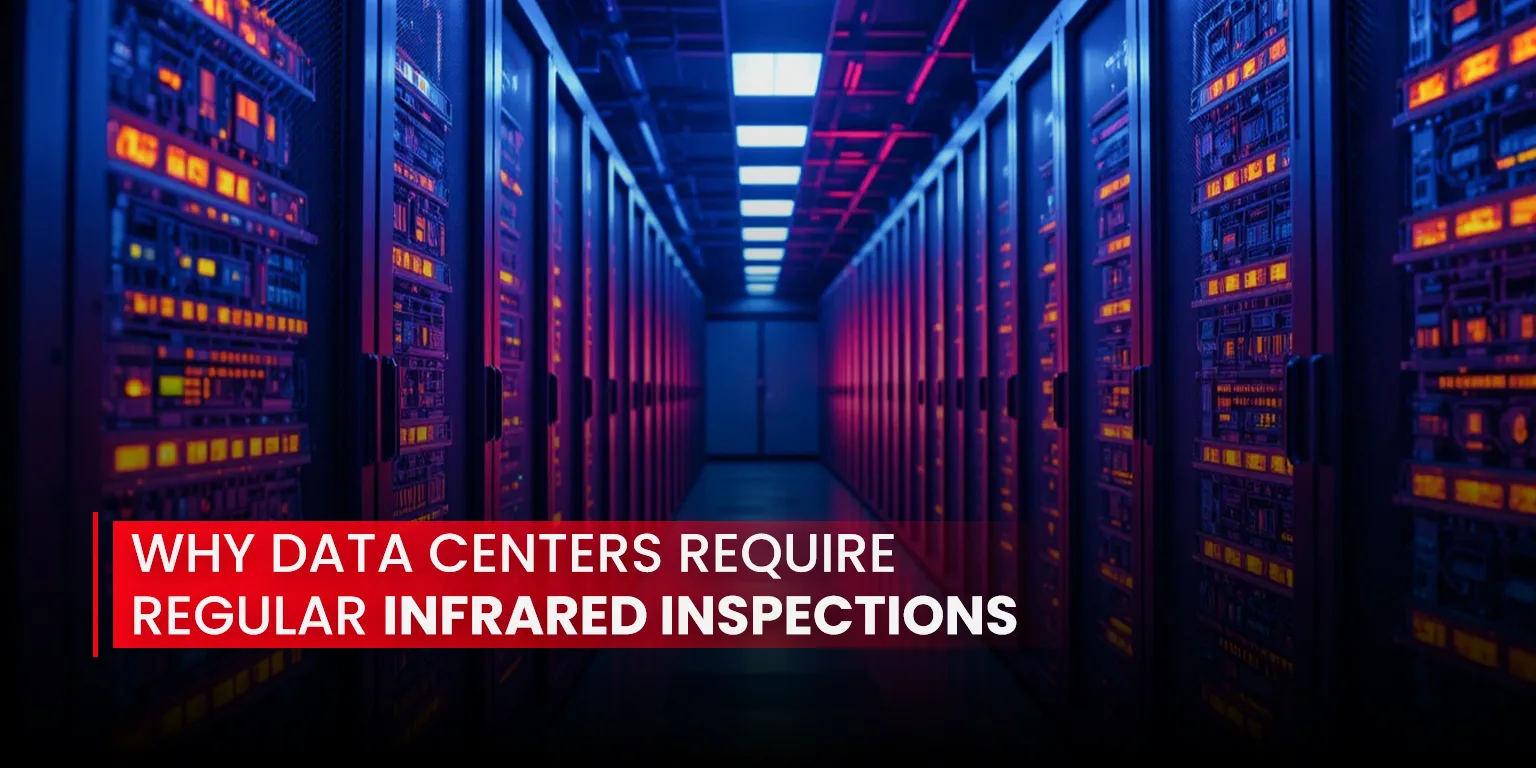
Modern data facilities operate as mission-critical environments where even minor electrical or mechanical failures can trigger downtime, data loss or regulatory violations. Infrared inspections have become an essential preventive strategy, helping operators identify hidden risks before they escalate into safety incidents or compliance failures. By visualizing heat patterns that are invisible to the naked eye, infrared technology provides actionable insights that support reliability, safety and regulatory alignment.
What Are Infrared Inspections in Data Facilities?
Infrared inspections are non-contact thermal assessments used to detect abnormal heat signatures in electrical, mechanical and structural components. In data centers, these inspections focus on switchgear, transformers, UPS systems, panels, busways and critical connections.
Excess heat is one of the earliest indicators of problems such as loose connections, overloads, insulation breakdown, or component degradation. Because infrared inspections are performed while systems are energized, they offer a real-world view of operational conditions without disrupting uptime.
Why Compliance Depends on Infrared Inspections
Infrared inspections support compliance by documenting proactive risk management and adherence to recognized safety standards. Many regulatory frameworks and insurance providers emphasize preventive maintenance and documented inspection programs.
Thermal inspections help demonstrate due diligence in meeting requirements related to electrical safety, fire prevention and operational continuity. When inspection reports show that potential hazards were identified and corrected early, facilities are better positioned during audits, insurance reviews, or post-incident investigations.
How Infrared Inspections Improve Safety in Data Centers
Infrared inspections directly enhance safety by reducing the likelihood of fires and equipment failures. Electrical faults are a leading cause of data center incidents and most of these faults generate heat long before failure occurs.
By detecting hot spots early, facility managers can schedule corrective maintenance under controlled conditions rather than responding to emergencies. This proactive approach protects personnel, safeguards high-value equipment and minimizes the risk of cascading failures that can compromise entire operations.
Key Risks Infrared Inspections Help Identify
Infrared inspections identify issues that traditional visual checks often miss. Common findings in data facilities include loose or corroded electrical connections, unbalanced loads, overloaded circuits, failing breakers and deteriorating insulation.
They also reveal cooling inefficiencies, such as uneven airflow or overheated server racks, which can shorten equipment lifespan and increase energy consumption. Addressing these issues improves both safety and operational efficiency.
Why Infrared Inspections Are Critical for Uptime and Reliability
Infrared inspections protect uptime by enabling predictive maintenance rather than reactive repairs. Data centers depend on continuous operation and unplanned outages can result in significant financial and reputational damage.
Thermal data allows maintenance teams to prioritize repairs based on severity and risk. This targeted approach reduces unnecessary shutdowns, extends asset life and ensures that critical systems perform as intended under peak loads.
When and How Often Data Facilities Should Perform Inspections
Infrared inspections should be conducted regularly as part of a structured maintenance program. Industry best practices typically recommend annual inspections for most facilities, with more frequent assessments for high-load or mission-critical environments.
Inspections are especially valuable after equipment upgrades, load changes, or electrical modifications. Consistent inspection intervals create a historical thermal baseline, making it easier to identify trends and emerging risks over time.
The Role of Professional Infrared Services
Professional infrared inspections provide accuracy, consistency and defensible documentation. Certified thermographers use calibrated equipment and standardized reporting methods to ensure reliable results.
Engaging specialists for Data Center Infrared Inspections ensures that findings are properly interpreted and translated into practical maintenance recommendations. This level of expertise is critical for facilities that must balance technical complexity with strict compliance expectations.
Regional Compliance Considerations for Data Facilities
Compliance requirements and operational challenges can vary by location due to climate, grid conditions and regional regulations. Facilities operating in the Southeast, for example, often contend with higher ambient temperatures and humidity, which can exacerbate thermal risks.
Organizations seeking Data Center Infrared Inspections Georgia benefit from localized expertise that understands regional operating conditions.
Similarly, facilities relying on Data Center Infrared Inspections Tennessee gain insights tailored to regional infrastructure demands and compliance expectations.
Why Infrared Inspections Are a Strategic Investment
Infrared inspections are not merely a maintenance task; they are a strategic investment in risk reduction and operational resilience. The cost of routine inspections is minimal compared to the financial impact of downtime, equipment replacement, or regulatory penalties.
By integrating thermal inspections into standard operating procedures, data facilities strengthen safety culture, improve reliability and demonstrate a proactive commitment to compliance.
Final Thoughts
Infrared inspections provide data facilities with clarity, control and confidence in their operations. They reveal hidden threats, support compliance documentation and enable smarter maintenance decisions without interrupting critical systems.
For organizations looking to enhance safety and compliance through professional thermal assessments, the next step is simple. To learn more or discuss inspection requirements, connect with us and explore how infrared inspections can support your data facility’s long-term performance and regulatory readiness.