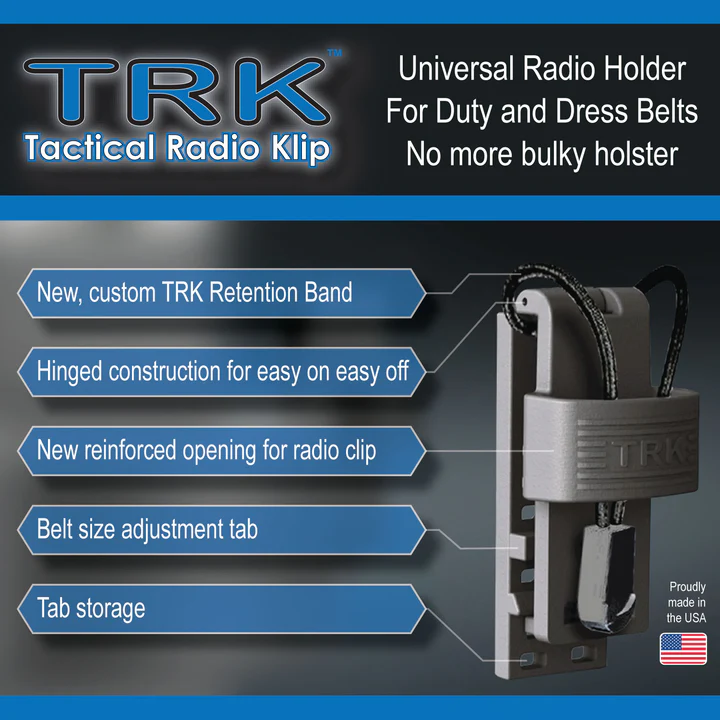
What holds back emergency talk between first responders isn't faint signals or old channels. Trouble builds through tiny snags – slight pauses, mismatched tools, brief slips in teamwork. When a radio dangles loose on a belt, motion can twist it, impact might unclip it, and thick gloves often block quick reach. The core flaw hides past hardware. It lives in how people touch their tools. Enter the tactical radio klip – not new tech, just fixing what was awkward before.
When Standard Radio Mounts Fail Under Pressure
A radio usually fits in your hand. Yet only a few keep working when hit by radiation, rough weather, or prolonged use. Many mounts depend on springs that weaken with age. These let the unit rotate without control, swinging upside down when you move fast. When seconds count – like inside a broken building, facing danger, or among many injured – even small shifts can change everything. A static crackle fills the air when hands grope for a radio tucked beneath fabric. That split delay stretches out even longer if everyone fumbles mid-step. Slowed by an inch, coordination slips out of rhythm without warning. A downward tilt hides the button just enough to matter.
How Tactical Radio Klips Reduce Movement Errors
A clever clip solves the problem by limiting movement. Not like those desk badge reels or one-size-fits-all brackets – these rely on set angles that grip firmly. Positioning matters more than mere holding. Resistance keeps the gear secure until you mean to remove it. Yanking won't free it easily; only purposeful motion will. Keeps things moving smoothly even when stuff gets caught, yet still lets you open it fast with just one hand covered. Pressing exact spots on the radio unlocks it on some versions, thanks to flat levers built close to the surface. Fire crews in a few cities checked how well these work, but each department measures results its own way. Hard numbers? Not usually shared beyond internal reports.
Why Adoption Spreads Quietly Inside Departments
It's the missing logos that keep these klips under the radar. Hardly any advertising pushes them forward. Forget flashy ads. Decisions usually unfold behind the scenes, guided by gear coordinators swapping notes after patrols. Popularity builds because they work, not because someone sold them well. What circulates within departments carries more weight than online specs. A small remark from a sergeant about clearer radio contact can shift habits across units – no memo required.
Radio Placement Matters More Than Audio Settings
Sound doesn't always travel well when blocked. Even small distances matter if fabric gets in the way. Held low against clothing, a radio struggles to catch words clearly. Voices lose sharpness as they pass through multiple layers of cloth. Headgear shifts the angle so microphones miss the mouth. Position changes everything – a stiff clip holds the unit steady and facing forward. No software fixes what placement solves on its own. Clear capture comes from open space around the mic. It works because air carries sound better than padding does.
Standardized Carry Builds Team Awareness
Some teams notice odd perks linked to how the brain learns repetition. Carrying radios the exact way – same hip, same angle, same placement – builds unspoken signals between people. A quick look to the side gains purpose when habits align. A shifting stance in response to others works better if everyone rigs gear alike. Doing things the same cuts down mental effort over time. No lab tests prove this yet, but field stories point to easier teamwork underground or in smoke, places where eyes can't help at all.
Reduced Cognitive Load During High-Stress Events
A quiet mental shift happens, too. When gear holds firm without wobbling or jamming, attention settles elsewhere. Emergency teams aren't fighting risk itself – they take out avoidable hiccups first. Surety isn't born from high-end gadgets lying around. Something solid shows up when you stop chasing new things. Stays where it belongs, like a radio that never moves. Quiet in its role. Simple by design. Always on, even if you forget it's listening.
Minor Improvements, Measurable Outcomes
A dip in repeated radio messages appeared once one city's ambulance crews began using uniform clip methods with updated gear holders. The numbers did not leap out. Message precision at first contact edged up by roughly six percent across eight months, according to call records – not a significant shift. Yet when services operate at full stretch, even minor progress eases pressure. Fewer repeats open breathing room on shared frequencies. Better incoming details help guide response choices faster.
Safety Is Built Incrementally
Safety never comes from one significant change. Instead, it builds slowly, piece by piece. Tools work best when shaped around how people actually use them. Attention to daily damage makes a difference over time. Minor updates stick when they ease frustration – rarely, because they claim to change everything.
What First Responders Can Actually Control
First, each person rushing toward danger faces unknown threats. The focus should be on what can actually be shaped. The way equipment moves matters. Tool placement makes a difference. A radio either responds or it does not. The last thing anyone needs is surprise silence.
Stillness Over Flash
Not flashy, Tactical klips holds things steady instead. A small thing, really. Yet being where you need them matters. Stillness counts now and then.