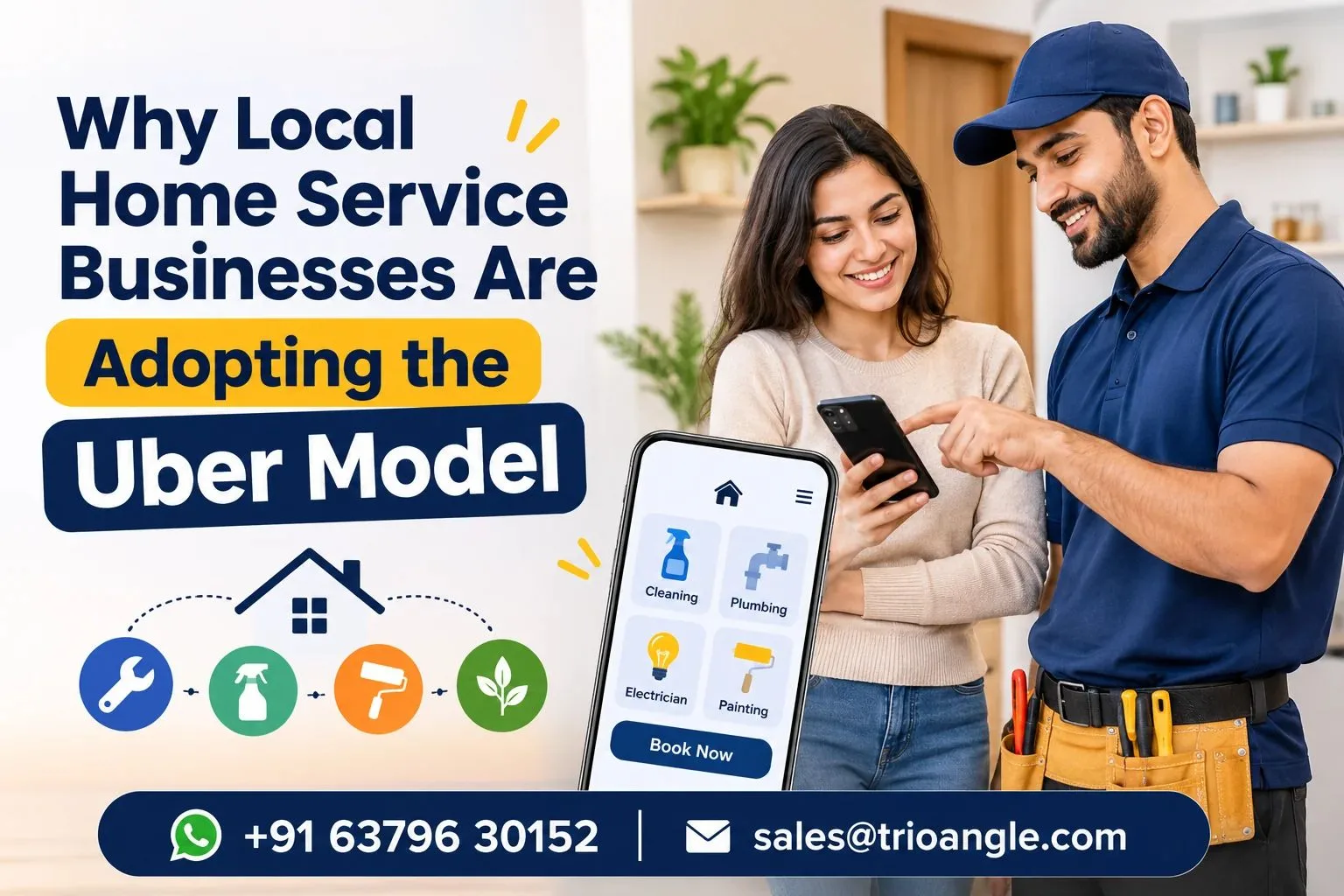
The home service industry is seeing strong growth, with the global home services market expected to grow by USD 1.23 trillion between 2025 and 2030. This creates opportunities for startups to enter the market and start their own home service businesses with a handyman app.
There are also many gaps in local markets that new businesses can address instead of competing directly with large companies.
Local home service businesses are beginning to adopt the Uber-like handyman app business model. Uber is one of the successful examples of this business model, and entrepreneurs can adapt the same approach to suit their local handyman service markets.
In this blog, we will look at why local home service businesses are adopting the Uber business model.
What Is the Uber Model for Home Service Businesses?
The traditional way of finding a service provider takes more time because customers often have to rely on local contacts or referrals. However, the way people find service providers has changed. Today, they can easily search for and book nearby professionals through an app.
So, what exactly is an Uber-like handyman app?
An Uber-like handyman app is a prebuilt platform that follows the Uber business model to connect customers with nearby service providers based on their location. This helps reduce customers' waiting time when looking for a professional. Service providers can also accept or reject service requests based on their availability.
An Uber-like handyman app consists of three main components:
- Customer app
- Service provider app
- Admin panel
You can customize the platform based on the needs of your local target market and customer requirements.
What Makes the Uber Model Suitable for Local Home Service Businesses?
There are many home service apps on the market, but why should a business adopt the Uber business model?
When a customer requires plumbing services, they don't need to work through a lengthy list of providers just to find someone who is available. A handyman app like Uber allows them to connect with a nearby provider without spending time searching.
This model is suitable for local home service businesses. Let's look at what makes the Uber model a good fit for this type of business.
1. Growing Demand for Home Services
Demand for home services like plumbing and furniture mounting is rising. During holidays or emergencies, people often need help quickly.
People do not want to waste a lot of time finding available professionals. Therefore in order to solve this problem, local handyman services such as Uber are very helpful to quickly get local services.
2. Flexible Service Booking and Scheduling
This Uber-style handyman app lets customers create an account and book home service appointments at a time that suits them, which makes the booking and scheduling process simpler.
3. Better Visibility Into Daily Operations
When a local business expands, handling several service providers and customer bookings can become challenging. A handyman app like Uber brings these activities into a single place, allowing business owners to monitor bookings and provider availability through the admin panel.
How Does the Uber Model Work for Handyman Services?
Step 1: Account Creation or Service Selection
Customers can register for an account using a phone number or social media account. Once registered, you can browse through the services offered or search for a specific one. They can also provide job information to explain what they need.
Step 2: Find Nearby Service Providers
The app identifies nearby providers based on the customer's location, displays the service providers in the vicinity, and sends the customer a booking request.
Step 3: Ask for Acceptance and Booking Confirmation.
Service providers get booking alerts and can accept or decline requests based on their availability. After accepting, they share their details with customers and send booking updates.
Step 4: Service Tracking and Payment
Customers can use GPS to track the provider’s location on the way to their appointment. Once the job is finished, the provider updates the booking status, and customers can pay through the available in-app methods.
Step 5: Ratings and Reviews
Once the service is finished, customers can rate the provider and leave feedback on the quality of the service and their overall experience.
How to Start an Uber-Like Home Service Business
In this section, we are going to explore how you can start a local home service business using a handyman app like Uber.
1. Do Market Research
Before launching your handyman app, research your target market and understand your competitors' strengths, weaknesses, and services. Also, identify which services your target customers are most likely to book. This information will help you decide which services to offer and how to design your platform.
2. Choose a Specific Service Category
Choose the service categories you want to focus on based on what people in your target market are most likely to book and which services have higher demand in your area. This will help you decide which services to offer when launching your platform.
3. Pick Your Business Model
Plan how your platform will generate income. There are several revenue models to choose from, and you can select or adjust them based on your target market and audience. Some common revenue models include:
- Commission fees
- Subscription plans
- Dynamic surge pricing
- Listing fees
- Advertising
4. Select the Development Approach
There are two development approaches available: building a handyman app from scratch or using a prebuilt handyman clone app. You can choose the approach that best fits your budget, launch timeline, and business requirements.
5. Build a Network of Service Providers
Build a network of service providers and verify their backgrounds, skills, and experience. Also, let them know about the commission percentage and payout process. This clear verification will help create trust among users.
Common Problems Local Home Service Businesses Face
Operating a local home service business is not always easy. As the business expands, tracking service providers, maintaining service quality, and ensuring customer satisfaction can become difficult.
Business owners must know how to address these issues while keeping their day-to-day operations running smoothly. The common challenges are,
- Finding Reliable and Qualified Service Professionals
- Maintaining Consistent Service Quality
- Balancing Service Demand With Provider Availability
- Handling Customer Complaints and Payment Issues
- Building Customer Trust Through Reviews and Verification
Conclusion:
A handyman app like Uber can be a suitable option for starting a local home service business. It allows startups to customize the platform based on their business needs and local market requirements. Unlike traditional marketplaces, this model connects customers with nearby service providers based on their location and availability.
In this blog, we explored how the Uber business model works for handyman apps, its benefits for local home service businesses, the steps to get started, and the common challenges business owners may face. Understanding these points can help startups plan their business and choose the right approach.