
Homeowners in Queens are adopting ductless AC systems with the i see Mitsubishi sensor to reduce energy waste, meet electrification goals, and improve room-by-room comfort. Smart occupancy detection and targeted airflow help lower electricity use across many NYC apartments.
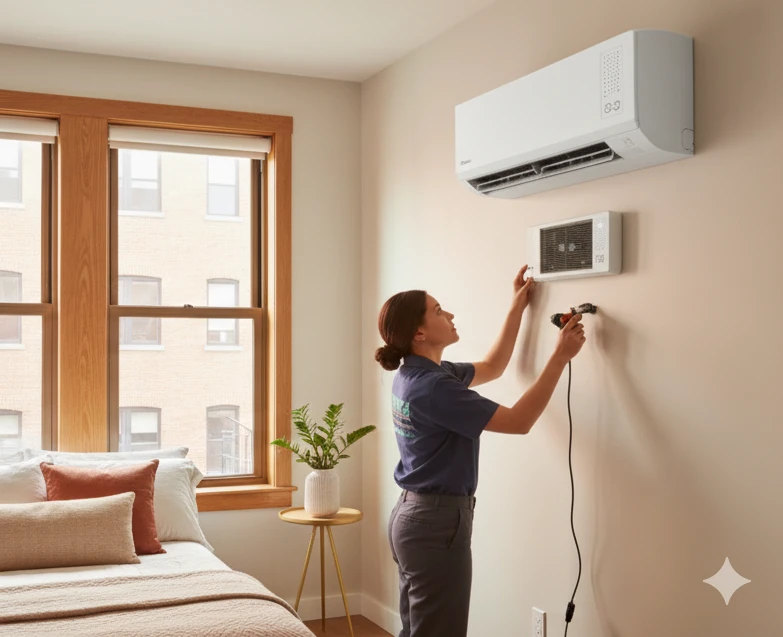
A small shift is happening across most apartments in Queens. Nothing dramatic - just practical! Homeowners and condo residents are quietly replacing bulky central units and old window AC with ductless systems.
Why? Energy bills are part of the reason, but not the only one.
As new building efficiency rules in New York City continue to evolve, homeowners are reconsidering how they heat and cool their homes. Electricity use, wasted air, uneven cooling between rooms—these small inefficiencies add up over time.
And then there is a newer feature getting attention: the 3D i-See Mitsubishi sensor. It sounds technical. In reality, it behaves more like a quiet observer in the room, adjusting airflow and temperature as people move around the space.
That is one reason many residents are now exploring ductless air conditioning installation in queens as a long-term upgrade.
How Mitsubishi Electric 3D i-See Sensor Reduces Energy Waste
Air conditioning systems usually work on a simple idea. Cool the room until the thermostat says stop.
The limitation becomes obvious once you think about it. A thermostat measures temperature in one spot - often the wall. Meanwhile the couch, the kitchen corner, and the hallway might exude completely different vibes.
The i see Mitsubishi sensor tries to fix that gap.
Instead of checking temperature at a single point, the sensor scans the room and reads temperature differences across multiple zones. It also tracks movement.
From there, two things start happening.
Occupancy Detection:
The system notices whether people are actually in the room. If no one is there for a while, the unit quietly reduces output.
Not dramatically. Just enough to avoid wasting energy cooling empty space!
For example, someone leaves the living room to cook dinner. The sensor recognizes the shift. Cooling power gently drops until someone returns. The moment movement comes back, airflow increases again.
Small adjustments—but repeated throughout the day, they cut energy use.
It also helps at night. Many homeowners notice the system lowering activity once the room becomes still for long periods.
No complicated settings needed.
Precision Airflow Control
Another practical benefit is targeted airflow.
Most AC units blast air in one direction - sometimes straight at the sofa; sometimes at a wall.
The 3D sensor maps where warmer zones exist in the room. Then it adjusts airflow to those areas instead of cooling the entire space evenly.
In a Queens apartment with large windows facing afternoon sun, this matters. One corner heats up quickly while the rest stays cooler.
Instead of over-cooling everything, the ductless system sends air where it is needed most.
A small change in behavior! But it prevents the usual thermostat tug-of-war many households deal with.
Why Ductless Systems Help Meet NYC Electrification Laws
New York City has been tightening energy regulations for buildings. Some homeowners first heard about it through Local Law discussions or building efficiency notices.
The goal is fairly straightforward. Reduce carbon emissions and shift toward electric systems that run more efficiently.
Traditional central HVAC setups, especially older ones, often struggle with efficiency in smaller apartments. Long duct runs, leakage, and uneven airflow waste energy.
Ductless systems use different mechanism for cooling.
They remove ductwork entirely and use small indoor units connected to an outdoor condenser. Each room can run independently.
That flexibility helps apartments comply with newer electrification goals in a few ways:
- No energy loss through duct leaks
- Lower electricity demand during partial cooling
- Easier integration with heat pump technology
Some Queens co-ops and multifamily buildings have started recommending ductless upgrades during renovations. Not mandatory everywhere. Still, the trend is visible.
Owners who install these systems today are often thinking five or ten years ahead.
Regulations rarely get looser.
How Smart Sensors Improve Comfort in Multi-Room Apartments
Apartments in Queens come in all shapes –
- Railroad layouts
- Narrow walk-ups
- Converted lofts
- Pre-war units with thick walls
Central AC does not always adapt well to these layouts.
One bedroom freezes. Another room stays warm. Hallways feel like tunnels of stale air.
Ductless systems change the setup. Each indoor unit controls its own zone.
Now add the i see Mitsubishi sensor.
Instead of relying on a hallway thermostat, the system reads real room conditions. If someone is sitting near a window on a humid afternoon, the airflow shifts toward that spot.
Another small detail: the sensor avoids blowing air directly onto people whenever possible. It redirects airflow slightly above or around them.
It sounds minor. Yet homeowners notice it quickly.
Nobody likes cold air blasting straight onto their neck while watching TV.
Energy Savings Compared to Traditional Central AC
Energy savings vary depending on the apartment size and insulation. But several patterns show up consistently after ductless air conditioning installation in queens.
First, zoning makes a difference.
Many households only use two or three rooms during the evening. Central systems cool the entire apartment anyway.
Ductless units cool only the spaces being used.
Second, inverter technology adjusts compressor speed rather than turning on and off constantly. That reduces electricity spikes.
Then the sensor adds another layer.
It limits unnecessary cooling in empty areas and balances temperature differences that normally cause over-cooling.
Some homeowners report noticeable drops in summer electricity bills. Others see smaller changes but appreciate the quieter operation.
Savings rarely come from a single feature. It is usually the combination of zoning, inverter control, and the i see Mitsubishi sensor working together.
Are Mitsubishi Ductless Systems Worth It in NYC Apartments?
The upfront cost makes people pause. Installation is not cheap, especially in older buildings where electrical upgrades might be needed.
Still, homeowners often weigh the long-term benefits.
A ductless system offers:
- Quieter cooling compared with window units
- Independent control for each room
- Lower energy waste during partial usage
- Easier maintenance without large duct networks
For smaller apartments or multi-room condos, the flexibility becomes appealing.
There is also the matter of aesthetics. Window units block light and street views. Ductless indoor units sit high on the wall and take up far less space.
Not everyone switches immediately. Some homeowners wait until an old AC system fails before upgrading.
That approach makes sense too.
Does the 3D i-See Sensor Actually Lower Electricity Bills?
Short answer: yes, but modestly.
The i see Mitsubishi sensor does not magically cut bills in half. Anyone promising that is overselling the idea.
Its role is subtler.
By adjusting airflow, detecting empty rooms, and avoiding unnecessary cooling cycles, the sensor trims small pieces of energy waste throughout the day.
Over a full cooling season, those small reductions add up.
Think of it like a smart thermostat with better awareness of the room itself. Not just the wall temperature.
Homeowners tend to appreciate the comfort improvement first. The energy savings follow quietly in the background.
Conclusion
Queens homeowners are not chasing flashy technology. Most are simply trying to make their apartments more efficient, a little quieter, and less expensive to cool during long summer stretches.
Ductless systems fit that need fairly well.
The i see Mitsubishi sensor adds an interesting twist. It observes the room, adjusts airflow, and avoids cooling empty spaces.
With energy regulations tightening and electricity costs creeping up, more residents are choosing ductless air conditioning installation in queens as a practical upgrade rather than a luxury feature.
It is less about novelty and more about smarter every day cooling.