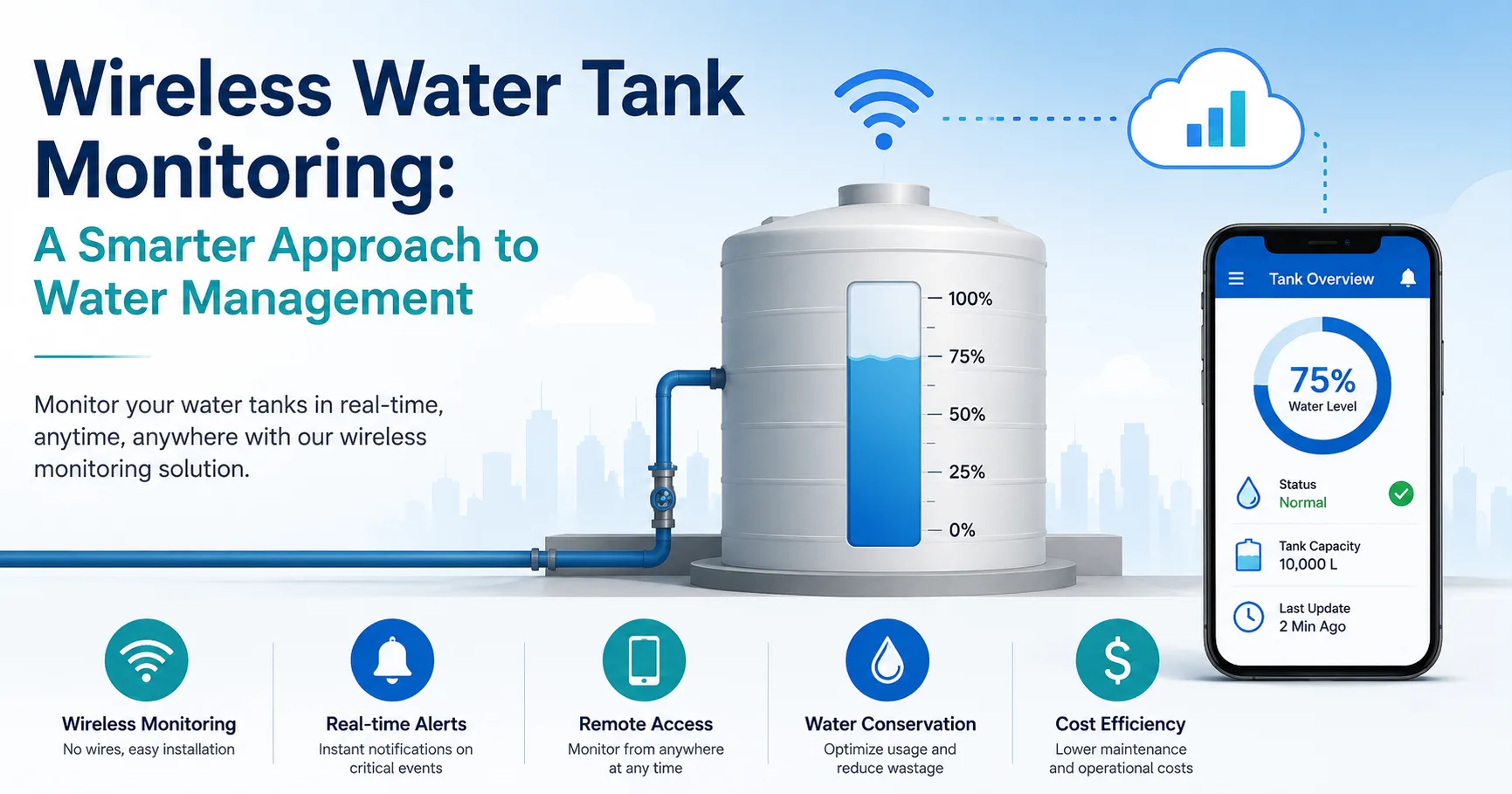
Effective water management is essential for residential buildings, commercial facilities, industrial plants, hotels, hospitals, and educational institutions. As organizations seek more efficient ways to monitor water storage and reduce wastage, Wireless water tank monitoring systems have emerged as a smart and reliable solution. By providing real-time visibility into water levels without the need for extensive wiring, these systems are transforming how water resources are managed.
Wireless water tank monitoring combines modern communication technologies with automated monitoring capabilities, helping property owners improve operational efficiency, reduce maintenance efforts, and support water conservation goals.
What Is Wireless Water Tank Monitoring?
A wireless water tank monitoring system enables users to monitor water levels remotely through internet-connected platforms, mobile applications, or cloud-based dashboards. Instead of relying on manual inspections, facility managers can access real-time information about tank status from virtually anywhere.
The system continuously tracks water levels and sends updates automatically, ensuring that operators always have accurate and up-to-date information about their water storage infrastructure.
Real-Time Visibility for Better Water Management
One of the primary benefits of wireless monitoring is real-time access to critical water level data. Traditional methods often involve periodic inspections that may miss sudden changes in tank levels.
With real-time water tank monitoring, users can instantly view current water levels and receive alerts when tanks become too full or too low. This proactive approach helps prevent water shortages, overflow incidents, and unnecessary operational disruptions.
Reducing Water Waste and Overflow
Water overflow is a common problem in many buildings and facilities. Overflowing tanks not only waste valuable water resources but can also increase utility costs and create maintenance issues.
Wireless monitoring systems help eliminate this problem by providing continuous tracking and automated notifications. Facility managers can take immediate action when water levels approach critical limits, ensuring efficient water usage and minimizing waste.
Simplified Installation and Scalability
Unlike traditional wired monitoring systems, wireless solutions require less infrastructure and can often be deployed more quickly. This makes them ideal for both new developments and existing facilities.
Wireless systems can also be expanded easily as property requirements grow. Whether managing a single tank or multiple tanks across large facilities, organizations can scale their monitoring capabilities without extensive modifications.
Remote Access and Instant Alerts
Modern smart water monitoring systems allow users to access water level information from smartphones, tablets, or computers. Remote monitoring eliminates the need for on-site inspections and provides greater flexibility for facility management teams.
Automated alerts can be configured to notify users of low water levels, potential overflows, or unusual consumption patterns. These notifications enable faster response times and improved operational control.
Supporting Sustainable Water Management
Water conservation is becoming increasingly important across regions facing growing demand and limited water resources. Wireless water tank monitoring helps organizations identify inefficiencies, optimize water usage, and reduce unnecessary losses.
By providing accurate data and actionable insights, these systems contribute to more sustainable water management practices while helping organizations achieve environmental and operational goals.
The Future of Smart Water Infrastructure
As digital transformation continues across industries, wireless water tank monitoring systems are becoming a key component of modern infrastructure. Integration with cloud platforms, building management systems, and advanced analytics tools is helping organizations gain greater control over their water resources.
By adopting wireless monitoring technology, property owners can improve efficiency, reduce costs, prevent water wastage, and ensure reliable water availability. Wireless water tank monitoring is not just a convenience—it is a smarter approach to water management for the future.