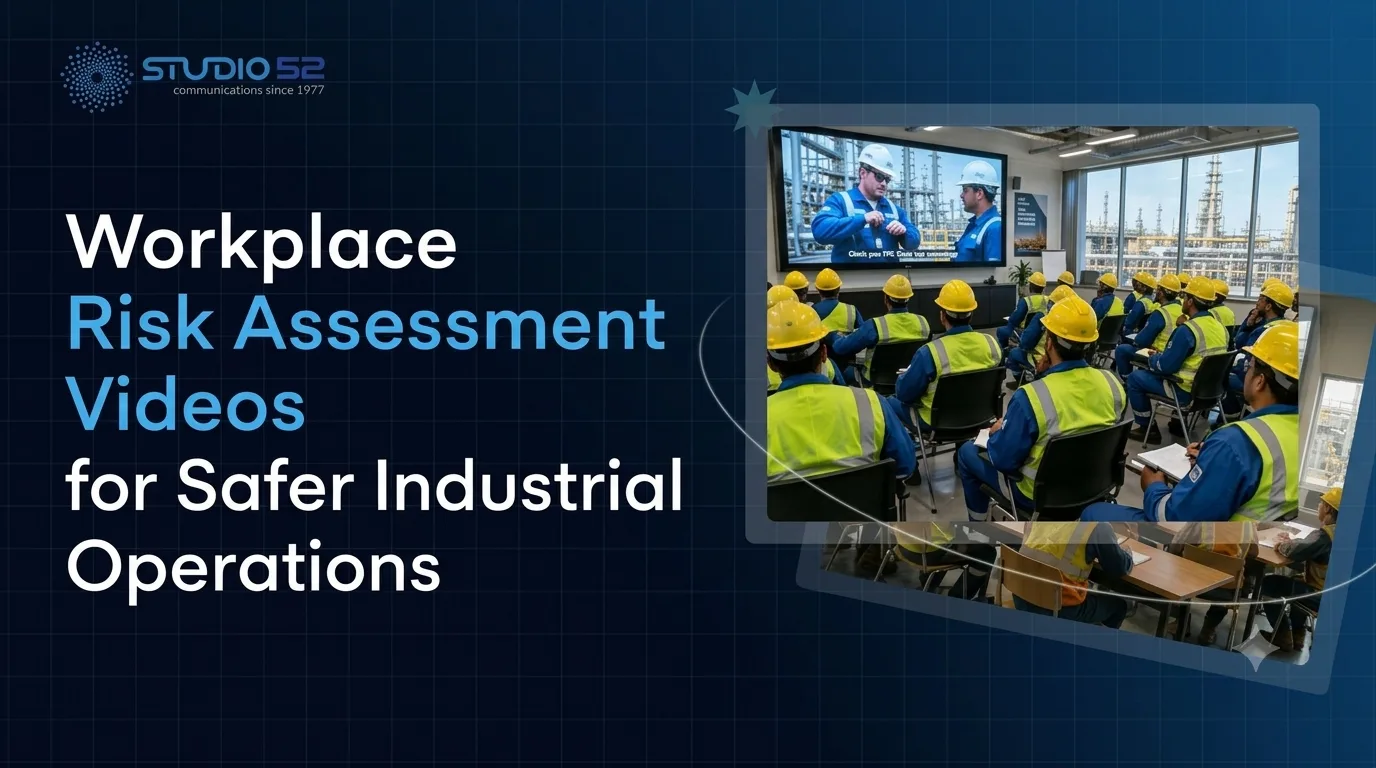
Every workplace has potential risks that employees and organisations need to understand. These risks may be related to machinery, electrical systems, working conditions, chemicals, manual handling or daily operational activities. Identifying hazards and taking appropriate precautions are important steps towards maintaining a safer working environment.
Risk assessment is a process that helps organisations identify potential hazards, understand who may be affected and determine suitable preventive measures. However, communicating risk assessment findings to employees can sometimes be challenging. Written reports and technical documents may contain important information, but employees may not always understand how those risks relate to their daily tasks.
Workplace risk assessment videos provide a visual approach to explaining potential hazards and preventive procedures. Through practical demonstrations, animation and clear explanations, organisations can help employees understand workplace risks assessment video more effectively.
Understanding Workplace Risk Assessment
Risk assessment involves examining workplace activities to identify situations that may cause harm. It also helps organisations determine the likelihood and potential impact of different hazards.
For example, a manufacturing facility may identify risks associated with moving machinery, electrical equipment and material handling. A construction company may focus on working at heights, excavation, falling objects and vehicle movement.
Once these risks are identified, organisations can develop procedures to reduce exposure and improve working conditions.
Employees should understand the hazards relevant to their responsibilities. They should also know how to recognise unsafe conditions, report concerns and follow the required precautions.
Why Visual Risk Communication Matters
A risk assessment report may describe a hazard in technical language, but a visual demonstration can make the situation easier to understand.
For example, a video can show how an obstructed walkway creates a trip hazard. It can also demonstrate how incorrect equipment handling may result in an unsafe situation.
Workplace risk assessment videos can explain:
- Common workplace hazards.
- Unsafe working practices.
- Equipment-related risks.
- Personal protective equipment requirements.
- Emergency response procedures.
- Hazard reporting methods.
- Preventive actions and safe working practices.
These videos can help employees connect the information in workplace safety documents with situations they may encounter during their daily activities.
The Importance of Industry-Specific Safety Content
Different industries have different operational requirements. A single general safety video may not address every risk employees face.
Manufacturing facilities may require videos about machine guarding, electrical systems and production equipment. Construction organisations may need visual training about scaffolding, excavation, lifting operations and site access.
Oil and gas safety video operations may require specialised training about hazardous environments, equipment procedures and emergency arrangements.
Customised workplace risk assessment videos can focus on these specific requirements. Businesses can use actual workplace footage and relevant scenarios to make training content more meaningful.
Using Animation to Explain Workplace Risks
Animation can help demonstrate risks that are difficult to capture through live-action filming.
For example, three-dimensional animation can illustrate how machinery operates, identify internal components and explain potential hazards associated with moving parts. Animated scenarios can also demonstrate unsafe situations without recreating dangerous activities in real environments.
Two-dimensional animation and motion graphics are useful for presenting safety symbols, warning information and preventive instructions.
These visual formats can be combined with professional narration to explain the risk, its possible consequences and the correct preventive measures.
Developing a Structured Risk Assessment Video
The development of a workplace risk assessment video should begin with identifying the intended training objective.
Organisations can work with safety professionals to determine which hazards need to be covered. Once the topics are selected, a script can be prepared using simple and understandable language.
The production team can then develop a storyboard showing how each hazard and preventive measure will be presented.
Depending on the subject, production may include:
- Live-action workplace filming.
- Animated hazard demonstrations.
- Motion graphics and safety illustrations.
- Professional voice-over narration.
- Subtitles and visual labels.
The final video should be reviewed by relevant stakeholders to ensure that the information is accurate and reflects the organisation's approved procedures.
How Studio52 Helps Organisations Communicate Workplace Risks
Studio52 provides professional safety video production solutions for businesses that need visual content for workplace awareness and training.
Its production approach can combine live-action filming, animation, motion graphics and narration to explain different safety topics. These formats can help organisations present workplace hazards, operational procedures and preventive measures in a clear visual sequence.
Studio52 serves media production requirements across the UAE, Saudi Arabia, Oman and the UK. Its safety-related content can be relevant to organisations in construction, manufacturing, engineering, oil and gas and other industrial sectors.
For businesses looking to communicate workplace risks through professional visual content, Studio52's Safety Video Production Services offer solutions for developing customised safety training materials.
Using Risk Assessment Videos During Safety Meetings
Regular safety meetings provide an opportunity for employees and supervisors to discuss workplace conditions and identify areas that require attention.
Videos can support these discussions by demonstrating specific hazards and showing the correct preventive actions.
For example, a supervisor can present a video about manual handling and ask employees to identify unsafe lifting techniques. A separate video about electrical safety can introduce a discussion about equipment inspections and reporting damaged connections.
These sessions can help employees participate in safety discussions rather than simply receiving instructions.
Updating Risk Awareness Training
Workplace risks can change when equipment, procedures or working conditions are modified. Organisations should review their safety training content regularly to ensure it remains relevant.
New equipment may require additional instructions, while changes in workplace layouts may introduce different hazards.
Updating video content allows businesses to communicate revised procedures in a consistent format. Organisations can also develop additional videos whenever new training requirements arise.
Conclusion
Workplace risk assessment videos provide a practical way to explain potential hazards and preventive procedures through visual communication. By demonstrating unsafe situations and appropriate precautions, businesses can help employees understand the risks associated with their responsibilities.
Studio52 offers professional safety video production solutions that organisations can explore when developing customised workplace awareness and training content. Combining relevant information with clear visual demonstrations can support more effective safety communication across industrial environments.