For two decades, enterprises measured digital maturity by volume: more data, more storage, more dashboards. Yet many organizations with petabytes of data still make decisions slowly. The uncomfortable question CIOs must now ask isn't "how much data do we have?" — it's "what can we actually do with what we know, right now, safely?"
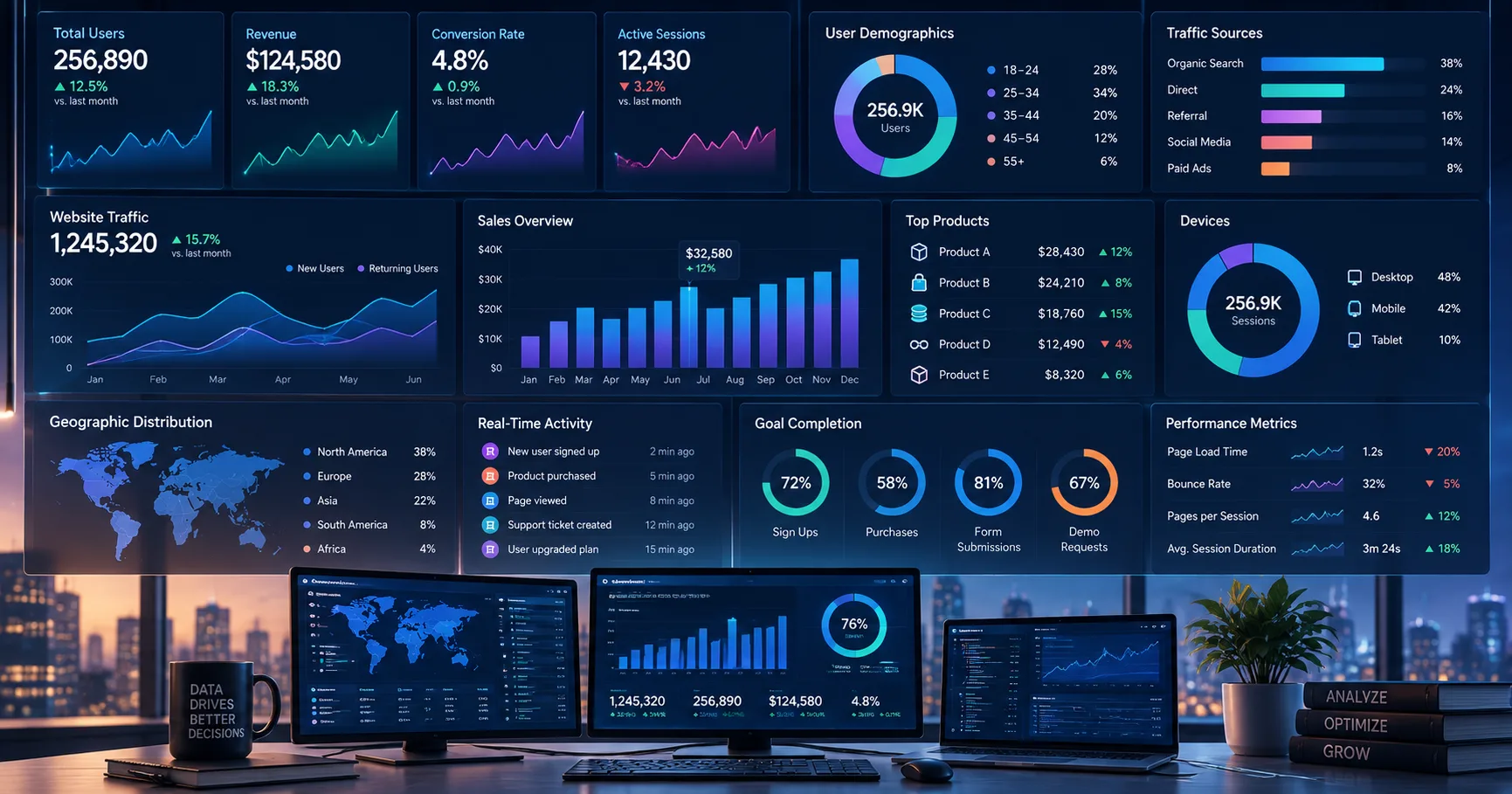
A perfectly organized CRM creates no value if the answer to a customer's problem sits locked inside a separate ERP system. A dashboard can tell an executive what happened last quarter. It cannot yet tell them what to do next Tuesday.
From Data Storage to Data Intelligence
Enterprises have poured budget into CRM platforms, ERP systems, data warehouses, data lakes, and knowledge repositories. The result is often fragmentation dressed up as infrastructure.
Enterprise reality Common assumption Actual outcome Data exists somewhere in the org "We have the data" It isn't available when a decision needs it Systems are integrated on paper "Our platforms talk to each other" Context stays siloed by department Dashboards report the past "We're data-driven" Insight arrives after the decision window closes
Distributed data is not intelligence. It requires context, connectivity, and timing — information available at the exact moment it's needed, not the moment it's reported. Closing that gap is central to Digital Transformation Services, which increasingly focuses less on digitizing paperwork and more on making enterprise information usable in real time.
AI Agents Change the Question
It helps to separate four categories that get conflated in boardroom conversations:
- Traditional software — executes predefined rules and workflows.
- Generative AI assistants — respond to prompts, generate content or analysis.
- AI copilots — assist a user inside one application or workflow.
- AI agents — can interpret context, reason across multiple systems, and take approved action toward a defined goal.
Enterprise agents are not unrestricted for digital employees. They operate within permissions, policy rules, security controls, and human oversight — the same guardrails that govern any employee handling sensitive systems. What's new is the ability to work across systems rather than answering questions confined to one. In engagements led by teams like those at Sapphire Software Solutions, this distinction is often the first thing that must be untangled before any agent architecture gets built.
Make It Concrete: The Enterprise Moment That Matters
Picture a sudden spike in customer demand. Today, resolving it might require:
- Checking CRM data for the trend
- Reviewing sales forecasts
- Verifying ERP inventory levels
- Examining supply-chain constraints
- Contacting operations
- Deciding whether to reorder
- Initiating the workflow manually
An AI agent, properly built, can compress that chain: detect the shift → pull context from CRM and ERP → evaluate supply risk → recommend an action → initiate an approved workflow, with a human sign-off at the threshold that matters. This is the practical difference a well-scoped AI Agent Development Company delivers — not magic automation, but faster movement of existing data toward a decision.
The New Enterprise Advantage: Insight to Action
Data-driven enterprise Intelligence-driven enterprise Uses data to monitor and report Uses AI to interpret and connect signals Supports human decisions after the fact Supports decisions in the moment they're needed Reports on performance Recommends and executes approved actions
The shift affects decision velocity, operational efficiency, and customer experience — but only where architecture, data quality, and governance are sound. AI does not manufacture these outcomes on its own.
The Hidden Challenge: AI Agents Need More Than Data
Owning enormous data volumes doesn't make an organization AI-ready. Agents need:
- Reliable, high-quality data access
- Genuine system integration, not point-to-point patches
- Clear identity and access management
- Security, observability, and audit trails
- Defined business processes and escalation points
The uncomfortable truth: a powerful model cannot compensate for fragmented systems or unclear permissions. Enterprise architecture, not model quality, is increasingly the bottleneck.
What Technology Leaders Should Start Asking
- Which processes genuinely benefit from an agent rather than another dashboard?
- What can an agent access, recommend, and execute — and where must a human approve?
- How is every agent action logged and audited?
- How do we measure the business value an agentic workflow actually creates?
- Is our architecture ready for governed agent-to-system interaction?
These questions, more than any tooling decision, shape whether AI in Decision Making becomes a genuine capability or another stalled pilot.
Conclusion:
Data remains foundational — but it was never the finish line. The real advantage lies in the organization's ability to move: Data → Context → Intelligence → Decision → Action.
This isn't a call to acquire more platforms or run another proof of concept. It's a call to look honestly at where information stalls inside the organization — the handoffs, the manual checks, the reports nobody acts on in time — and ask whether that friction is a data problem or an architecture problem. Most often, it's the latter. The enterprises that pull ahead over the next few years won't necessarily be the ones with the richest data estates; they'll be the ones that quietly rebuilt the plumbing connecting decisions to the information that should be driving them.
The enterprise of the future won't be defined by how much it knows, but by how intelligently, securely, and quickly it can put that knowledge to work. That capability — not the data warehouse itself — is the asset worth investing in now.