
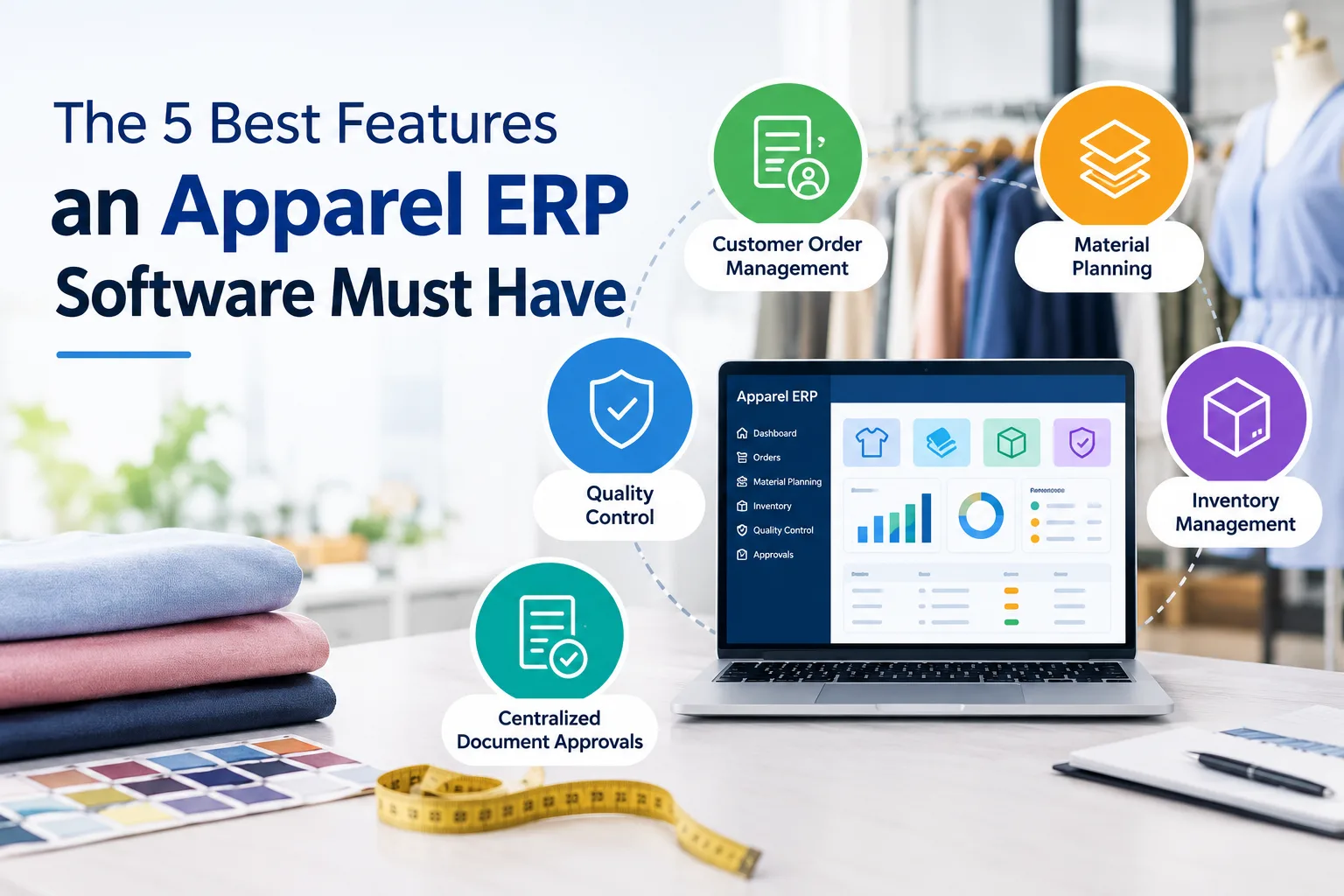
5 Best Features an Apparel ERP Software Must Have
The apparel industry involves complex operations, from managing customer orders and sourcing raw materials to inventory tracking, quality control, and production approvals. Managing these processes manually can lead to delays, errors, increased costs, and poor coordination between departments.
An Apparel ERP software helps businesses streamline these operations through a centralized platform. But what features should you look for when choosing the right solution?
Here are five essential features every apparel ERP software must have.
1. Customer Order Management
Managing multiple customer orders, styles, sizes, colors, and delivery schedules can be challenging without a centralized system.
An apparel ERP should offer:
- Centralized customer order tracking.
- Style, color, and size-wise order management.
- Order amendments and updates.
- Production and shipment tracking.
- Real-time order status visibility.
These capabilities help businesses manage orders efficiently, minimize errors, and ensure timely deliveries.
2. Material Planning
Material planning ensures that fabrics, trims, accessories, and other raw materials are available when production requires them.
Important capabilities include:
- Bill of Materials (BOM) management.
- Material Requirement Planning (MRP).
- Material availability tracking.
- Purchase planning.
- Supplier lead time management.
Effective material planning helps reduce material shortages, avoid excess purchasing, minimize wastage, and prevent production delays.
3. Inventory Management
Apparel businesses handle different types of inventory, including fabrics, trims, work-in-progress, and finished garments. An ERP system should provide complete visibility into stock across warehouses and production facilities.
Look for features such as:
- Real-time inventory tracking.
- Multi-warehouse management.
- Fabric and trim inventory control.
- Batch and lot tracking.
- Stock movement monitoring.
- Finished goods management.
Better inventory management helps businesses maintain accurate stock levels, reduce unnecessary inventory costs, and ensure material availability.
4. Quality Control
Maintaining consistent product quality is essential for meeting buyer expectations and avoiding costly rework or rejected shipments.
A good apparel ERP should support:
- Incoming material inspections.
- In-process quality checks.
- Final product inspections.
- Defect tracking and reporting.
- Corrective action monitoring.
Integrating quality control into the ERP system helps identify issues early, improve product consistency, and maintain buyer satisfaction.
5. Centralized Document Approvals
Apparel manufacturing involves multiple documents requiring approvals from different departments. Managing these through emails and spreadsheets can cause delays and version conflicts.
Essential capabilities include:
- Centralized document storage.
- Configurable approval workflows.
- Role-based access control.
- Approval status tracking.
- Document version management.
- Automated notifications and reminders.
Centralized approvals improve accountability, reduce manual follow-ups, and help teams make faster decisions.
Conclusion
Choosing the right apparel ERP software is essential for improving operational efficiency and managing the complexities of garment manufacturing.
Customer order management, material planning, inventory management, quality control, and centralized document approvals are five important features to prioritize.
An ERP solution that connects these functions on a single platform helps apparel manufacturers reduce errors, control costs, improve coordination, and manage their businesses more efficiently.
The right apparel ERP is not just about managing operations; it's about building a more connected, efficient, and scalable apparel business.