
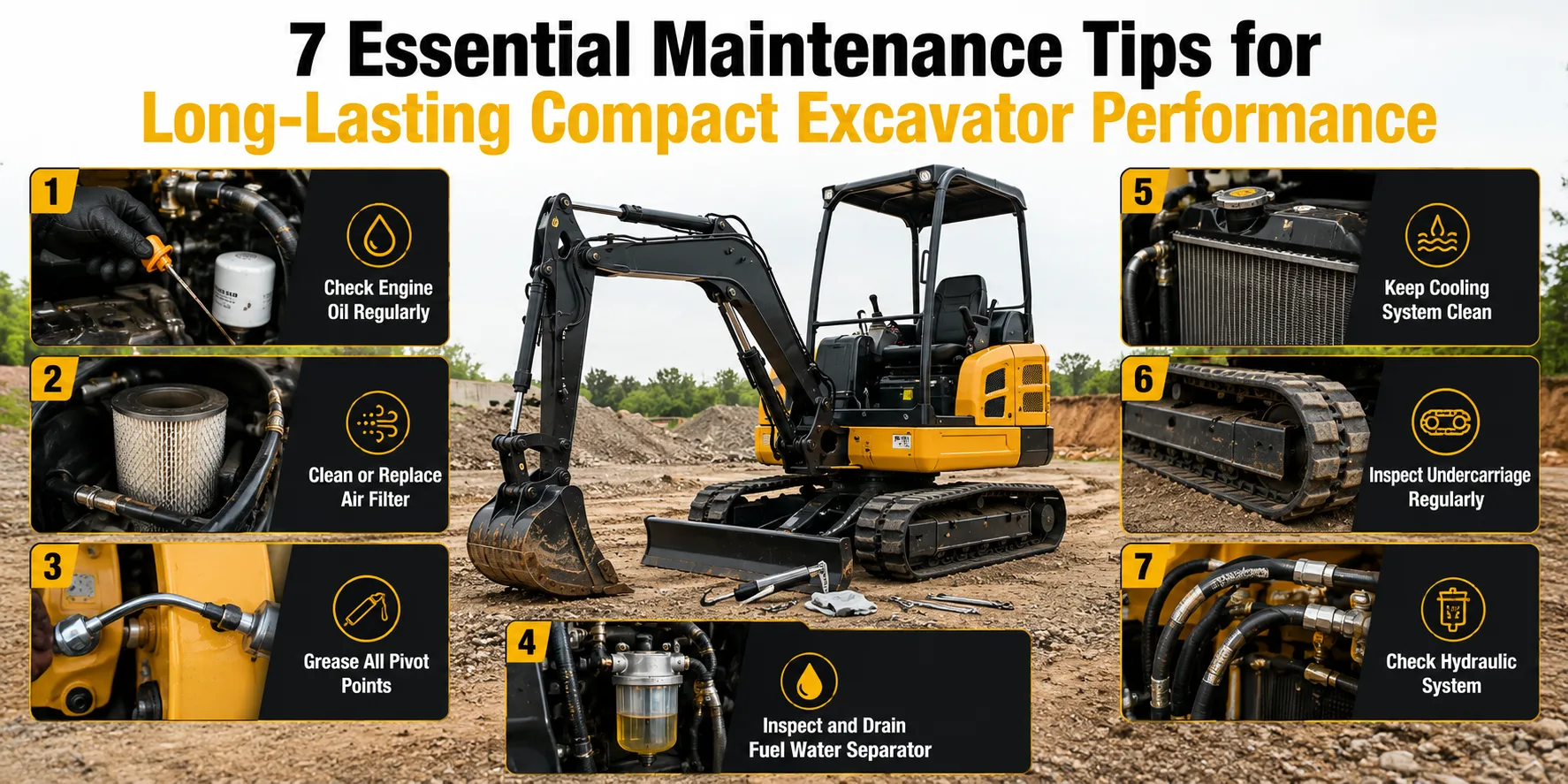
Compact excavators have become an integral part of modern construction, utility, and infrastructure projects. Their ability to operate in confined spaces while handling a wide range of excavation and material-handling tasks makes them one of the most frequently utilized machines on a job site. As a result, they are often expected to deliver consistent performance across varying terrain conditions, changing workloads, and extended operating hours.
However, the long-term performance of a compact excavator is not determined solely by its specifications or build quality. It is largely influenced by how effectively the machine is maintained throughout its operational life.
The challenge is that performance deterioration rarely appears as a major failure in its early stages. More often, it develops through small inefficiencies that accumulate over hundreds of operating hours.
In this blog, we will be taking a look at a proactive approach to maintenance that helps control operating costs, reduce unplanned downtime, and maximize equipment value over the long term.
7 Important Compact Excavator Maintenance Tips
1. Monitor Hydraulic Fluid Condition and Contamination Levels
Hydraulic performance depends on the ability of the system to maintain pressure, flow rate, and lubrication across pumps, valves, cylinders, and hydraulic motors. As operating hours accumulate, hydraulic fluid becomes exposed to oxidation, thermal stress, moisture intrusion, and microscopic wear particles generated within the system.
Contaminated hydraulic fluid can affect spool valve operation, and accelerate pump wear. Because these changes occur gradually, performance losses often remain undetected until cycle times begin increasing or attachment response becomes inconsistent.
Tip:
Do not wait for hydraulic performance to decline before inspecting the system. Regular fluid testing, contamination monitoring, and timely filter replacement can help identify developing issues before they affect pumps, valves, and other critical hydraulic components.
2. Maintain Engine Lubrication Quality Throughout Service Intervals
Engine lubrication affects far more than friction control. Oil is responsible for heat transfer, contaminant suspension, corrosion protection, and deposit management within the engine.
As oil ages, additive packages begin degrading and viscosity characteristics change under operating conditions. This can affect bearing protection, piston ring performance, and overall lubrication effectiveness. In high-hour machines, extended oil drain intervals may also contribute to sludge formation and accelerated component wear.
Tip:
Replace engine oil before its performance begins to deteriorate, as degraded oil can reduce lubrication efficiency and increase component wear.
3. Preserve Cooling System Heat Rejection Capacity
Engine and hydraulic systems generate substantial thermal loads during excavation activities. The cooling system is responsible for dissipating this heat while maintaining operating temperatures within design parameters.
However, cooling efficiency is frequently reduced by external contamination rather than component failure. Dust, soil particles, vegetation, and construction debris can accumulate between cooling cores and restrict airflow. As heat rejection capacity decreases, operating temperatures increase, placing additional stress on lubricants, hydraulic fluid, and mechanical components.
Tip:
Routine inspection of radiators, oil coolers, coolant condition, and airflow pathways helps maintain thermal stability during extended operating cycles.
4. Control Undercarriage Wear Through Regular Measurement and Inspection
The undercarriage is subjected to continuous loading, impact forces, and abrasive wear throughout machine operation. Unlike many other excavator systems, wear progression within the undercarriage is directly influenced by operating conditions, track tension, and maintenance practices.
Excessive track tension increases loading on rollers, sprockets, and idlers, while insufficient tension can contribute to accelerated track wear and operational instability. Material buildup within track assemblies may further increase wear rates by creating abnormal loading conditions.
Tip:
Inspect track assemblies and wear components regularly to identify abnormal wear early, helping reduce repair costs and extend undercarriage service life.
5. Maintain the Air Intake System
Combustion efficiency depends on a consistent supply of clean air. In excavation environments, airborne dust and fine particulate matter create continuous challenges for intake and filtration systems.
As filtration efficiency declines or airflow restrictions increase, engine breathing characteristics can change, affecting combustion quality and fuel utilization. Prolonged exposure to contaminated intake air may also accelerate wear within cylinders, pistons, and turbocharger components where applicable.
Tip:
Do not focus only on filter replacement. Regularly check intake ducts and seals to prevent unfiltered air from entering the engine.
6. Manage Lubrication Across Pins, Bushings, and Linkage Assemblies
Attachment performance depends on the condition of multiple pivot points operating under repetitive loading cycles. Pins, bushings, and linkage connections are continuously exposed to shock loading, abrasive contaminants, and varying operating forces.
Without adequate lubrication, friction levels increase and wear rates accelerate across bearing surfaces. As clearances expand, operational precision may decline, affecting grading accuracy, bucket control, and attachment performance.
Tip:
Lubricate pins and bushings at recommended intervals to reduce metal-to-metal contact. This will help in extending the service life of linkage assemblies.
7. Implement Routine Condition Monitoring Procedures
Effective maintenance programs rely on identifying trends rather than reacting to failures. Condition monitoring provides an opportunity to evaluate machine health through regular inspection of fluids, structural components, wear surfaces, hoses, fittings, and operating systems.
Changes in fluid condition, abnormal wear patterns, temperature behaviour, vibration levels, or leakage rates often indicate developing issues before they affect machine availability.
Tip:
Make routine inspections part of your maintenance program to identify developing issues early and plan service activities before they lead to costly repairs.
Final Thoughts
A compact excavator is a long-term investment, and its performance over the years depends largely on the quality of maintenance it receives. While these machines are built to withstand demanding operating conditions, continuous exposure to heavy workloads, challenging terrain, dust, and varying weather conditions inevitably places stress on critical systems.
So, for owners and operators of compact excavators, the goal should not simply be to keep the machine running. The goal should be to keep it performing at the level required to support efficient, reliable, and profitable operations throughout its working life.