
Failed libraries get attention. Underperforming libraries do not. When a prep returns 60% of the yield it should have, most teams shrug, load anyway, and move on, because nothing actually broke. That quiet tolerance is expensive, and cleanup is usually where the missing material went.
Bead cleanup looks simple enough that it rarely gets audited. In reality, NGS library preparation DNA cleanup is the most technique-sensitive step in the entire workflow, and the same seven errors appear in lab after lab. None of them produce an obvious failure. All of them shave off yield, and they compound across a multi-step prep.
Why Cleanup Is Where Material Disappears
Every cleanup step is a deliberate loss event. You are removing unwanted molecules, and the boundary between wanted and unwanted is set entirely by your technique. Small deviations shift that boundary. A library prep with three cleanup steps that each lose an avoidable 15% arrives at the sequencer with roughly 60% of the material it should have carried.
Seven Mistakes
These are ordered by how frequently they appear rather than severity, and most labs recognise at least three of them immediately. Each has a specific mechanism and a specific fix. Working through them systematically is far more productive than switching reagents and hoping the numbers improve on the next run.
Over-drying the bead pellet
This is the most common error in any magnetic bead DNA cleanup protocol and the easiest to fix. Once ethanol has evaporated, additional drying time causes the pellet to crack and become hydrophobic. DNA then binds more tightly and resists elution. The pellet should still look slightly glossy when you add an elution buffer, never chalky or fissured.
Ethanol carryover into the eluate
The opposite failure is equally damaging, and it does not reduce your yield so much as sabotage everything downstream. Residual ethanol inhibits ligation and amplification, and samples carrying it tend to drift out of wells during loading. Remove the final droplet with a fine tip after the last wash, keeping the plate on the magnet.
Applying a ratio to the wrong volume
Bead ratios are calculated against the sample volume at that specific step, not the original reaction volume. Volumes drift during a prep through evaporation, incomplete transfers, and added buffers. If you calculate 0.8x against an assumed volume rather than the actual one, your effective ratio changes and your size cutoff moves with it.
Incomplete resuspension after adding beads
Binding only happens where beads and DNA make contact, so clumped particles mean inaccessible surface area. This is a frequent source of variation in DNA cleanup, particularly in 96-well plates where corner wells receive less effective mixing. Mix until the suspension is uniformly coloured with no visible clumps against the well wall.
Rushing elution
DNA does not release instantly. Adding an elution buffer, mixing once, and immediately placing the plate back on the magnet leaves a meaningful fraction still bound. Allow a genuine incubation period, mix thoroughly to fully resuspend the pellet, and use an elution volume appropriate to the amount of bead material present.
Washing beads off the magnet
Ethanol washes must be performed with the pellet immobilised. If beads become resuspended during a wash, bound DNA is released into ethanol and aspirated straight into the waste. This is a silent, total loss for that fraction. A common DNA cleanup protocol error is dispensing wash buffers too forcefully and dislodging the pellet without noticing.
Using degraded or unequilibrated reagents
Ethanol is hygroscopic and absorbs atmospheric water, so a bottle diluted last month is no longer at the concentration your protocol assumes. Weaker ethanol releases DNA during washing. Cold bead reagents behave differently from equilibrated ones, so both should be prepared fresh and brought to room temperature before use.
How Small Losses Compound
Individually, none of these errors feels significant enough to investigate. Collectively they explain most unexplained yield gaps. The compounding effect is what makes them dangerous, because each step multiplies rather than adds, and the shortfall only becomes visible at final quantification when the cause is no longer traceable.
Building a Protocol That Fails Less
Consistency beats optimisation here. The goal is not a perfect cleanup but an identical one, performed the same way by every person on the team. Written parameters, not verbal habits, are what deliver that. Reliable NGS library preparation DNA cleanup starts with removing judgment calls from the bench protocol wherever possible.
Document these parameters explicitly rather than leaving them to individual interpretation:
- Exact bead ratio, with the measured sample volume it applies to at each step
- Drying time expressed as a visual endpoint, not only as minutes
- Minimum elution incubation time and mixing method
- Ethanol preparation date and concentration
- Reagent equilibration time before use
- Which steps must be performed with the plate on the magnet
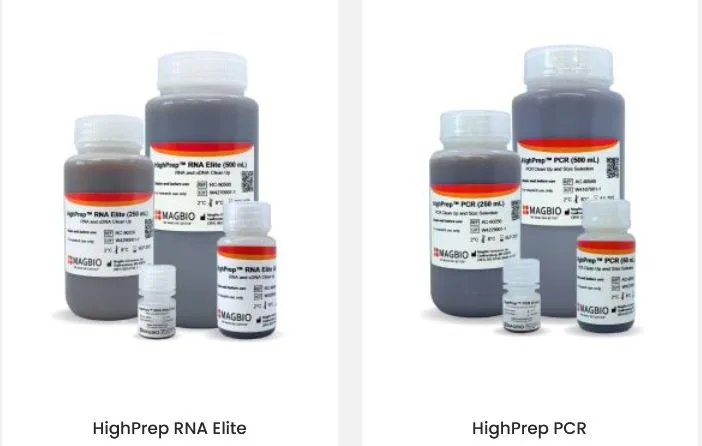
Reagent consistency matters just as much as technique. Lot-to-lot variability in bead concentration shifts your effective ratio without anyone changing a pipetting step, which is why laboratories often standardise on a single supplier. Manufacturers such as MagBio Genomics, a well-regarded producer of bead chemistry for genomics workflows, supply reagents like HighPrep PCR in bulk formats that support this kind of protocol stability.
When the Problem Is Not Your Technique
Occasionally a lab does everything correctly and still loses material. In those cases, look upstream at input quality, adapter concentration, or amplification conditions before revisiting the magnetic bead DNA cleanup protocol. Cleanup cannot recover what was never there, and chasing the wrong variable wastes weeks of troubleshooting time.
FAQs
How do I tell whether my losses come from cleanup or from library prep itself?
Quantify before and after each cleanup step for a few samples. The step where material disappears becomes obvious quickly, and it prevents you from troubleshooting the wrong part of the workflow.
Is a cracked bead pellet always a problem?
Visible cracking means the pellet has dried past the useful point. You can still elute from it, usually with a longer incubation and thorough mixing, but recovery will be lower than it should be.
How long should elution incubation actually be?
Long enough for full release, which depends on fragment size and bead quantity. Longer fragments need more time, and gentle warming assists recovery without harming the DNA.
Troubleshooting yield loss in your prep? Speak to a MagBio Genomics specialist about HighPrep PCR and cleanup parameters for your workflow, call (301) 302-0144 to arrange a technical consultation.