
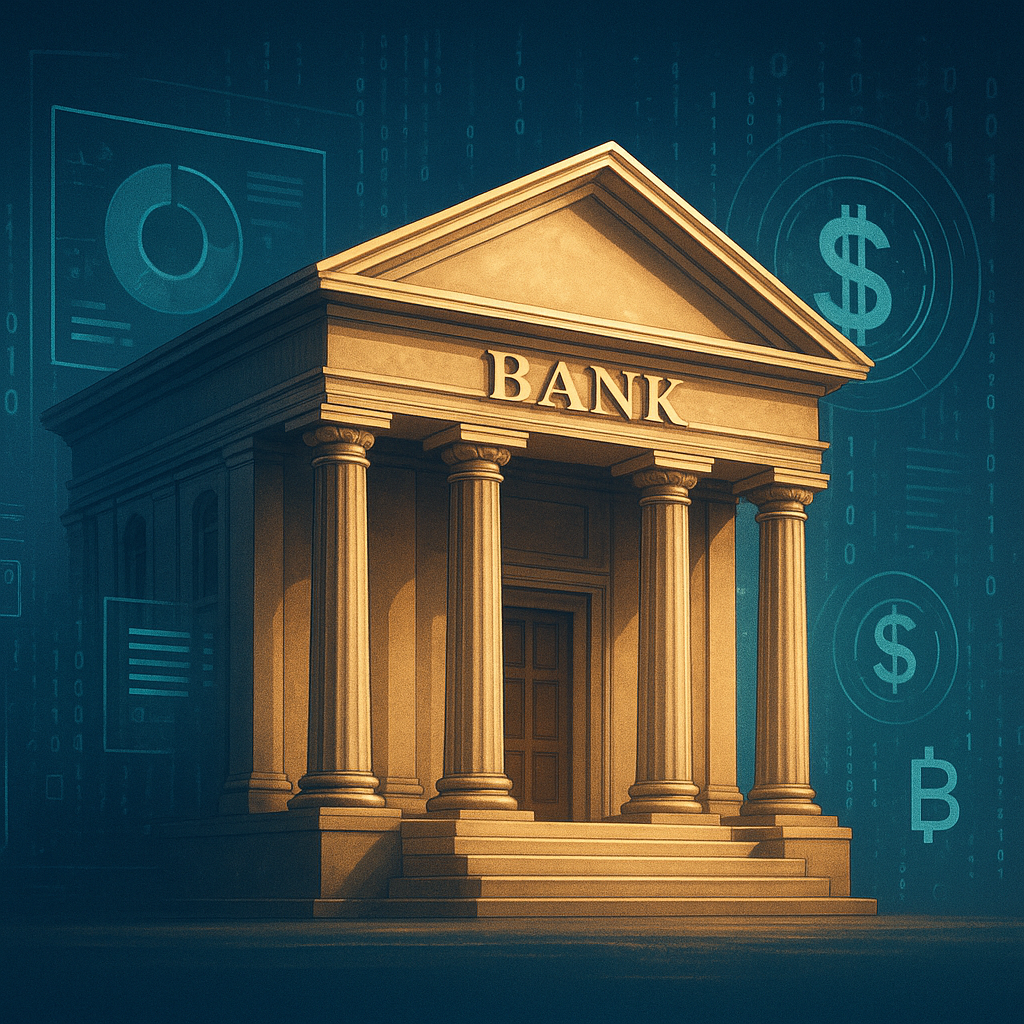
Banking’s Enduring Pillar: A Scene from a Global Financial Hub
On a crisp spring morning in April 2026, at the heart of Frankfurt’s financial district, tens of thousands of transactions coursed through the digital arteries of Deutsche Bank alone. Despite rising competition from fintech disruptors and decentralized finance platforms, legacy institutions like Deutsche Bank, JPMorgan Chase, and HSBC continue to process trillions in assets with unmatched reliability. This scene encapsulates a paradox shaping global finance: while innovation accelerates, traditional banking remains a trusted cornerstone.
Recent data from the Bank for International Settlements highlights that global commercial bank assets grew to over $150 trillion in 2025, underscoring the sector’s colossal scale. Yet, alongside this growth, the banking industry is navigating seismic shifts driven by evolving technology, regulatory landscapes, and customer expectations. The question compelling industry watchers in 2026 is not whether banks will survive change, but how they will sustain trust and relevance in a fragmented financial ecosystem.
“Banks are no longer merely financial intermediaries; they are becoming complex technology platforms embedded in daily life,” says financial analyst Dr. Leah Montrose. “Their challenge is balancing innovation with the gravitas that centuries of trust confer.”
From Goldsmiths to Algorithms: The Evolutionary Path of Banking
Banking’s roots stretch back to ancient Mesopotamia, where temple priests safeguarded grain and precious metals, evolving over centuries into sophisticated institutions facilitating commerce and economic growth. The 20th century saw banks as gatekeepers of capital, with physical branches and paper-based ledgers. The digital revolution of the late 20th and early 21st centuries transformed these functions radically, introducing online banking, electronic payments, and data analytics.
Yet, the essence of banking—trust, safety, and liquidity provision—remains unchanged. The 2008 financial crisis exposed vulnerabilities in regulation and risk management but reinforced the necessity of robust banking frameworks. Since then, banks have overhauled compliance and embraced digital transformation, albeit cautiously.
Fast forward to the 2020s, and banking is at a crossroads. The rise of fintech startups, blockchain-based decentralized finance (DeFi), and artificial intelligence-driven credit scoring challenges traditional models. However, despite these innovations, many consumers and corporations still rely predominantly on established banks for deposits, loans, and investment services.
“The historical continuity of banking institutions is a crucial factor in financial stability,” notes Prof. Miguel Alvarez, economic historian. “Technological advances have not replaced trust; they have redefined how it is earned and maintained.”
2026 Banking Landscape: Data and Trends Defining the Sector
The banking sector in 2026 is characterized by a duality: robust traditional banking alongside burgeoning fintech ecosystems. According to the 2026 Global Banking Report, traditional banks still command over 70% of global financial assets under management, reflecting resilience amid disruption.
Key data points illustrate this dynamic:
- Digital Adoption: Over 85% of bank customers worldwide use digital channels, but 65% prefer banks with both physical and digital presence.
- Fintech Collaboration: 60% of top 200 banks have active partnerships with fintech firms, leveraging API integrations for enhanced services.
- Regulatory Compliance Costs: Banks spend an average of 12% of their operational budgets on compliance, up from 8% in 2020, reflecting increasing regulatory scrutiny.
- Sustainability Financing: Banks have tripled green loan portfolios since 2023, aligning with global climate goals.
- Cybersecurity Investment: Global banking cybersecurity spending reached $45 billion in 2025, up 20% year-over-year.
These figures reveal a sector adept at integrating innovation while preserving core banking functions. Notably, the hybrid model combining traditional banking’s reliability with fintech's agility is emerging as the dominant paradigm.
Comparatively, DeFi platforms, despite rapid growth, manage less than 5% of total financial assets, constrained by regulatory uncertainty and scalability challenges. This reinforces the view that traditional banks remain essential for large-scale financial intermediation.
Cutting-Edge Developments Shaping Banking in 2026
Several recent advances are reshaping banking’s operational and strategic landscape. Among the most impactful are:
- AI-Driven Personalization: Banks increasingly deploy generative AI to craft tailored financial products and advisory services, enhancing customer engagement. JPMorgan Chase’s AI-powered virtual advisor now supports over 40 million clients.
- Central Bank Digital Currencies (CBDCs): More than 30 countries have launched retail CBDCs, with the European Central Bank’s digital euro entering pilot phase. Banks are adapting infrastructure to integrate CBDCs alongside traditional currencies.
- Quantum-Resistant Security: As quantum computing threatens classical cryptography, banks invest in quantum-safe protocols to safeguard transactions and data.
- Embedded Finance Expansion: Banking services increasingly embed within non-financial platforms, from e-commerce to ride-sharing, enabling seamless payments and credit.
- ESG Integration: Environmental, social, and governance (ESG) criteria are at the forefront of lending and investment decisions, reflecting regulatory mandates and investor demand.
These developments illustrate how banks are evolving beyond mere money custodians to become multifaceted financial ecosystems.
For a detailed look at how traditional banking remains resilient amid innovation, see our analysis in Why Banking’s Traditional Foundations Are Holding Firm Amid Rapid Innovation.
Expert Insights: The Industry’s View on Banking’s Future
Industry leaders emphasize that trust remains banking’s currency. Lisa Chen, Chief Innovation Officer at Standard Chartered, argues that “technology is an enabler, not a replacement. Maintaining trust requires transparency, security, and regulatory alignment.”
Meanwhile, fintech executives highlight collaboration over competition. Raj Patel, CEO of fintech startup FinWave, notes, “Our partnerships with established banks are essential to scale. Banks offer credibility and regulatory expertise; we bring speed and innovation.”
The regulatory environment also plays a decisive role. The Financial Stability Board’s 2026 recommendations stress harmonized global standards to mitigate systemic risks associated with new technologies.
These expert perspectives underscore a complex interplay between innovation, regulation, and legacy systems. The balance banks strike will define financial stability and inclusion in the coming decade.
“Banks that succeed will be those that leverage technology to deepen customer relationships while adhering to robust governance,” summarizes Dr. Anil Desai, banking strategist.
Looking Ahead: What to Expect in Banking’s Next Chapter
Several trends merit close attention for investors, policymakers, and consumers:
- Integration of AI and Human Expertise: Hybrid advisory models combining AI analytics and human judgment will dominate wealth management and retail banking.
- Expansion of Embedded Finance: Financial services embedded in everyday apps will grow, offering convenience but raising regulatory and privacy questions.
- Acceleration of Sustainable Finance: Banks will increase financing for climate resilience, renewable energy, and social impact projects.
- Enhanced Cyber Resilience: Investments in quantum-resistant encryption and AI-driven threat detection will become standard.
- Greater Financial Inclusion: Leveraging mobile banking and AI credit assessments, banks aim to serve previously unbanked populations globally.
Consumers and businesses should prepare for a banking environment that is simultaneously more digital, personalized, and interconnected. Understanding these shifts is critical to making informed financial decisions.
For those beginning their journey in modern banking, our comprehensive guide Unlocking Your Financial Future: A Beginner’s Journey Through Modern Banking offers valuable insights.
In sum, banking in 2026 is not about the death of traditional institutions but their transformation into adaptive, technology-enabled platforms that continue to anchor the global financial system. The resilience of trust, combined with strategic innovation, will shape banking’s trajectory well into the future.