New embroidery business owners often focus heavily on choosing the right machine, but the materials you pair with it fabric and thread play an equally important role in the quality of your final product. Understanding some basics here can save beginners from frustrating trial-and-error and wasted materials.
Why fabric type matters more than people expect. Different fabrics behave very differently under an embroidery needle. Stiff, stable fabrics like denim or canvas are relatively forgiving and hold embroidery well with minimal support. Softer or stretchier fabrics like chiffon, georgette, or knits commonly used in Indian garments such as sarees and kurtis require more careful handling, usually with the right stabilizer, to prevent puckering, stretching, or distortion during stitching.
Understanding stabilizers and backing: A stabilizer is a supporting material placed behind or sometimes on top of fabric to keep it steady while the machine stitches. There are different types: cut-away, tear-away, and wash-away stabilizers, each suited to different fabric weights and design densities. Choosing the wrong stabilizer type is one of the most common beginner mistakes, often resulting in puckered or misshapen embroidery even when the machine itself is working perfectly.
Thread quality directly affects output quality. Not all embroidery thread is created equal. Lower-quality thread tends to break more often, causing production delays and inconsistent tension, while higher-quality thread, whether polyester, rayon, or specialty metallic threads, tends to run more smoothly and produce a more polished, professional finish. For a growing business, investing in reliable thread suppliers pays off in both efficiency and customer-facing quality.
Matching thread type to fabric and use case: Different projects call for different thread types. Rayon threads offer a soft sheen suited to decorative work, polyester threads are more durable and colorfast for everyday garments, and metallic threads add a festive or premium look often used for occasion wear like lehengas, a common request in the Indian embroidery market. Understanding these distinctions helps beginners make better material choices for different client requests.
Needle selection matters too. Needles need to match both the fabric and thread being used; using the wrong needle type or size can cause skipped stitches, thread breakage, or even fabric damage. Beginners should familiarize themselves with basic needle sizing guidelines specific to their machine and the materials they work with most often.
Testing before committing to bulk production: One of the most valuable habits a new embroidery business owner can build is testing a small sample on the actual fabric being used before running a full production batch. This catches tension issues, stabilizer mismatches, or design problems early, avoiding costly fabric waste on larger orders.
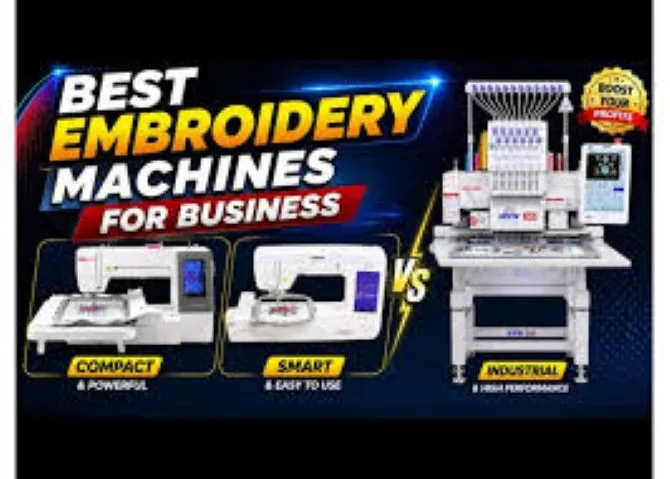
How this ties back to machine choice: A well-built single head embroidery machine with reliable tension control makes working across different fabric and thread combinations significantly easier, since consistent mechanical performance reduces the number of variables a beginner needs to troubleshoot at once. Pairing a dependable machine with the right materials knowledge creates a much smoother learning curve for anyone starting.
Getting comfortable with fabric, stabilizer, and thread choices takes some hands-on experimentation, but even a basic understanding of these fundamentals early on helps new embroidery entrepreneurs avoid the most common and most easily preventable quality issues in their first projects.