
Pricing is one of the toughest calls any business has to make. Set your prices too high, and you risk scaring away customers. Go too low, and you’re leaving money on the table. It’s a balancing act that even seasoned professionals struggle with.
Here’s the kicker: most businesses aren’t testing their prices properly. They rely on gut instinct, competitor benchmarks, or old data. But in today’s competitive market, guessing just isn’t enough.
The Power of Data-Driven Pricing
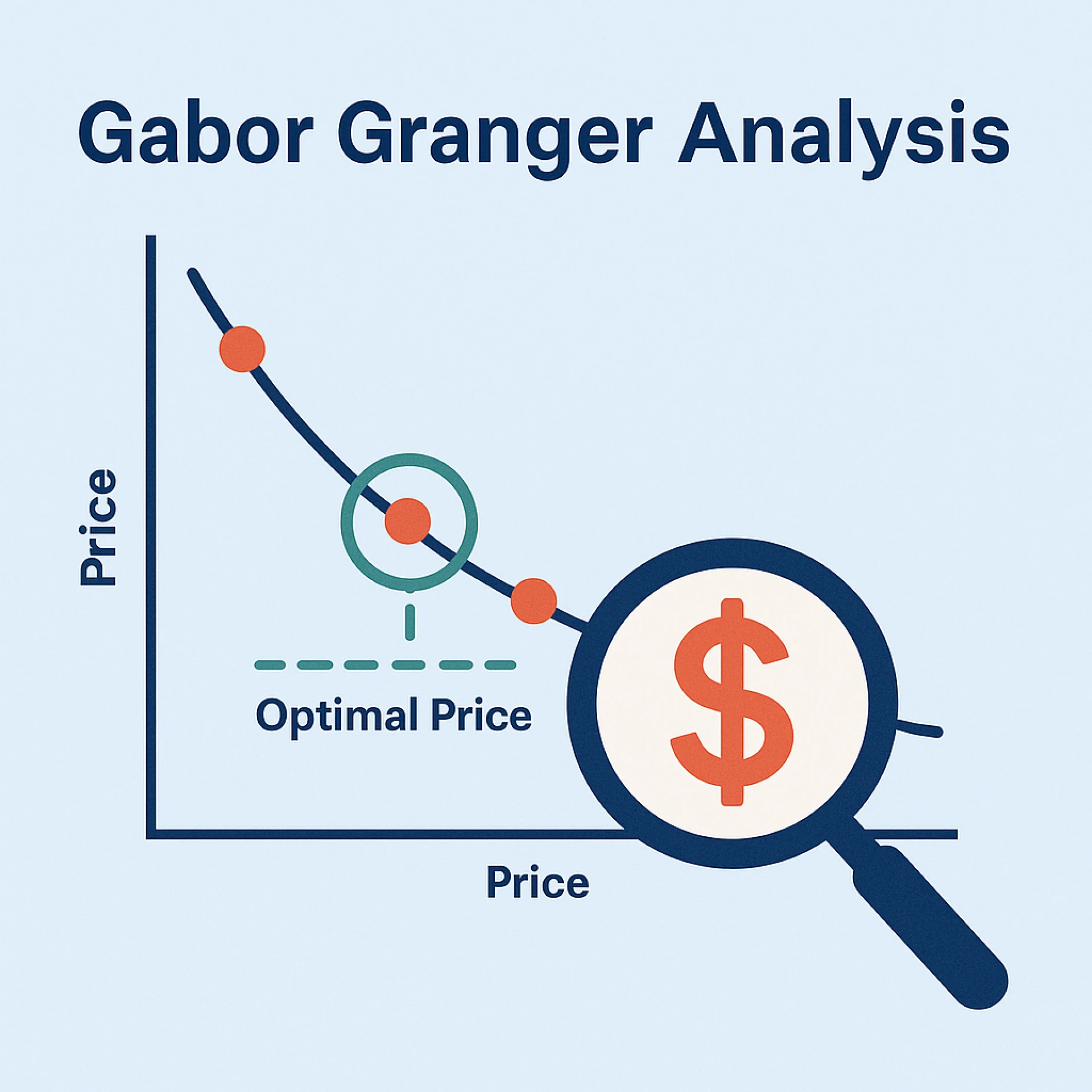
A recent Bain & Company report found that companies using scientific pricing methods can improve profit margins by 8% to 15%. One of the simplest, most reliable tools in this space is Gabor Granger analysis, a market research technique that helps businesses determine the optimal price customers are willing to pay.
Instead of throwing darts in the dark, this method asks potential customers a series of questions about how likely they would be to purchase a product at different price points. The result? A clear picture of the “sweet spot” where profit and customer demand meet.
As Peter Drucker famously said, “What gets measured gets managed.”
Why Aren’t More Businesses Using It?
The truth is, many companies think pricing research is complicated or expensive. Others just don’t know where to start. But the reality is that tools like Gabor Granger analysis can be implemented quickly, even by small businesses, and the payoff can be huge.
Here’s what often holds teams back:
- Fear of change – Pricing feels risky to touch.
- Over-reliance on intuition – “We’ve always charged this much.”
- Lack of in-house expertise – Many teams simply don’t have a dedicated pricing analyst.
How to Get Started
You don’t need to reinvent the wheel. Many businesses bring in pricing specialists or market researchers to run a Gabor Granger analysis. The process is straightforward:
- Design a survey targeting your ideal customers.
- Ask about purchase intent at a range of price points.
- Analyze responses to identify the optimal price range.
Once you have the data, you can test new prices with confidence instead of making guesses.
Beyond Pricing: Building a Smarter Business
Optimizing your pricing is just the first step toward building a data-driven company. Pairing pricing insights with other tools—like customer segmentation and demand forecasting—can transform how you approach sales and marketing.
As Warren Buffett puts it, “The single most important decision in evaluating a business is pricing power.”
Key Takeaways
- Pricing is a major driver of profitability, yet most businesses don’t test it properly.
- Gabor Granger analysis reveals the optimal price customers are willing to pay.
- Companies using scientific pricing methods can see 8%–15% higher profit margins.
- Implementing this method doesn’t require a massive budget or complex systems.
Stop guessing, start measuring—your bottom line will thank you.
Frequently Asked Questions (FAQ)
1. What is Gabor Granger analysis?
It’s a market research method used to find the optimal price customers are willing to pay by asking them about purchase intent at different price points.
2. How does Gabor Granger analysis work?
Participants are shown a range of prices for a product or service and asked how likely they are to buy at each price, helping identify the “sweet spot” where profit and demand meet.
3. Why should businesses use Gabor Granger analysis?
Because guessing your prices can lead to lost revenue; this method provides data-backed insights that improve pricing strategies and boost profitability.
4. Is Gabor Granger analysis only for large companies?
No—small and medium-sized businesses often benefit the most, as they can test prices quickly without investing in complex, expensive research tools.
5. How accurate is Gabor Granger analysis?
While no method is perfect, it’s widely used because it provides a reliable estimate of customer willingness to pay, especially when combined with real-world testing.
6. How do I run a Gabor Granger analysis for my business?
You can design a simple survey targeting your ideal customers or hire a market research consultant to guide you through setup, analysis, and implementation.
7. Can Gabor Granger analysis be combined with other methods?
Yes—many businesses pair it with Van Westendorp’s Price Sensitivity Meter, conjoint analysis, or A/B testing for a deeper understanding of pricing dynamics.
8. How often should I reevaluate my pricing?
It’s a good idea to revisit pricing at least annually or whenever there are significant changes in market conditions, customer behavior, or your cost structure.